Wondering what to pack for our Japan women-only tours? Going on your own holiday adventure to Japan in the spring, summer or fall period?
In this article you’ll find an intro to the weather in Japan in April, June and October, which are the best months to visit Japan in each of the seasons, and a handy list of suggestions for things women should pack for this trip.
The weather in Japan
The weather in Japan changes a lot throughout the year. With the exception of Okinawa prefecture, which enjoys summertime all year round, the rest of the country experiences the 4 seasons in full, especially in the mountainous regions where there are popular ski resorts.
Temperatures in the main three cities of Osaka, Kyoto and Tokyo range from mid-30s Celsius (80-90s F) in the summer to below freezing in winter, with four marked seasons and a Monsoon period in the late spring and early summer.
We offer 3 tours a year, one at the best time in each of the main seasons, so that travelers can pick their preferred travel time.
Weather in Japan in April
The end of March and beginning of April sees the most popular time of the year to visit Japan: Cherry blossom or sakura season.
The season starts at the end of March in the south of the country and ends at the end of April, sometimes beginning of May, in the northern mountainous regions, as the temperatures soar from south to north and springtime fully blooms.
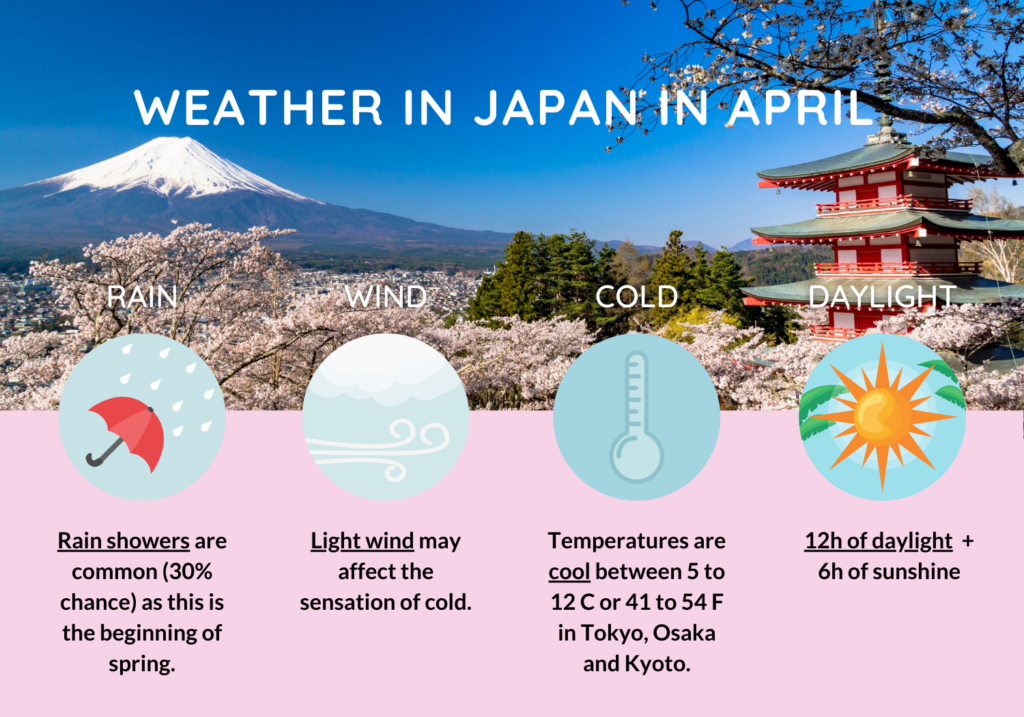
At this time of year, temperatures are still cold, but are not freezing anymore, and days tend to be mostly dry.
Be prepared for the following:
- Temperatures range from 5 to 12 Celsius (41 to 53 Fahrenheit), with nighttime and early morning temperatures being pretty cold.
- 12 to 13 hours of daylight and 6 hours of average sunshine, giving us enough time to do all the sightseeing. The sun rises early, at around 5am, and sets between 6pm and 6,30pm.
- The weather is typically good at this time of year, with a relatively low chance of rain (30%) and light wind that may worsen the sensation of cold.
Weather in Japan in June
June is the end of spring and beginning of summer in Japan and it is a quieter time of the year to visit, with the lowest tourist traffic besides winter, and milder temperatures than the rest of the summer, but the risk of rain.
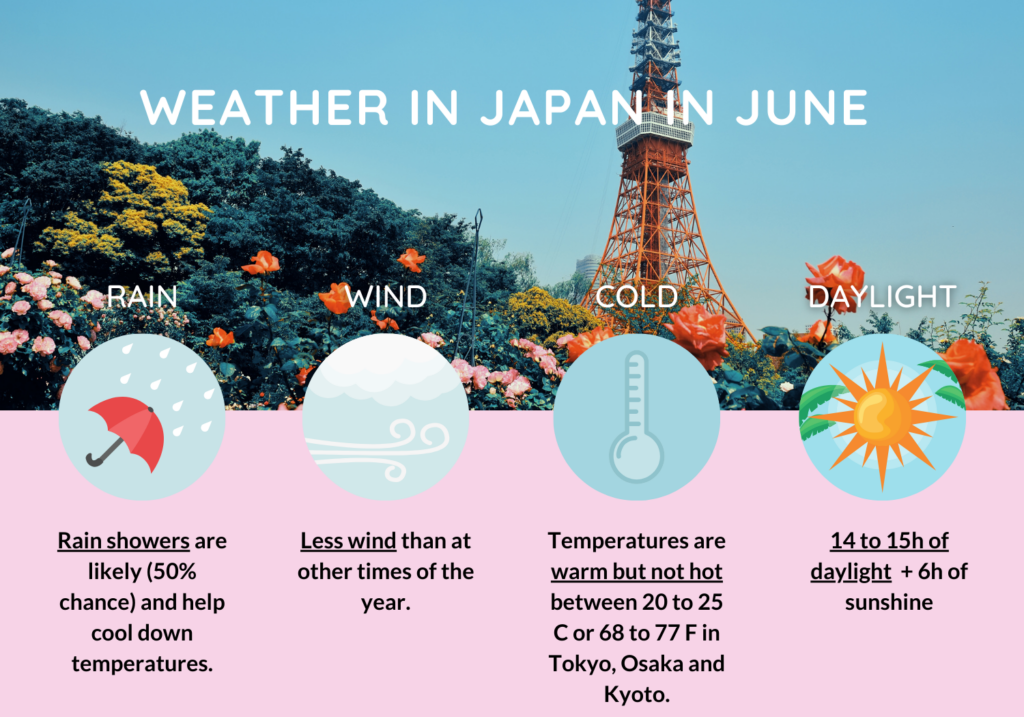
At this time of year, temperatures are warm but not yet steaming hot, and showers cool down the sensation of heat further.
Be prepared for the following:
- Temperatures can range from 20 to 25 Celsius (68 to 77 Fahrenheit), with pleasant nighttime temperatures.
- Days are long, with 14 to 15 hours of daylight and 6 hours of average sunshine. The sun rises early, at around 4.30am, and sets around 7pm.
- The weather is calm at this time of year, and summer rains cool days further. There is a 50% chance of rain so an umbrella or rain jacket is necessary.
Weather in Japan in October
October is one of the most beautiful times of the year to visit Japan and enjoy the fall foliage, especially in the countryside, where we spend a lot of time during our tour.
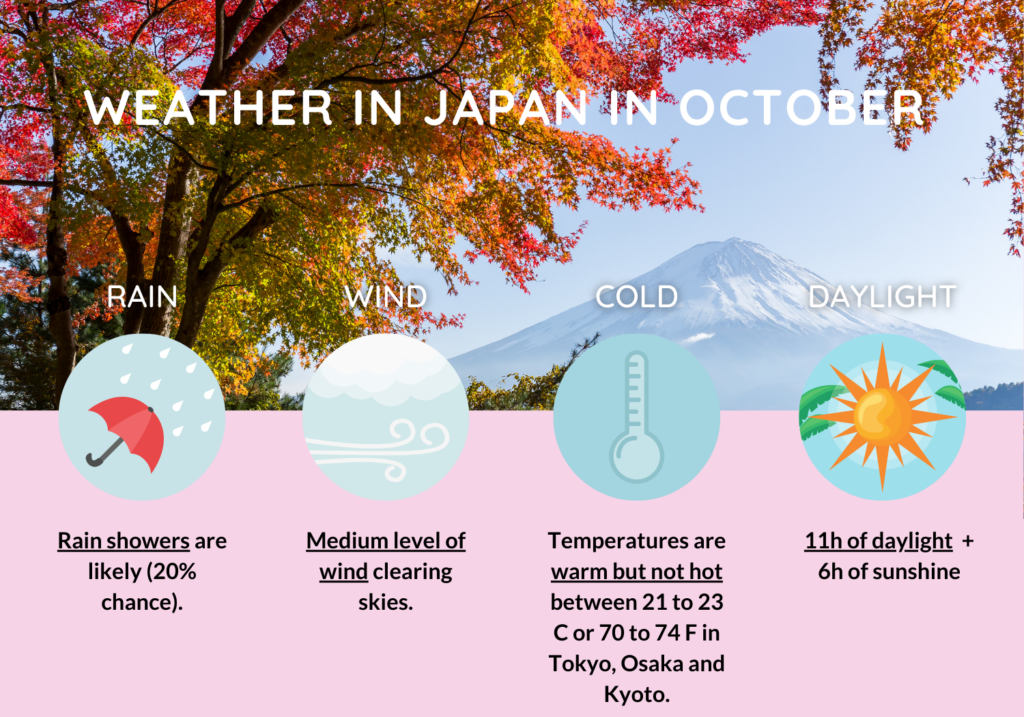
At this time of year, temperatures are pleasant, but days are starting to shorten, lending an extra aura of romance.
Be prepared for the following:
- Temperatures that can range anywhere from 21 to 23 Celsius (70 to 74 Fahrenheit).
- 11 hours of daylight and 6 hours of average sunshine. The sun rises at around 6am and sets early just before 5pm.
- The weather is calm and dry at this time of year, with a very low chance of rain (20%) and medium level of wind.
How to dress in Japan
Now that you know what the weather will be like in Japan at the time we visit, let’s talk about some cultural considerations and suggestions to help you pack.
In general, Japanese women dress modestly, neatly and neutrally, blending in rather than standing out. That being said, Japan is also famous for its eclectic styles and fashion neighbourhoods to match, and its fashion-forward take on trends that don’t follow international standards.
Bring layers
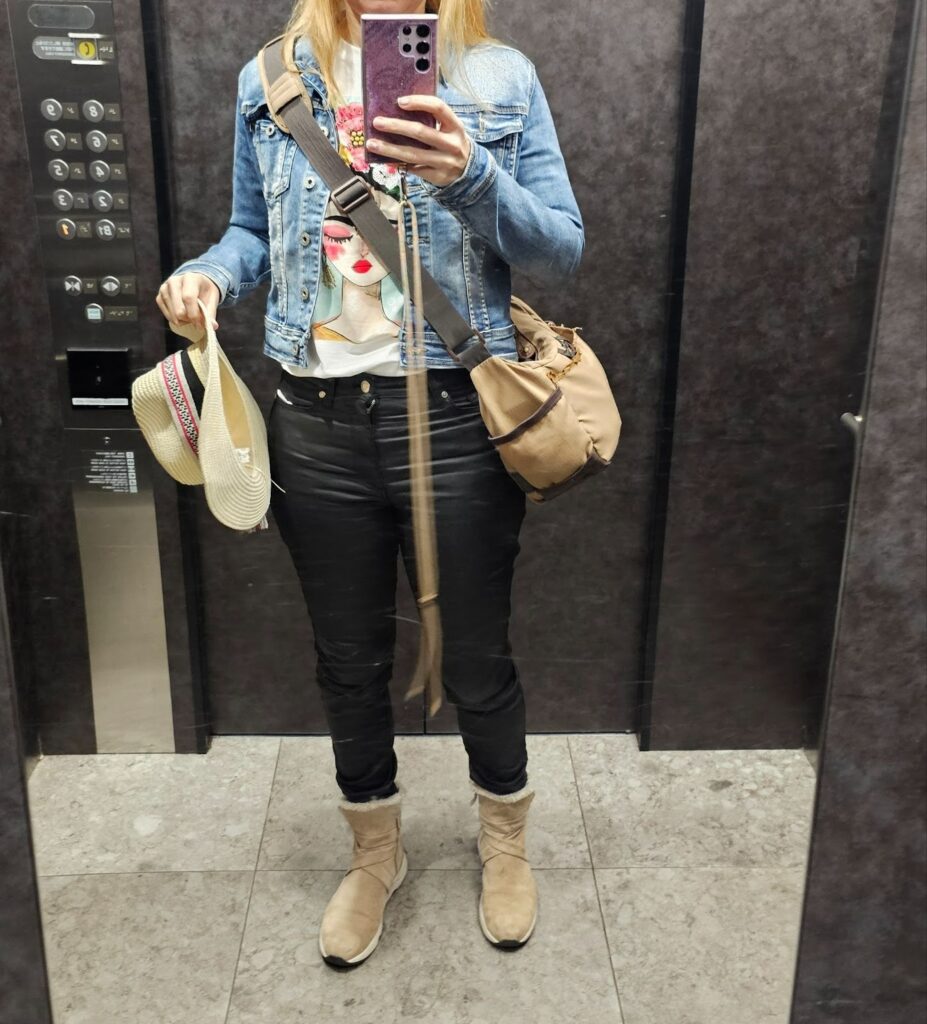
Temperatures can vary during the day in spring and summer, though less so in the fall, but layers are always a good idea because air conditioning or heating can be very strong inside.
In the summer, a raincoat will be useful to stay dry, especially since a lot of the sightseeing is outdoors, in the open air.
In the spring, temperatures can change a lot from early morning to the peak of the day, so a light jacket towards the end of the season or a coat at the beginning, is a must. The reverse applies to autumn.
Because the days end early, and Japan is very safe, you are likely going to be out and about until after dark, so a light jacket will be handy even in the summer.
Well put together
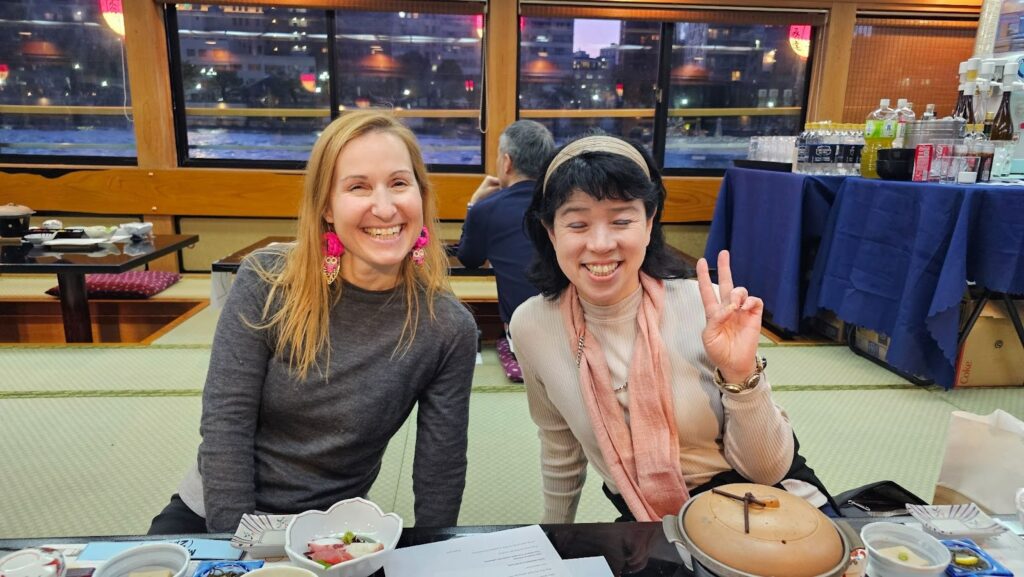
Japanese people take great care in the way they dress and present themselves and it is a sign of respect to do the same.
Even though you are a tourist, you will be taken more seriously and command more respect if you appear to dress neatly and intentionally.
You do not have to wear expensive clothing or brands, just wear clean, ironed and elegant clothes and some accessories that look like you put some thought into will do.
In contrast, old, clearly worn out clothes and shoes are something you won’t see often. Again, it is all a matter of making sure you are well put together and have made an effort to preserve the sense of harmony Japanese culture seeks.
Pro tip: Lots of Japanese people wear eclectic and unique clothing styles, but even if they look unconventional, they are still well put together and it is obvious that they have spent time thinking about what they are wearing.
Dress conservatively
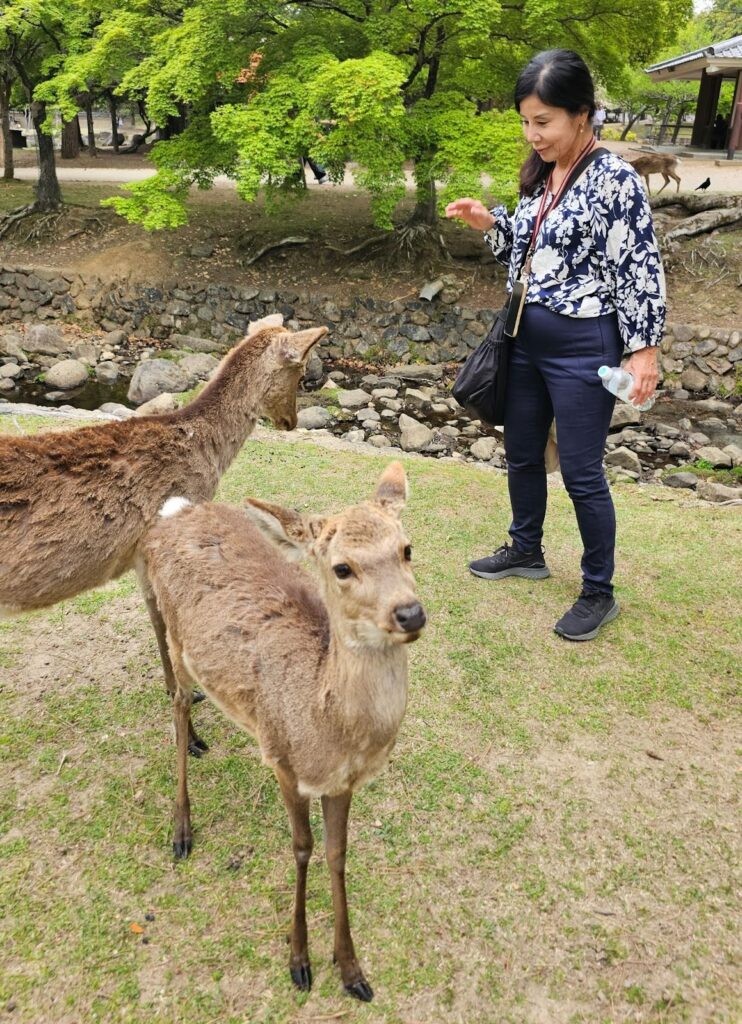
Japanese women dress conservatively in general and showing cleavage is rare and can make others feel uncomfortable. This does not mean you can’t or shouldn’t do it, but it is not done by local women.
At the same time, miniskirts are common and you will see the younger women wearing them so short that you can almost see their undies, and that seems to be ok.
Athleisure wear such as tight leggings and gym / yoga clothes, are just not worn in Japan. Clothes that are tight and reveal your body shape are not something Japanese women wear (even at the gym) and they find it strange that foreigners wear gym clothes in the street.
Again, this is not a rule or a law, just Japanese convention so, if you want to blend in and dress like the locals, leave your yoga outfits at home or relegated to the gym.
Hide those tattoos
As we mention in our travel tips articles and you will hear across the internet, tattoos are associated with criminal gangs and if you have them, you will struggle to enter gyms, pools and onsens with them.
This also means that you are best off wearing clothing that hides them in public.
Clothes you can sit down on the floor in
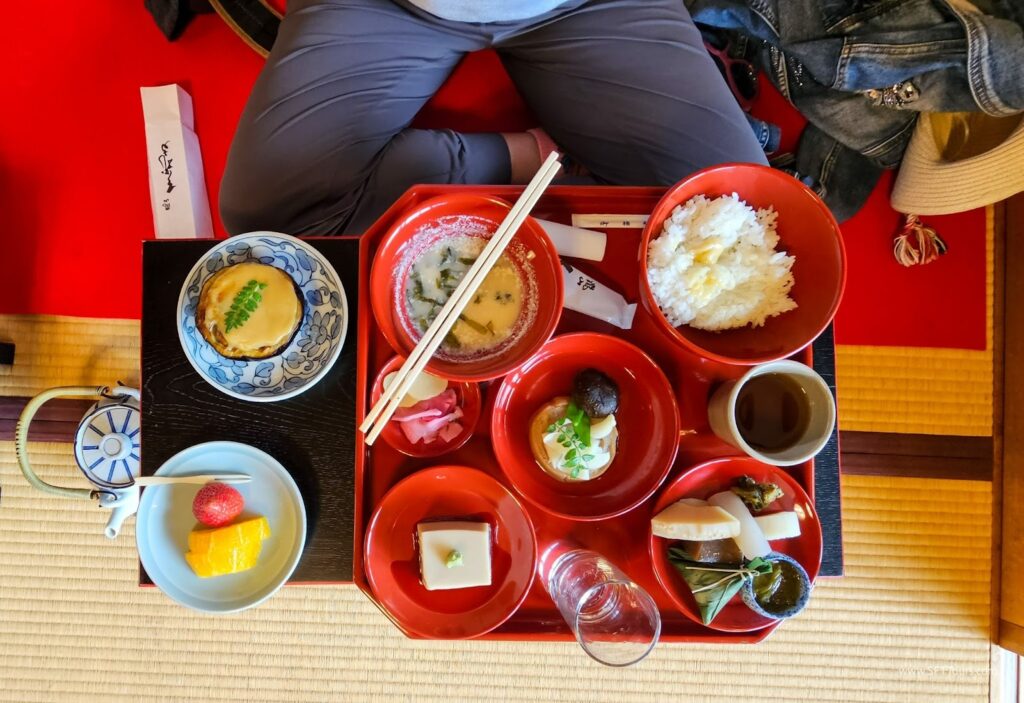
Yes, that may sound strange, but a lot of traditional restaurants in Japan have tatami floors and you may be sitting on a cushion. This is also the case in many activities such as tea ceremonies or Geisha encounters.
If you wear short skirts or very tight rigid trousers, it will be tough for you to sit down in them and cross your legs or sit on your feet with your knees bent, consider that when packing.
Formal settings demand smart casual
Events such as tea ceremonies, Geisha entertainment, and fancy restaurants will be places to wear more smart casual attire than informal clothing.
You don’t need super fancy dresses, but making a little more effort in such settings will be appreciated. Add accessories to dress up an outfit and you’re good to go.
Wearing a kimono
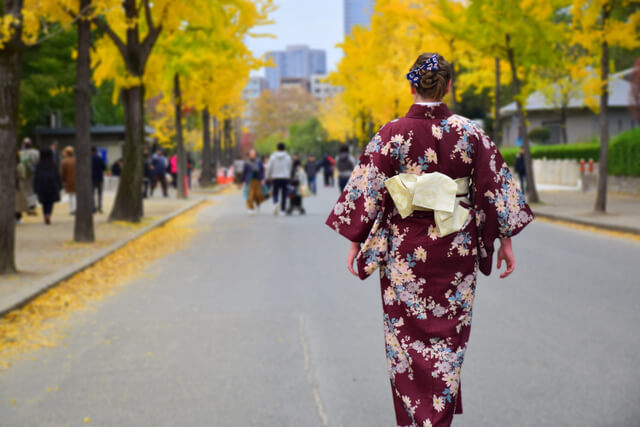
Japanese people don’t wear traditional kimonos on a daily basis, these are kept for special occasions such as tea ceremonies and weddings, or to dress up for a day of exploration.
It is very common to see both tourists and locals dressed with beautiful kimonos rented for the day or for a few hours, like we will do during our tour. Locals do it too, and I spotted many Japanese tourists wearing kimonos at the various temples and shrines, including the perfectly color coordinated couple above who let me take their picture.
Rental places will also offer hair styling to go with the kimono and will of course give you the wooden shoes called geta, and the tabi socks which separate the big toe from the rest. They will also dress you up. There are many layers under that beautiful embroidered outer layer that keep the entire outfit in place.
Renting and wearing a kimono is a great cultural experience and a way to take beautiful photos.
What to pack for a trip to Japan
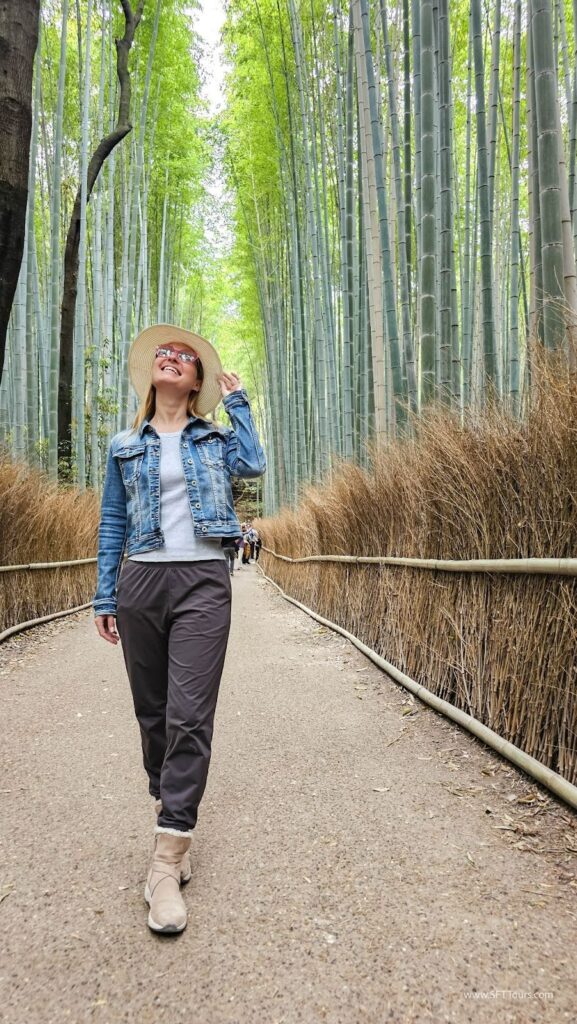
Limit the number of suitcases you bring, their size and weight
You want to travel to Japan as light as possible for four reason:
- Convenience
- Consideration
- Space limitations
- Ability to shop locally
Japan is a spread out but well connected country, and most travelers will explore more than one region or city, moving a lot throughout their trip.
Because private drivers are very expensive, you will be taking public transportation. This means trains, buses and the Shinkansen bullet train.
Lugging around your suitcase will be a hassle and many stations don’t always have elevators or escalators and if they do, they are hidden (trust me, I’ve been there), plus you really need to bear in mind Japan’s very considerate society when you do that. This means taking up as little space as possible in the train or when you walk in the streets and train stations. For this reason, a wheeled suitcase will be better than a backpack too.
Pro tip: Check your wheels are not damaged causing them to make more noise than should be expected, as a mark of consideration.
In Shinkansen trains, there is very little space for larger suitcases which needs to be reserved in advance and is limited to 160cm size, that is the addition of the 3 measurements of the suitcase (length + width + height). Overhead space is big enough for a small bag and can be pretty high making it hard for you to reach.
Moreover, space in hotel rooms is limited because everything in Japan is tight and space is pricey. Even though we have reserved upgraded accommodations at all hotels and chosen rooms that are not the entry level ones to allow more space, especially on rooms that will be shared by more than one guest, there will still be limited space to open a large suitcase.
The solution if you need to bring larger suitcases, lots of items or travel for a longer time? Using the coin operated laundry facilities at most hotels and / or forwarding your suitcases to your next destination.
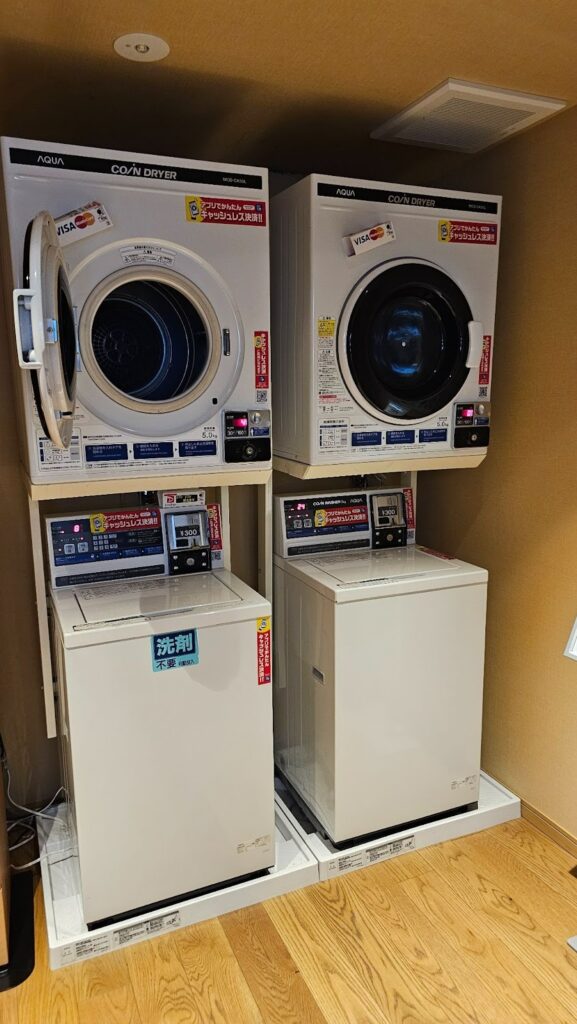
Most hotels have laundry facilities including driers, that guests can operate with coins (typically, detergent is preloaded). They are usually quite cheap, but can be busy with other guests at times. Some hotels will have a system for you to check when they are free embedded in your own hotel room TV, and if you are traveling with others, you can share the load in case you only need to wash a few items.
On our trip, we will be sending the larger suitcases from Tokyo to Nara and packing a smaller bag for the 3 days in the countryside. This means you will need 1 suitcase and a smaller bag for the 2 days / nights we will spend between Tokyo and Nara.
Pro tip: The luxury onsen resort we will stay at between Tokyo and Nara provides slippers, pyjamas and bathrobes for use in the property, so you don’t need to pack lounge wear or pyjamas for those two days.
Shipping luggage nationally is fairly common, and most travel agencies and tour companies do that, especially when the bullet train is involved because of the space limitation. Your hotel can also help arrange that, but booking in advance is a must so they have time to make arrangements for you.
Lastly, make sure that you leave space in your suitcase to shop. Japan is a quirky and unique country and there is just soooo much to shop.
From cosmetics, which are superior in quality to what you will find in the US or even Europe in quality, to cool clothing from local designers or beautiful silk kimonos, from manga or anime plushies and other items to food and drinks such as sake, whiskey, soy sauce, or flavoured kitkats, and from pottery by the artist we will meet, to decorative items such as pretty paper umbrellas and so much more.
You will regret not having enough space to shop if you come with full suitcases.
Consider a versatile capsule wardrobe
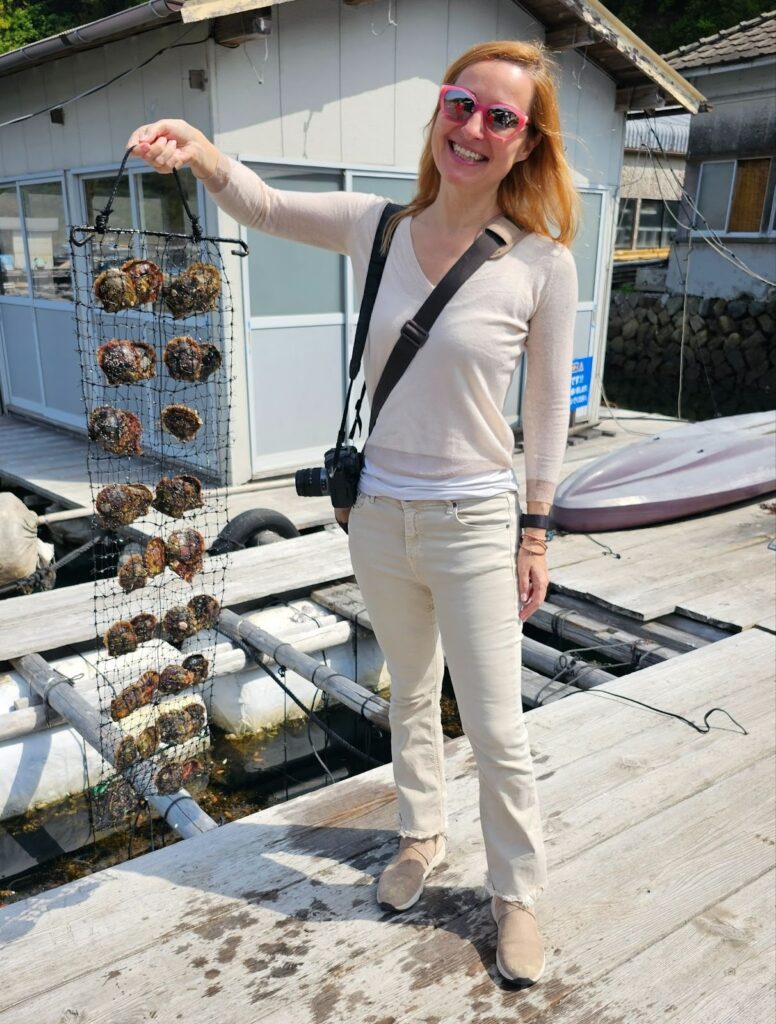
Because you are better off bringing just one piece of luggage that is in a manageable size and weight, capsule wardrobe guidelines will be useful.
Consider packing items that all go together, so that you can create many outfits with the same pieces. This will also means wearing more basic colors (white, grey, blac), which will be more in line with the average Japanese person.
Waterproof outer layer
A light raincoat in the spring and autumn seasons and a poncho or breathable rain jacket or umbrella are a must when you visit Japan as rain is common year round.
If you are visiting in the summer, consider a very light rain cover to avoid feeling even hotter, something like a disposable poncho or an umbrella will be better than a rain jacket that will make it harder for you to breathe underneath.
In the cooler months, a waterproof jacket will help you not get wet even when using an umbrella. Space is limited in Japan so using an extra large umbrella will be seen as disrespectful and will be harder to manage when it is crowded.
Trousers and jeans
Trousers may be the most convenient bottom to wear in Japan as they are easy to pair with any top and comfy.
If you are visiting in the warmer months, consider breathable materials such as cotton or linen, while in the cooler months a pair of well-kept jeans or other comfy trousers such as slacks or chinos will do. Quick dry materials are always a good idea since washing machines are efficient but driers are sometimes slower.
Since rain is common in the summer, and you are likely to get wet, shorts or capri trousers are a good idea so that you don’t get the bottom part wet and dirty from puddles or splash.
Dresses and skirts
Long skirts are great for spring and autumn and shorter ones are a good option for the summer. Remember that even though Japan is a pretty conservative country, short skirts do not seem to be an issue, yet you should avoid them when visiting temples and other religious spaces.
Dresses will also be a good option to pack light since they are a full outfit. Pair them with a sweater and opaque tights in the cooler months.
Sleeved tops
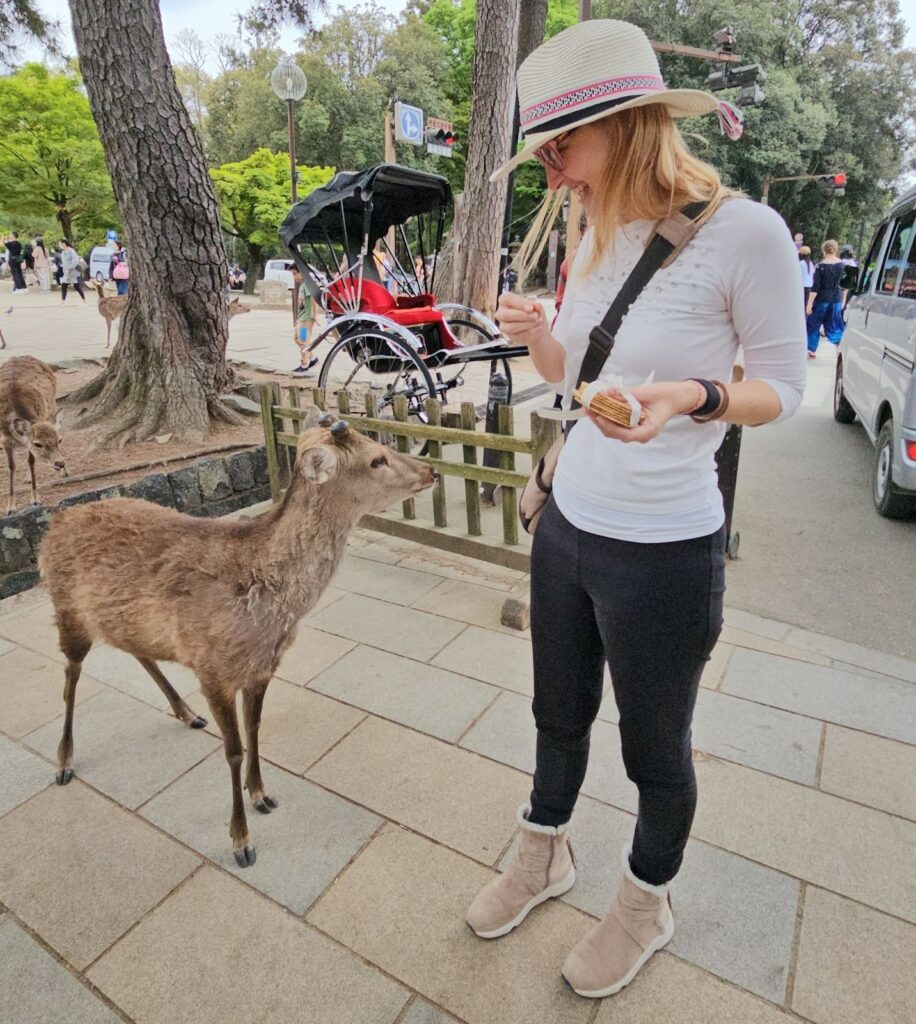
Even in the hotter months, you should cover shoulders, tummy and cleavage when entering a temple. It is not as much a rule to follow but a sign of respect.
If you are wearing more revealing clothes, you can cover with a shawl or a light cardigan.
Short and long sleeved t-shirts, blouses, and other nice tops that can be dressed up or down are a good base layer for summer. Spaghetti strap tops are not worn by local women.
Pro tip: Even in the peak heat of summer, indoor AC (including that in trains) will be cranked up to freezing temperatures so it’s important to bring a shawl or cardigan to put on.
For cooler months, sweaters will be necessary as even in early spring, temperatures can be quite low.
Pro tip: Avoid wearing tops that have very loose sleeves or parts that dangle as those could dip into food in the many shared meal experiences you will try in Japan.
Comfortable, easy to remove shoes
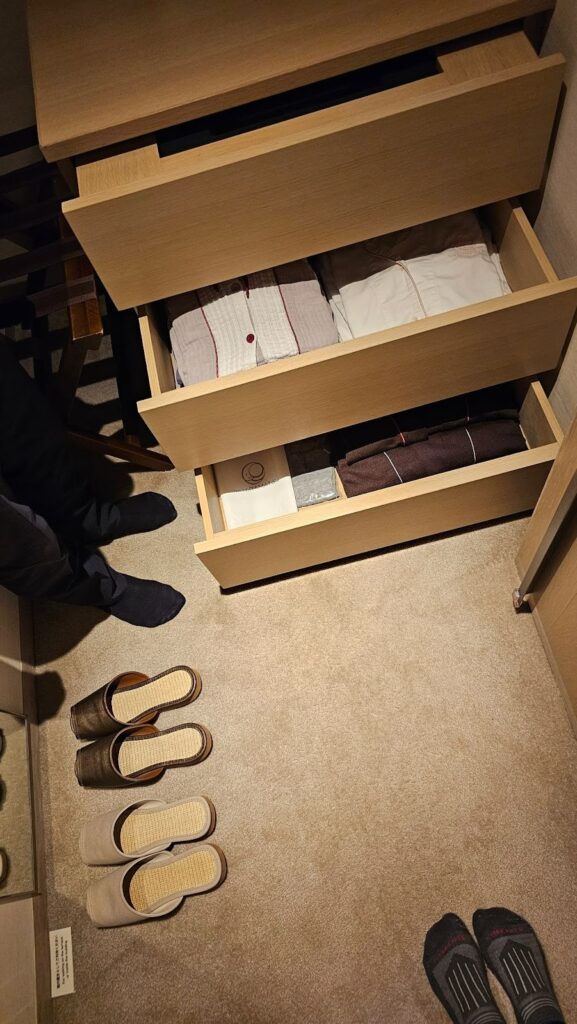
You will have to take your shoes on and off every time that you get into a house, temple, private space or even a restaurant, essentially anywhere where tatamis are used and anywhere indoors, so wearing shoes that are easy to slip in and out of will greatly help.
Having to lace up your shows all the time will slow you and the rest of the group down, not to mention that there is often limited space to sit down in to do this so you will be balancing on one foot.
Most trips to Japan involve a lot of walking so your footwear should be comfortable and able to take you from cobblestones to parks to trains.
If you are visiting in summer or spring when rain is most common, having waterproof shoes like these boots for cooler months or waterproof sneakers such as the ones from Allbirds that slip on or the ones from Cloud 5 will be a blessing.
Sandals are fine, but plastic shoes like flip flops are not worn by the Japanese, you are not at the beach.
Pro tip: Make sure your socks have no holes in them. Even if you wear sandals, it is a sign of respect and forethought to put on socks when you enter a space. Make sure you don’t bring old shoes that smell or are so worn out you would be embarrassed if attention was brought to them.
Other items you should pack for your Japan trip
| Ziplock bags: Bins are just not readily available in the streets of Japan so you should bring your own bags to store your rubbish and take it back to the hotel for disposal. Make sure it can zip up so as to avoid spillage inside your handbag such as this one. | |
| A toilet kit: Although public toilets are awesome and will also feature the modern Japanese toilet, soap and paper towels often lack. Bring your own hand sanitiser, or a small bottle of soap (e.g. hotel toiletry size) to wash your hands and a small cotton towel / handkerchief like this one to dry off. | |
| A coin purse: As we mentioned, cash is king in Japan still and you will be using a lot of coins for washing machines, for public toilets or to pay for smaller things. A coin purse will come in handy. One with a keychain you can tie to your bag handle like this one will be quicker to find. | |
| Universal plug adaptor: Plugs in Japan are type A and B, two-pronged flat ones like in the US. The best way to ensure you will be able to use any plug is by packing a universal adaptor. I like the ones which come with USB ports so that I can charge phones, cameras and everything else with just one adaptor. I love this one because it has USB ports for all the electronics I now carry. | |
| Power bank: A portable charger can be an essential on long days exploring.This Anker Portable Charger has a 20000mAh capacity, and fast-charging USB-C ports, you can power up your devices in a flash, while the LED display keeps you in the know about your battery level. It’s the perfect companion for a day out on safari when you will be using your phone a lot to take photos and videos and will use up that battery a lot. | |
| Sunglasses: With 6 hours of sunlight a day and plenty of grey skies year round, sunglasses are essential for protecting the eyes from harmful UV rays and glare. Try these ones out to protect your eyes in style. | |
| Water bottle: Single use plastic bottles are terrible for the environment so I recommend you bring your own reusable bottle as part of our efforts towards zero-waste and responsible travel. Tap water in Japan is safe to drink and this app will tell you about all the places where you can refill your bottle, including cafes, partner shops, etc. | |
| Repellent: If you are visiting in the summer months, repellent will be useful for mosquitoes in the countryside and even in the cities. I have been using the Repel brand for decades. | |
| Sun hat: A must to blend in and to protect from the sun, as we will spend a lot of time out and about. Bring a smaller one, not a large brimmed one, to avoid taking up too much space. | |
| Portable fan: You will fit right in and feel refreshed in the hotter summer months if you bring a portable fan or a neck fan. We have many guests use this particular one on our summer trips in Europe and I wish I had one every time. | |
| An umbrella: This is a must since Japan sees rain year round. If you forget it though, they are widely available and cheap at convenience stores like 711 that fold up really small and are also UV repellant so they protect you from the sun. It is common to see Japanese people covered under an umbrella on a sunny day so an umbrella will also double up as a parasol. This one weighs less than 500 grams and is wind-resistant. | |
| A rain jacket or poncho: Rain is possible year round but more so in the summer. Pack a light packable raincoat or a poncho and have it with you when out all day so you can stay dry. | |
| A phone lanyard: A phone lanyard is super useful to travel with, to Japan or anywhere. It will help you have free hands and your phone always handy for photos. I have this one. | |
| Sunscreen: No Japanese person will ever leave the house without proper sunscreen, a sun hat and / or an umbrella to protect from the sun. Applying sunscreen helps protect the skin from sunburn, premature aging, and reduces the risk of skin cancer, ensuring safe enjoyment of outdoor activities. I like and use the Japanese brand Biore SPF 50++++ for my face because you can wear it under makeup and it is non-sticky and silky smooth. You can find it at any convenience store or pharmacy. For the body, I highly recommend Aussie brand Sun Bum which is specifically designed for Australia’s super strong sun, is vegan, reef-safe and smells heavenly. They have a travel pack with sizes below 100ml that comes with a pretty pouch and includes sunscreen, lip balm (very important) and aftersun. | |
| Body lotion: The hotels you will stay at might provide their own but it might be best to bring your favorite brand. My sister gifted me a Body Shop Christmas Advent calendar that came with many of their products to try and this 96h hydration body butter is amazing. It comes in a flat recycled plastic tub with an aluminum lid that’s super easy for travel and anti-spill (I can testify to that since I’ve traveled a few countries with it). | |
| Lip balm: Lip balm is essential in colder weather to prevent dry and chapped lips. This Nivea one comes in a pack of 4 and has SPF, so your lips will never be dry again! | |
| Sleep mask: If you’re a light sleeper, and can’t handle any light coming in from the hotel halls, guarantee your sanity and a good night’s sleep by bringing your own mask like this one to block the light. | |
| Pajamas: On our tours, we pair you up with a fellow solo female traveler that we think you’ll get along with – so don’t forget to pack your pajamas even though many of the hotels we will stay at will provide yukata ones, they may not be your choice of size or style. Here’s a comfy choice from Amazon. | |
| Ear plugs: If you are a light sleeper, a pair of ear plugs can help you sleep better. Check these out on Amazon. | |
| Travel pillow: If you are flying to Japan overnight, you will need a proper neck pillow to sleep and arrive rested. Meg and I both use the Turtle neck. | |
| First aid kit and medication: Available medications, brands and products in Japan are not the same as back home, and many basic items may require a prescription, so it’s always best to bring everything you are used to and of course, all prescription medication or vitamins you take. You should also think about packing a basic first aid kit with items such as painkillers, plasters and antiseptic ointment, motion sickness tablets, antihistamines, electrolyte powder in case of diarrhea (or hangovers form all the whisky), plus any other tummy ache related tablets or medicines your doctor may suggest (antacid, diarrhea tablets, etc.). Don’t forget blister bandages in case you get blisters in your winter boots. See our First Aid Kit list here. If traveling in the spring, consider bringing anti allergy medication. Important: Make sure that any medication you take is allowed in Japan, many items including some that are readily available over the counter in the US or Europe are prohibited substances in Japan or may require an import certificate. More details here. | |
| A foldable toiletry bag: I always travel with a foldable toiletry bag which I can hang anywhere. They also help you keep everything easy to find and tidy. This one is very cute and functional! |
What not to pack for a trip to Japan
There are a few things that you should reconsider bringing along with you to Japan either because you won’t need them and they would take up valuable space, or because they are not recommended.
- Strong perfume: It is seen as disrespectful to wear strong scents in closed spaces that are shared with others such as public transportation.
- Hair dryers: All the hotels we stay at on our tour have them, reserve your suitcase the space for other more important things.
- Bathing suits: Unless you know for a fact that your hotel has a swimming pool or are going to Okinawa, a bathing suit will not be necessary. Onsen are naked affairs and you won’t be able to wear one and most hotels do not have swimming pools owing to space limitations in most Japanese cities.
- Anti-theft bags: We recommend them on most of our trips but Japan is an extremely safe destination where pick pocketing is not an issue so aren’t needed. While a day pack is a must, even a simple tote bag will do since the risk of theft is practically none existent. That said, if your anti-theft bag is your go-to travel bag, then by all means bring it, it will just not be as necessary as in other destinations.
- Clothing with slogans or large logos: These are not in tune with the harmony Japanese culture seeks.