
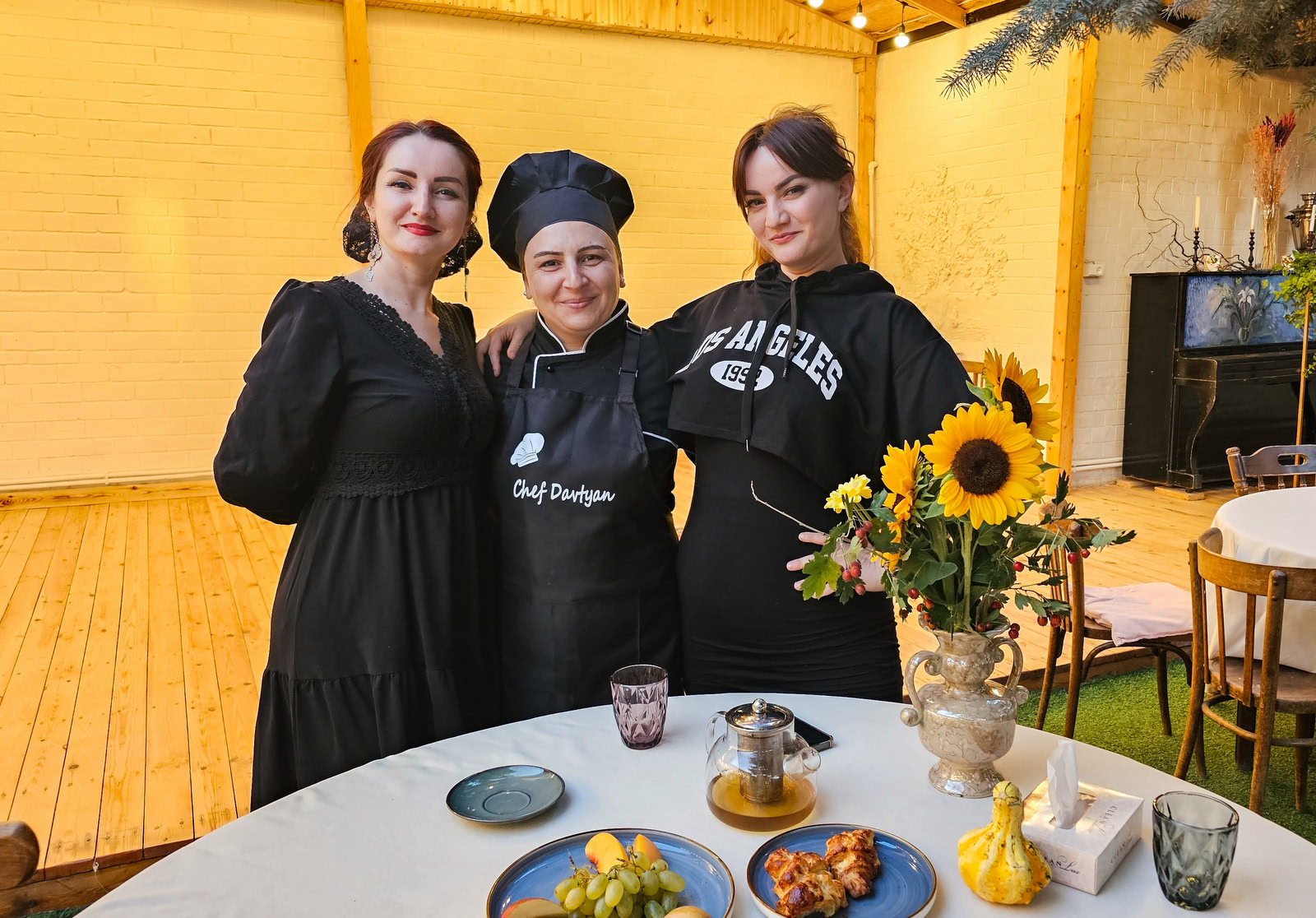
This article is written for solo female travelers visiting Armenia as part of our women-only tour or any woman traveling in the country independently.
You’ll find a brief history of the country, tips on the best time to visit, travel essentials and entry requirements, health and safety advice, local customs, useful Armenian words, and the foods and drinks you shouldn’t leave without trying.
I’ve also included a reading list, along with a few movies and documentaries to help you immerse yourself in Armenia’s fascinating history and culture before you arrive.
Looking for what to pack? You can find our Armenia packing list here.
Intro to the history of Armenia
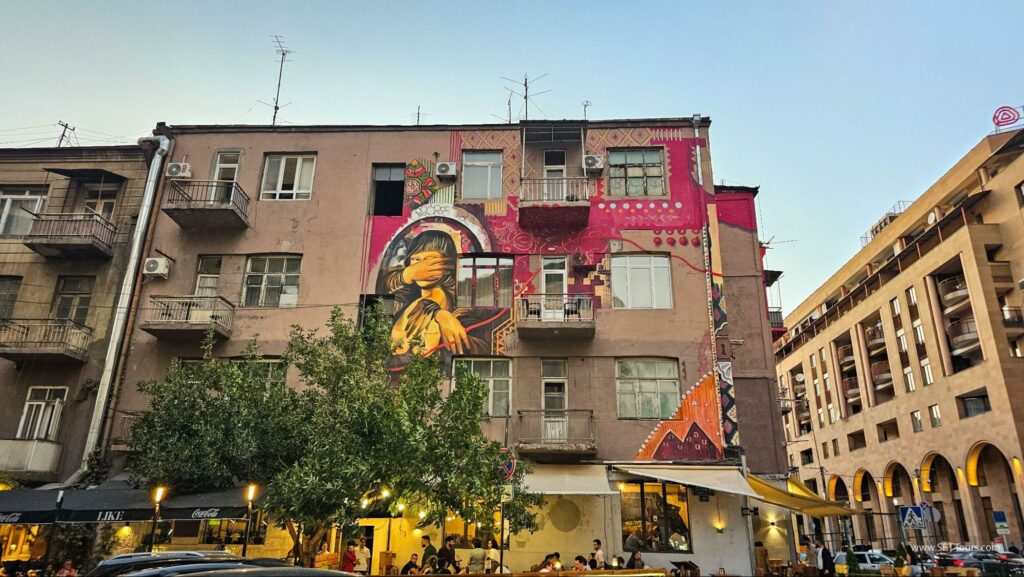
Armenia is a small landlocked country in the South Caucasus, bordered by Georgia to the north, Azerbaijan to the east, Iran to the south and Turkey to the west.
It’s small in size, but has one of the oldest histories of any country in the world, and you’ll find that almost every valley, monastery and mountain has a story to tell.
Archaeological discoveries show that people have lived there since prehistoric times, and the country was home to one of the ancient world’s most powerful and largest kingdoms, the Kingdom of Armenia.
During the first century BC under King Tigranes the Great, the kingdom extended from the Mediterranean Sea to the Caspian Sea, covering what are now Turkey, Syria, Lebanon, Israel, Iran, Azerbaijan and Georgia. Modern day Armenia occupies only a small fraction of that historic territory.
Armenia is known as the first nation to adopt Christianity as its state religion in 301 AD, more than a decade before the Roman Empire did the same.
This decision shaped the country’s culture, traditions and identity, and you’ll see its influence everywhere during our tour, from the dramatic monasteries perched on mountain cliffs to the intricate stone cross carvings known as khachkars, one of Armenia’s most distinctive cultural symbols.
Many of the monasteries we visit, including Geghard, Noravank, Tatev and Khor Virap, are not simply beautiful places to photograph, but they were once important centres of education, manuscript production, science and religion, helping preserve the Armenian language, literature and culture through centuries of foreign rule.
Crossroads of Europe and Asia
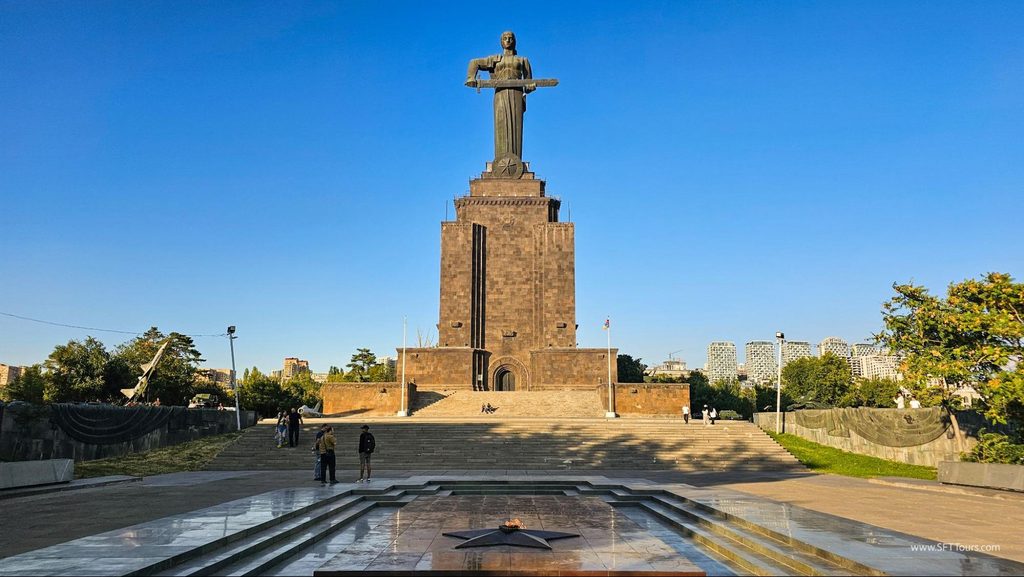
Armenia’s position at the crossroads of Europe and Asia has brought both prosperity and hardship through the centuries.
It formed part of the ancient Silk Road, with merchants carrying silk, spices, precious metals and ideas between East and West through its valleys.
At the same time, this strategic location has meant Armenia has been repeatedly invaded by powerful empires, including the Persians, Romans, Byzantines, Arabs, Mongols, Ottomans and finally, the Russians, each leaving traces that can still be seen today.
By the nineteenth century, the historic Armenian homeland was divided, with Eastern Armenia (today’s Armenia) under Russian rule following a series of wars, while Western Armenia (now Eastern Turkey) remained part of the Ottoman Empire.
Many places that are significant in Armenian history are now located in Türkiye, and one thing you’ll notice throughout your trip is the constant presence of Mount Ararat.
Even though the mountain now lies just across the border in modern-day Turkey, it remains Armenia’s national symbol and is deeply woven into the country’s identity, appearing everywhere from the national coat of arms to wine labels and works of art. On a clear day in Yerevan, its snow-capped peaks dominate the skyline, and you’ll soon understand why Armenians speak about it with such affection.
In 1915, an estimated 1.5 million Armenians lost their lives during the Armenian Genocide under the Ottoman Empire, while countless others were displaced across the world. Today, an estimated 5 to 8 million people of Armenian descent live outside the Republic of Armenia, creating one of the world’s largest and most connected diasporas.
During your time in Yerevan, you’ll have the opportunity to visit the Tsitsernakaberd Memorial Complex, a moving place of remembrance that offers important insight into this defining chapter of the nation’s history.
Following the collapse of the Russian Empire, Armenia briefly became an independent republic in 1918 before becoming part of the Soviet Union in 1922.
The Soviet era brought industrialisation, infrastructure and education, while also limiting national independence. Armenia regained its independence in 1991 following the dissolution of the Soviet Union and has continued to strengthen its identity as a modern, independent nation.
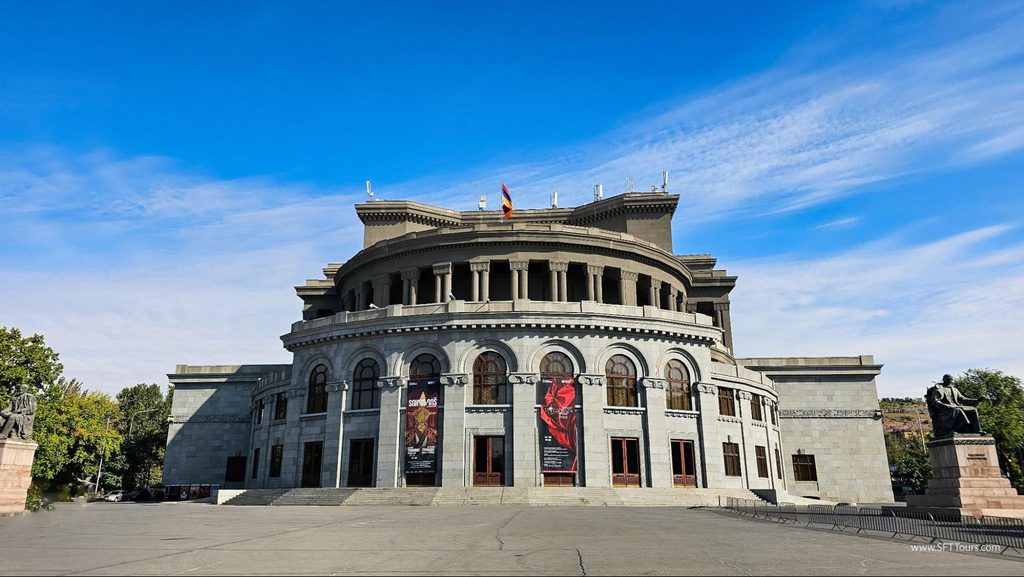
Today, Armenia is a vibrant, welcoming country where ancient traditions and modern life exist side by side. You’ll find centuries-old monasteries overlooking contemporary cafés, family-run wineries producing exceptional wines from indigenous grape varieties, and artisans continuing crafts that have been passed down through generations.
Perhaps what people remember most though is the warmth of the Armenian people. Despite centuries of upheaval, their resilience, generosity and deep sense of hospitality remain among the country’s defining characteristics.
Quick facts about Armenia
Armenia may be one of the smallest countries you’ll visit, but it is extraordinarily fascinating. Here are some facts that make Armenia unlike anywhere else in the world.
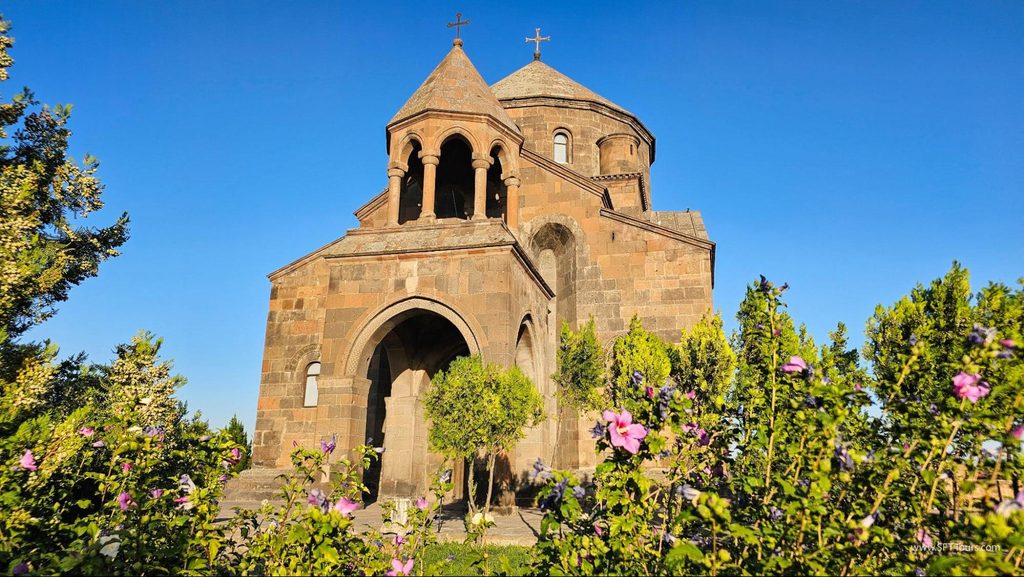
- The first Christian nation: As mentioned, Armenia was the first country in the world to adopt Christianity as its official state religion in 301 AD, more than a decade before the Roman Empire.
This isn’t just an interesting historical fact – it’s something you’ll experience. Ancient monasteries perched on mountain cliffs, crosses appear everywhere from village squares to family homes, and many of Armenia’s most spectacular landmarks were built as places of worship.
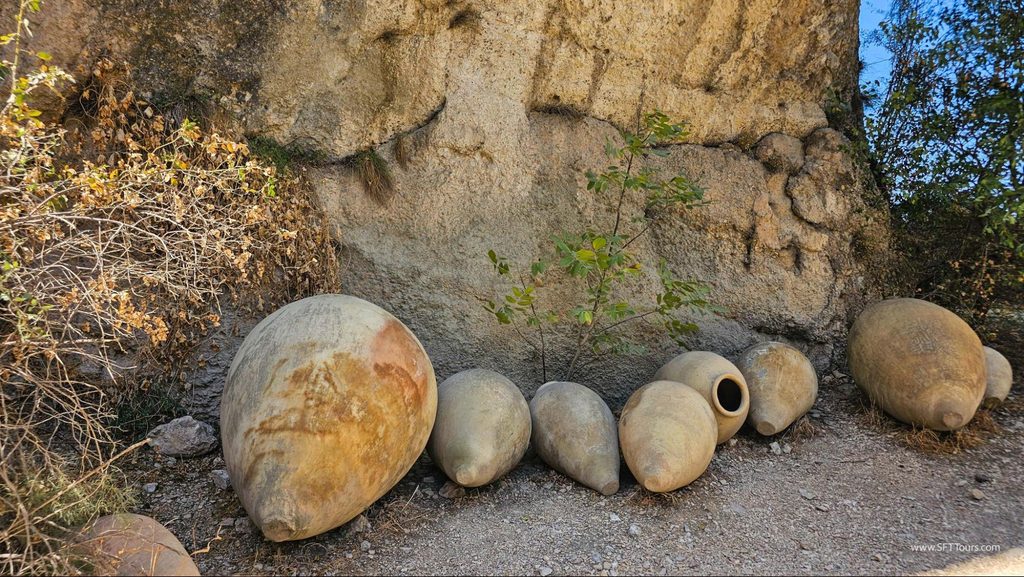
- One of the world’s oldest wineries: Wine has been part of Armenian culture for more than 6,000 years. In 2007, archaeologists discovered what is widely considered to be the world’s oldest known winery inside the Areni-1 Cave Complex, complete with a wine press, fermentation vessels, storage jars and drinking cups.
It’s fitting that we visit the Areni wine region during our tour because winemaking remains an important part of Armenian culture today, after the hiatus during Soviet Union times. Many wineries have retaken wine production using indigenous grape varieties that were cultivated for generations.
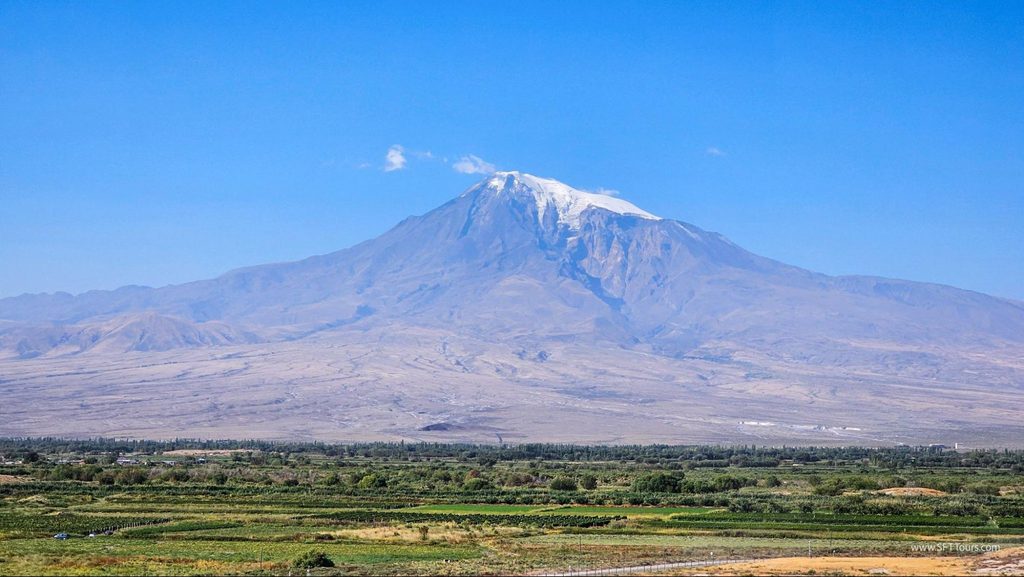
- Mount Ararat is Armenia’s national symbol… but it’s in Turkey: Mount Ararat appears on Armenia’s coat of arms, postcards, artwork, wine labels and souvenirs, yet the mountain actually sits just across the border in modern-day Turkey because of historical wars.
For Armenians, Mount Ararat is far more than a mountain. According to tradition, it is where Noah’s Ark came to rest after the biblical flood, and it remains one of the country’s most powerful symbols of identity and heritage. On a clear day, you’ll have spectacular views of it from Yerevan and Khor Virap Monastery. Look out for it from the rooftop of our hotel in Yerevan.
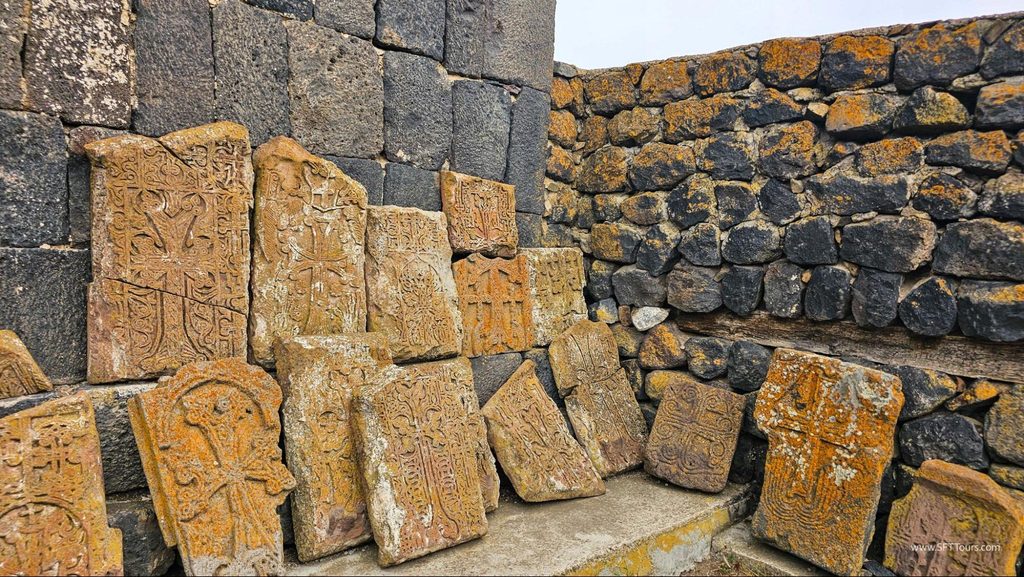
- You’ll see beautifully carved stone crosses everywhere: As you travel through Armenia, you’ll begin noticing elaborately carved stone monuments known as khachkars. These intricately carved cross-stones are unique to Armenian culture and have been recognised by UNESCO as Intangible Cultural Heritage.
No two are exactly alike. Many commemorate important historical events, honour loved ones or mark significant religious sites, and you’ll encounter them throughout monasteries, churches and villages during the tour.
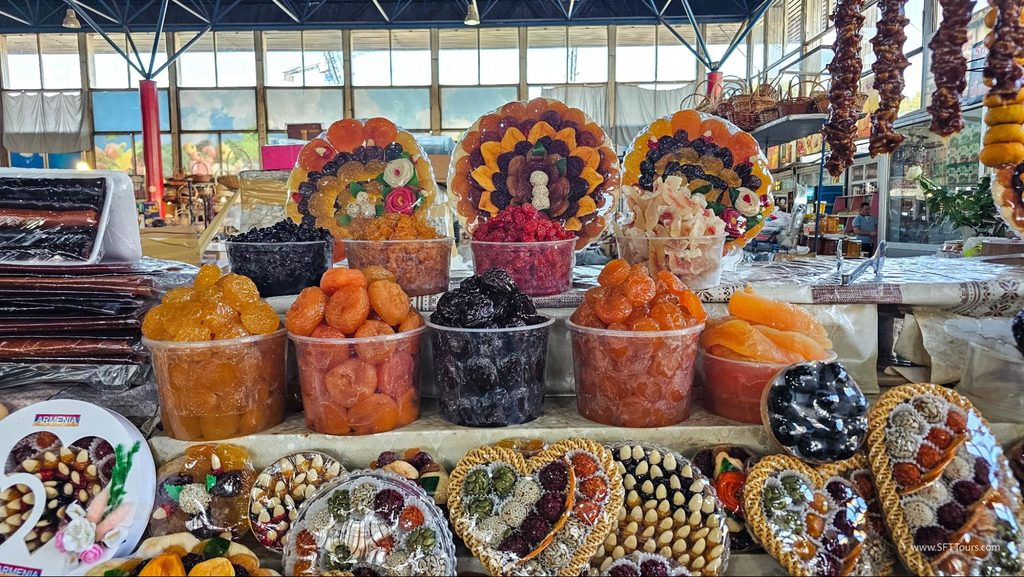
- Apricots are a national treasure: Armenians are really proud of their apricots, and with good reason. Many historians believe the fruit originated in this region, and their color is the official yellow / orange of the Armenian flag. If you’re visiting in September like we do, keep an eye out for roadside stalls selling fresh seasonal fruit, homemade preserves and dried fruit. They make excellent snacks during our scenic drives through the countryside.
- Chess is taught in schools: Here’s a fact that surprises almost everyone. Armenia is one of the few countries in the world where chess is a compulsory subject in primary school. The game is viewed as an important way to develop critical thinking, concentration and problem-solving skills, and Armenia has produced an impressive number of world-class chess players for a country of just three million people.
- Armenia has its own alphabet: Look at Armenian writing and it will be unlike anything you’ve seen before. The Armenian alphabet was created in 405 AD by the scholar Mesrop Mashtots and consists of 39 letters.
Before its creation, Armenians used several different writing systems, making it difficult to preserve their language and religious texts. The invention of the alphabet transformed Armenian culture, and allowed the Bible to be translated into Armenian, helping preserve the country’s literature and identity. It remains a huge source of national pride and you’ll see it everywhere during your trip, from street signs and café menus to beautifully carved monastery walls.
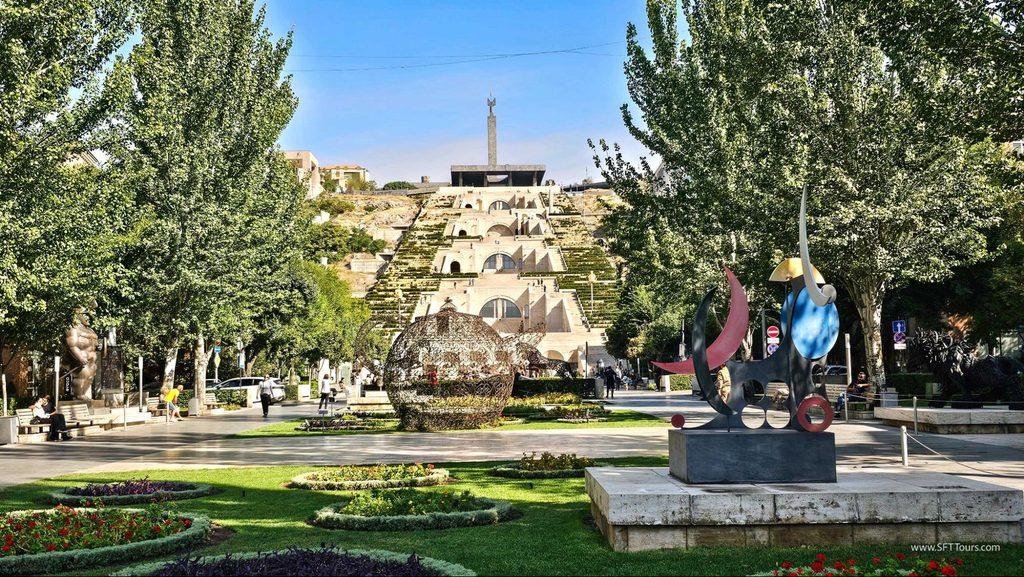
- Yerevan is older than Rome: Yerevan traces its origins back to 782 BC, when King Argishti I founded the fortress of Erebuni. That makes Armenia’s capital 29 years older than Rome.
Armenia travel tips
In this section, we will discuss various travel tips that will come in handy during a visit to Armenia.
When to visit
The best time to visit Armenia really depends on the kind of trip you’re hoping to have. Spring brings wildflowers and lush green landscapes, summer is warm and perfect for exploring the mountains, autumn is harvest season with beautiful colours and incredible food, while winter transforms the country’s ski resorts into a snowy playground.
We run our women-only Armenia tour in September, and I honestly think it’s one of the best months of the year to experience the country.
The intense summer heat is over, vineyards are heavy with grapes ready for harvest, roadside fruit stalls overflow with peaches, figs, grapes and pomegranates, and the mountain landscapes are comfortable for sightseeing.
Days are generally warm and sunny, while the cooler evenings make dining outdoors in Yerevan and Goris particularly enjoyable.
One thing to remember when planning a trip to Armenia is that altitude has a much bigger influence on the weather than people expect. You might leave Yerevan wearing a T-shirt and arrive at Lake Sevan wishing you had a jacket. The distances between destinations are relatively short, but because Armenia is so mountainous, temperatures can vary noticeably throughout the day.
Don’t forget to read our packing list here.
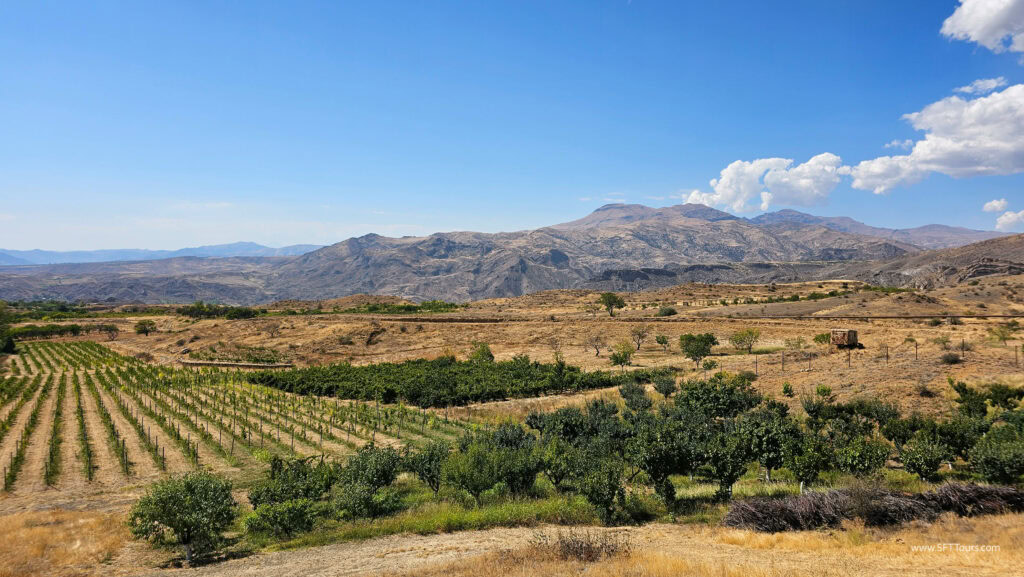
Spring in Armenia is from March through May and is one of the country’s most beautiful seasons.
Snow begins melting in the mountains, valleys become bright green, orchards burst into blossom and wildflowers cover the countryside. Temperatures are comfortable for sightseeing, particularly in Yerevan, and it’s an excellent time to visit if you enjoy exploring historic sites without the summer crowds.
Higher elevations such as Lake Sevan and alpine Dilijan can still be quite cool during early spring, so layers are essential if you’re travelling at this time of year.
Summer lasts from June through August and is warm throughout much of the country, particularly in Yerevan and the Ararat Valley, where daytime temperatures regularly exceed 30°C (86°F).
It’s a fantastic season for long evenings in the capital’s outdoor cafés and wine bars, while higher-altitude destinations such as Dilijan and Lake Sevan provide a welcome escape from the heat.
Summer is also festival season, and you’ll find open-air concerts, cultural events and lively restaurant terraces throughout the country. Vineyards and orchards are full of activity, and fresh local produce is at its peak.
Autumn is from September through November, and is my favourite time to visit Armenia.
September still feels wonderfully summery during the day, but the cooler mornings and evenings make sightseeing much more comfortable than in the middle of summer. It’s also harvest season, so you’ll see vineyards busy picking grapes and roadside stalls filled with seasonal fruit, homemade preserves, local honey and freshly harvested walnuts.
The changing colours across the mountains and forests become even more spectacular later in autumn, particularly around Dilijan, while crisp mountain air makes monastery visits even more enjoyable.
If you’re joining us on our September tour, I think you’ll experience Armenia at one of its very best.
Winter runs from December through February and brings snow to much of the country, particularly at higher elevations. While Yerevan remains lively throughout winter, destinations such as Tsaghkadzor become popular ski resorts for both locals and international visitors.
Snow-covered monasteries and mountain villages create a completely different atmosphere from the rest of the year, and winter is an excellent time to experience Armenia if you enjoy snow sports or festive celebrations.
Road conditions in mountainous areas can occasionally be affected by snow during the winter months, so travel is generally slower than during the rest of the year.
Public holidays and festivals in Armenia
Armenia celebrates a mix of national holidays, religious festivals and cultural events throughout the year. While many museums, restaurants and tourist attractions remain open during public holidays, you may find that government offices, banks and some smaller businesses close or operate with reduced hours.
Many of Armenia’s religious holidays follow the calendar of the Armenian Apostolic Church, one of the world’s oldest Christian churches, so some observances fall on different dates from those celebrated in Western countries.
Here are some of the most significant public holidays and festivals.
New Year’s Day – January 1: New Year is one of Armenia’s biggest celebrations. Families gather for large meals, exchange gifts and visit relatives over several days, and Yerevan’s Republic Square is beautifully decorated with lights and festive displays.
Armenian Christmas – January 6: Unlike many countries that celebrate Christmas on December 25, the Armenian Apostolic Church celebrates Christmas and Epiphany together on January 6.
Churches hold special services, families gather for traditional meals and many Armenians spend the day with loved ones.
Army Day – January 28 Army Day honours the establishment of the Armenian Armed Forces in 1992 and is marked with official ceremonies and commemorative events across the country.
Women’s Day – March 8 International Women’s Day is widely celebrated throughout Armenia. Flowers are traditionally given to mothers, wives, daughters, colleagues and friends, and many restaurants offer special events or promotions to mark the occasion. We’re not just including this in the list because we are feminists – in Armenia this is an actual official public holiday to honor women.
Armenian Genocide Remembrance Day – April 24 This is one of the most important days on the Armenian calendar. Each year, hundreds of thousands of people walk to the Tsitsernakaberd Memorial Complex in Yerevan to lay flowers in memory of the victims of the Armenian Genocide of 1915. Visitors are welcome to respectfully visit the memorial, but it’s important to recognise that this is a solemn day of remembrance rather than a tourist event.
Victory and Peace Day – May 9 May 9 commemorates the end of the Second World War while also recognising important moments in Armenia’s more recent history. Memorial ceremonies take place throughout the country, particularly at military memorials.
Republic Day – May 28 Republic Day celebrates the establishment of the First Republic of Armenia in 1918. You’ll often find concerts, cultural performances and public celebrations taking place in Yerevan and other cities.
Constitution Day – July 5 This national holiday marks the adoption of Armenia’s Constitution in 1995 and is observed with official ceremonies and public events.
Independence Day – September 21 Independence Day celebrates Armenia’s independence from the Soviet Union following the 1991 referendum. If you’re visiting around this time, you’ll often find concerts, fireworks, cultural performances and celebrations taking place, particularly in Yerevan.
Vardavar – One of Armenia’s most joyful traditions isn’t tied to a fixed date on the Gregorian calendar. Vardavar is celebrated 14 weeks after Easter and is famous for one very good reason: everyone throws water at everyone else!
Children fill buckets, adults arm themselves with water pistols and complete strangers happily splash one another in the streets. The tradition has ancient pre-Christian origins and was later incorporated into the Armenian Apostolic Church calendar. If you happen to be visiting during Vardavar, don’t be surprised if you get soaked – it is all part of the fun, and locals generally see it as good luck rather than bad manners.
Passport and visa requirements
Armenia is not part of the European Union or the Schengen Area, so entry requirements are separate from those for the rest of Europe.
Citizens of many countries, including Australia, New Zealand, the United Kingdom, the United States, Canada and all European Union member states, can visit Armenia visa-free for up to 180 days per calendar year for tourism.
If your nationality does require a visa, Armenia has an official eVisa system here that allows eligible travellers to apply online before departure. The application process is generally straightforward, and once approved, your eVisa is sent electronically by email.
Because visa policies can change, I always recommend checking the latest requirements on the official Armenian government visa website before you book your flights, particularly if you’re travelling on a passport that isn’t one of the commonly visa-exempt nationalities.
Passport validity Armenian authorities require your passport to be valid for at least six months from your intended date of arrival.
Border crossings: Most international visitors arrive through Zvartnots International Airport in Yerevan, but it’s also very common to combine Armenia with neighbouring Georgia, just as we do on our women-only tour.
The land border between Georgia and Armenia is open to international travellers, and crossing is generally a straightforward process. Depending on the route, you’ll usually spend a short time completing exit formalities from one country before entering the other.
If you’re travelling independently, allow a little extra time for border procedures, particularly during busy holiday periods.
It’s important to remember that the border between Azerbaijan and Armenia is roughly 1,000 kilometers long, spanning a main eastern frontier and a western section around the Nakhchivan exclave, but remains closed for over three decades due to conflict. The border has undergone active demarcation, demining, and normalization following a peace framework agreement.
Keep digital copies of your documents: Before every international trip, I always save digital copies of my passport, travel insurance policy, flight confirmations and any visas in secure cloud storage, as well as on my phone.
Hopefully you’ll never need them, but if your passport is lost or stolen, having quick access to copies makes replacing documents and dealing with your embassy much easier.
I also recommend carrying a printed copy of your travel insurance details and emergency contact information, just in case your phone battery decides to run out at exactly the wrong moment.
Health and safety
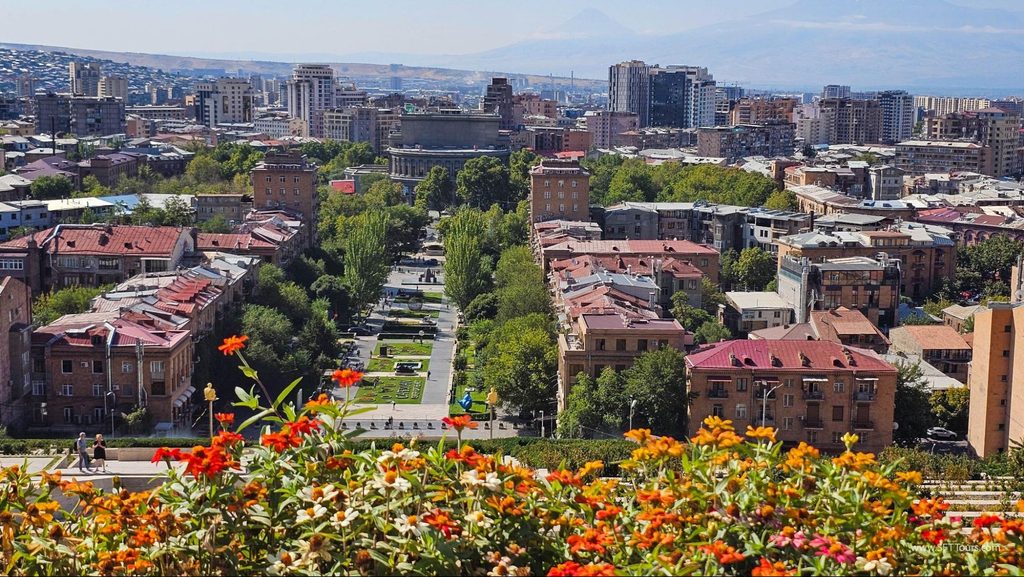
Armenia is generally an easy country to travel through, with good tourism infrastructure, modern healthcare facilities in Yerevan and pharmacies that are easy to find in larger towns and cities. During our tour, we’ll never be too far from medical assistance should it be needed, but, as with any international trip, it’s always better to be prepared before you leave home.
Bring all the medication you’ll need
One of my biggest travel tips, no matter where I’m going, is to pack all of your prescription medication in your hand luggage and bring enough to last your entire trip, plus a few extra days in case of unexpected delays.
While pharmacies are common throughout Armenia, the brands you’re familiar with at home may not be available, and some medications require a local prescription.
If you take prescription medication, keep it in its original pharmacy packaging and carry a copy of your prescription or a letter from your doctor, particularly if your medication contains controlled substances.
It is your responsibility to check that any medication you bring into Armenia is legal. Some medicines that are available over the counter in your home country may have different regulations elsewhere, so it’s worth checking before you travel.
Travel insurance isn’t optional
We never travel internationally without comprehensive travel insurance, and it’s a mandatory requirement on all Solo Female Travelers Tours.
Even though Armenia is generally a very safe destination, unexpected things can happen anywhere. Illness, flight disruptions, lost luggage or a simple accident can quickly become expensive without adequate cover.
Make sure your policy includes medical treatment, emergency medical evacuation, trip cancellation and cover for any activities you plan to participate in before or after the tour.
Taking five minutes to read your policy before you travel can save a lot of stress later.
The best travel insurance will differ for each traveler, depending on the nature, style, and length of your trip, so we recommend using an aggregator and comparison tool such as Travel Insurance Masters to find the right one for you depending on what coverage you want, age, location, trip, etc.
In case of emergency
The national emergency number in Armenia is 112, which connects you to emergency services including police, ambulance and fire. If you’re travelling with us, your tour leader will coordinate any assistance you may need and will always be your first point of contact should an issue arise.
If you’re travelling independently, it’s worth saving the contact details of your country’s embassy or consulate in Armenia before you depart, along with your travel insurer’s emergency assistance number.
Tap water
One thing I’ve seen people underestimate is how dehydrating Armenia can be. We’ll spend time outdoors, several destinations on our itinerary sit at higher elevations, and September often brings warm, sunny days. Even if the temperature feels comfortable, you’ll likely be walking more than you do at home.
Carry a reusable water bottle with you each day and drink regularly.
You’ll also notice traditional public drinking fountains, known as pulpulaks, throughout Yerevan and many towns. Fed by mountain spring water, they provide free, fresh, and clean mountain spring water to anyone passing.
If you have a sensitive stomach or simply prefer to be cautious when travelling, bottled water is inexpensive and widely available, or you can travel with a water filter bottle that has an inbuilt filter for you.
Food safety
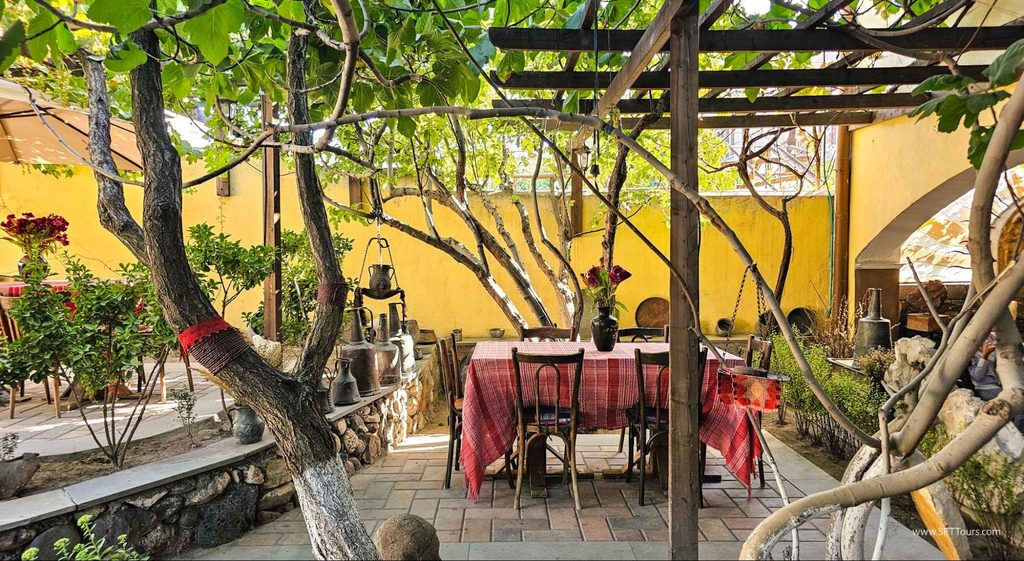
Armenian food is one of the highlights of visiting the country.
Restaurants generally maintain good hygiene standards, and because so much of the cuisine relies on fresh seasonal produce, you’ll enjoy some incredible meals throughout the trip. But as with travelling anywhere in the world, use common sense.
Choose busy restaurants, eat food that is freshly prepared and served hot, and wash or sanitise your hands before eating if you’ve been sightseeing all day.
One of my favourite parts of travelling through Armenia is stopping at roadside fruit stalls. September is harvest season, so you’ll see tables piled high with grapes, peaches, figs, apples and pomegranates. Fresh fruit makes a fantastic snack during our scenic drives.
The sun is stronger than you think
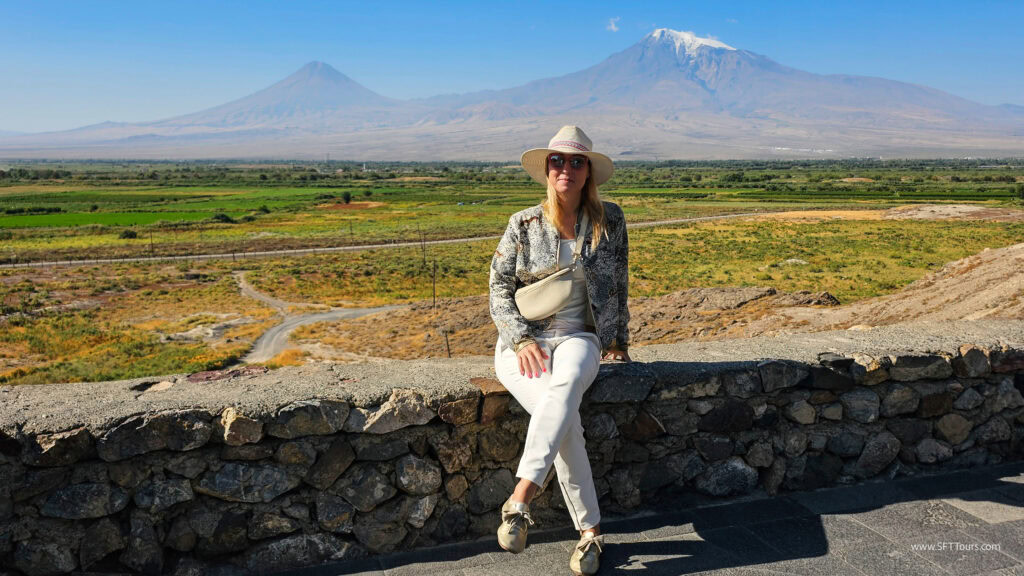
Because so much of Armenia sits at higher elevations, it’s surprisingly easy to underestimate the strength of the sun. Even if the air feels cool, UV exposure can still be significant, particularly at places like Lake Sevan, Tatev and Khor Virap where we’ll spend plenty of time outdoors.
Wear sunscreen every day, bring sunglasses and a hat, and don’t forget to reapply sunscreen throughout the day, particularly if you’re sightseeing for several hours.
Meg has managed to collect a sunburn in almost every country she has visited – please don’t do the same!
Mountain roads
One thing to keep in mind is that some of Armenia’s most spectacular scenery comes with plenty of twists and turns. As we travel through the country, particularly on our way to Noravank, Tatev and Goris, we’ll drive along winding mountain roads with plenty of curves and changing elevations. The views are incredible, but if you’re someone who is prone to motion sickness, it’s worth planning ahead.
Rather than waiting until you start to feel unwell, I recommend taking your preferred motion sickness medication before we set off, sitting towards the front of the vehicle if possible and keeping a bottle of water with you.
Most guests don’t have any issues, but it’s much easier to prevent motion sickness than to try to manage it halfway through a mountain pass.
Street dogs
One thing that surprises many first-time visitors is the number of free-roaming dogs you’ll see, particularly outside Yerevan and in smaller towns and villages. Even though they’re street / strays, most of these are community dogs that are cared for by local residents.
Many have coloured ear tags, indicating they have been vaccinated, sterilised and are monitored through local animal welfare programs. They’re generally very relaxed around people and are far more interested in finding a sunny place to sleep than approaching visitors.
It’s one of those little things that quickly becomes part of the Armenian landscape, but as anywhere in the world, avoid patting unfamiliar animals and simply give them plenty of space, particularly if they’re eating, sleeping or with puppies.
Safety in Armenia for solo female travelers
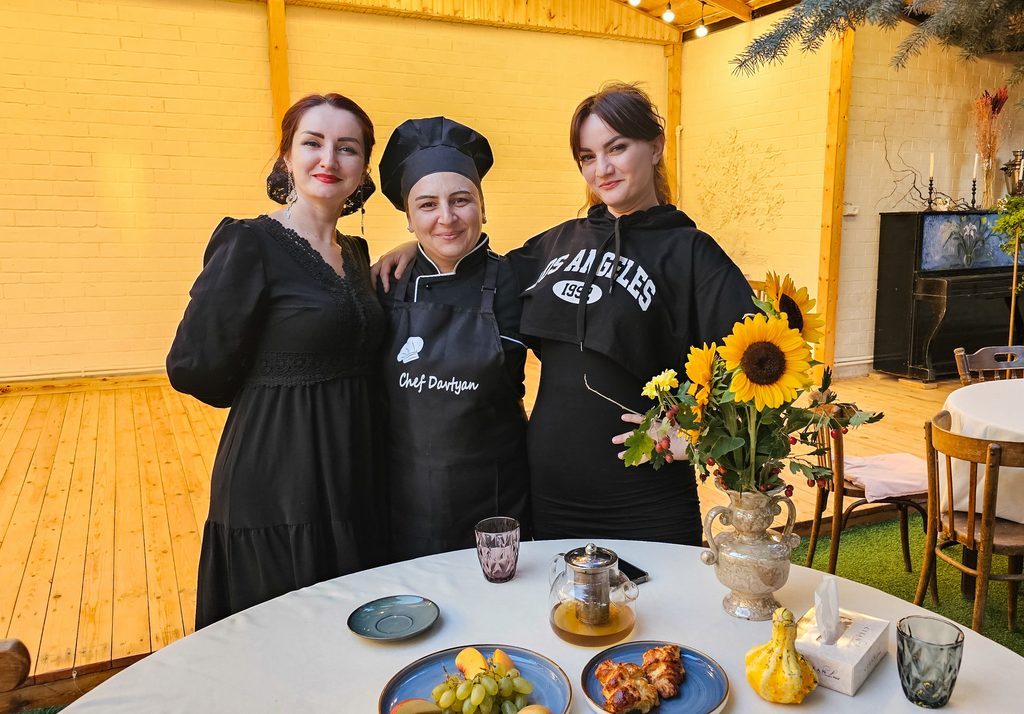
When we conducted our first Solo Female Travel Survey, one of the most relevant take-aways was that women who travel solo unanimously worry about their personal safety.
The best countries for first time solo female travelers all have safety in common. That’s why we created the first and most complete resource for women who travel solo to find safety information by country or destination.
With safety data coming from the US and UK Travel Advisories and the Global Peace Index, the index considers factors like the risk of theft, scam and harassment, as well as analyzing attitudes towards women in each country to rank each country from 1-4, 1 being the safest and 4 being the most dangerous for solo female travelers.
The good news is that Armenia is generally considered one of the safest countries in the Caucasus for travellers, including women travelling independently.
Violent crime against visitors is uncommon, locals are known for their warmth and hospitality, and many women in our community have described Armenia as a destination where they felt genuinely welcomed.
That doesn’t mean you should leave your common sense at home, but Armenia is one of those countries where you’ll quickly find yourself relaxing.
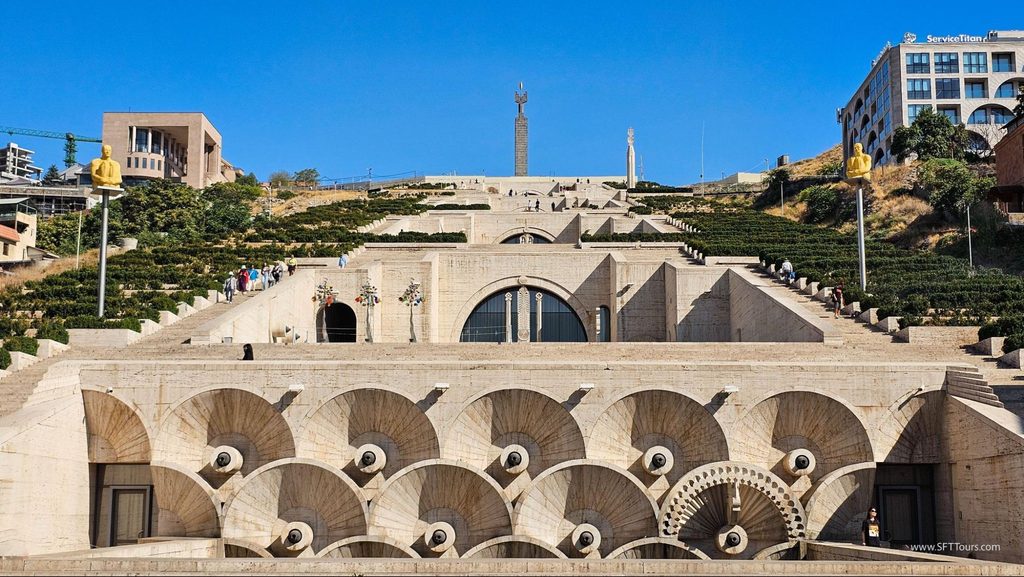
Walking around Yerevan: Yerevan has a relaxed, café culture that encourages people to spend time outdoors well into the evening. Republic Square, Cascade, Northern Avenue and many of the city’s parks and pedestrian streets remain lively after dark, particularly during the warmer months, with families, couples and friends enjoying the cooler evening temperatures.
It’s one of the things I love most about the city – it feels lived in. But as with any capital city, it’s sensible to remain aware of your surroundings, particularly late at night, avoid poorly lit areas if you’re alone and keep an eye on your belongings in busy public spaces, but most visitors find Yerevan to be an easy and comfortable city to explore.
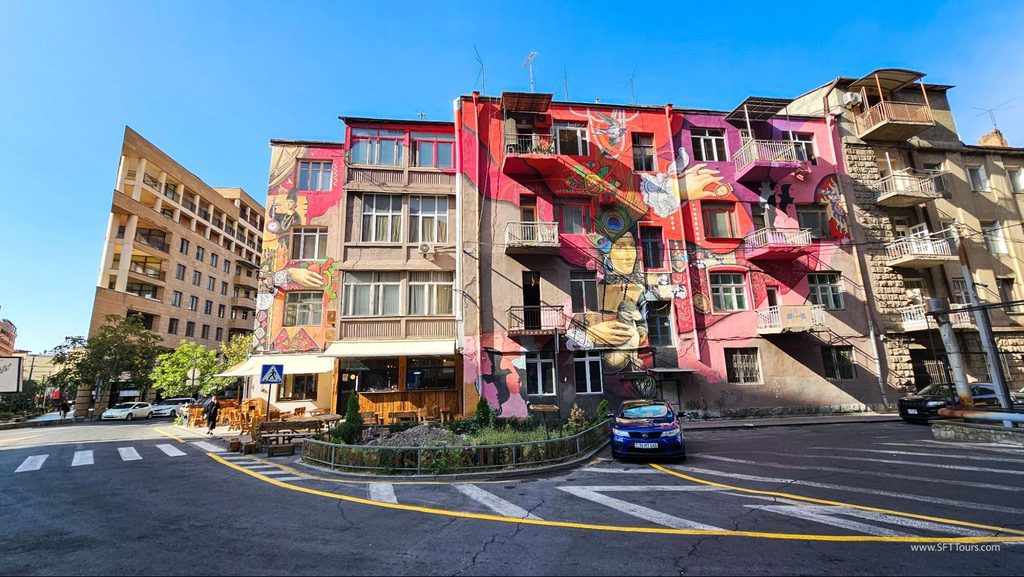
Petty crime: The most common issue travellers are likely to encounter is petty theft, such as pickpocketing in crowded areas, busy markets or on public transport. Fortunately, it’s not something that most visitors experience, but it’s still worth taking the same precautions you would anywhere else.
Carry a handbag or backpack that closes securely, avoid leaving your phone or wallet unattended on café tables and keep valuables out of sight when possible. Personally, I always travel with a cross-body bag that zips closed. It’s comfortable, practical and one less thing to think about while sightseeing.
Here are a few anti-theft bag models that we specifically recommend because our team or many of our guests have used on our European tours:
- Our photographer uses this backpack from Pacsafe for all her photographer equipment and highly recommends it.
- Meg has this larger cross body bag that even fits her laptop and can also expand (think shopping).
- Many of our guests have this one from Travelon that comes with a compartment for the water bottle. This has to be the most commonly used by our guests.
- Another classic coss-body bag from Travelon that is smaller so many of our guests love it because it is lighter.
- A waist bag option from Travelon that you can wear on your waist or across your chest like I always use mine. This makes it much more convenient to reach out for things and much closer to your body, so harder to steal from.
Border areas: As previously mentioned, parts of the country’s borders, particularly sections near Azerbaijan, are subject to travel advisories due to ongoing regional tensions.
While this may sound concerning if you’re reading about Armenia for the first time, it’s important to understand that these advisory areas are well away from the destinations visited on our women-only tour.
If you’re planning to arrive early or extend your stay independently, it’s always worth checking your own Government’s latest travel advisory before finalising any additional travel, particularly if you’re considering exploring remote border regions.
For most visitors following the well-established tourism route through Yerevan, Dilijan, Lake Sevan, Garni, Geghard, Khor Virap, Noravank, Areni, Tatev and Goris, this isn’t something you’ll notice during your trip.
Travel essentials for Armenia
In this section we will look at a range of other things to consider when traveling to Armenia as a solo female traveler.
Armenia plugs
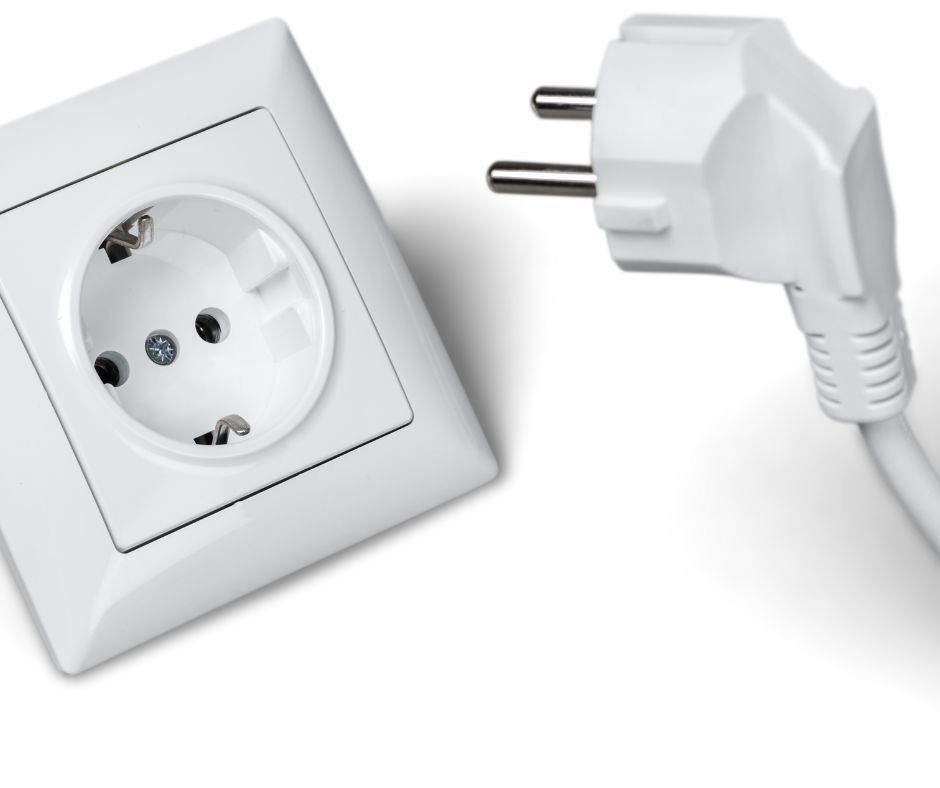
Armenia uses the same Type C and Type F electrical outlets found throughout much of continental Europe. These are the familiar two-round-pin plugs used in countries such as France, Germany, Spain, Greece and Italy.
The standard voltage is 230V with a frequency of 50Hz, so if you’re travelling from Australia, New Zealand, the United Kingdom, the United States or Canada, you’ll need a suitable travel adaptor for your plugs.
If you’re only buying one adaptor for international travel, I always recommend investing in a good-quality universal travel adaptor. They’re compact, work in dozens of countries and many newer models include multiple USB-A and USB-C charging ports, making it easy to charge your phone, smartwatch, camera batteries and power bank overnight without needing several adaptors.
If you’re sharing a hotel room, having multiple USB ports can be extremely useful when both of you are trying to charge everything after a busy day of sightseeing.
We’re also spending long days exploring monasteries, vineyards and mountain landscapes, and you’ll probably take far more photos than you expect.
Between navigating with your phone, taking videos, translating menus and sharing updates with family back home, batteries have a habit of running low just when you reach somewhere spectacular. Consider packing a power bank.
Just remember that lithium power banks must usually travel in your carry-on luggage rather than your checked suitcase, so pack it where it’s easy to access before your flight.
Staying connected
Staying connected in Armenia is generally very easy.
Hotels, cafés, restaurants and many attractions offer free Wi-Fi, particularly in Yerevan, and throughout our tour you’ll have regular opportunities to check emails, upload photos and stay in touch with family and friends back home.
While connection speeds are generally excellent in the capital, don’t be surprised if coverage becomes a little patchier as we travel through some of Armenia’s more remote mountain regions. Places such as Tatev, sections of the drive to Goris, and some rural valleys may experience occasional interruptions to mobile reception, but it’s usually only temporary.
Personally, I quite enjoy these little moments of being offline. Armenia’s landscapes have a wonderful way of reminding you to put the phone away occasionally and simply enjoy the view.
eSIM: If your phone supports eSIM technology, this is often the easiest option. You can buy and activate an Armenia data plan before you leave home, and connect almost immediately after landing without needing to swap physical SIM cards or search for a mobile phone store.
eSIMs like Airalo, Simify and Holafly all offer Armenia eSIM plans.
Physical SIM: If your phone isn’t compatible with an eSIM or you’d prefer a local physical SIM card, they’re inexpensive and easy to purchase after you arrive. Registration is mandatory by law in Armenia, so you’ll need to present your physical passport when you buy it.
The three main mobile providers in Armenia are Viva, Team Telecom Armenia and Ucom, all of which offer prepaid tourist SIM cards with generous data allowances at very reasonable prices.
You’ll find stores at Zvartnots International Airport and throughout Yerevan, and setup is usually quick and straightforward. Just remember to bring your passport, as it’s required when purchasing a SIM card.
Messaging and calling home: Apps like WhatsApp, Facebook Messenger, FaceTime, Signal and Telegram all work normally in Armenia, making it easy to keep in touch with family and friends using Wi-Fi or mobile data.
If you’re travelling with us on an SFT tour, we also use WhatsApp for group communication before departure and throughout the trip, so it’s worth downloading and setting it up before you leave home if you don’t already use it.
Money and Currency
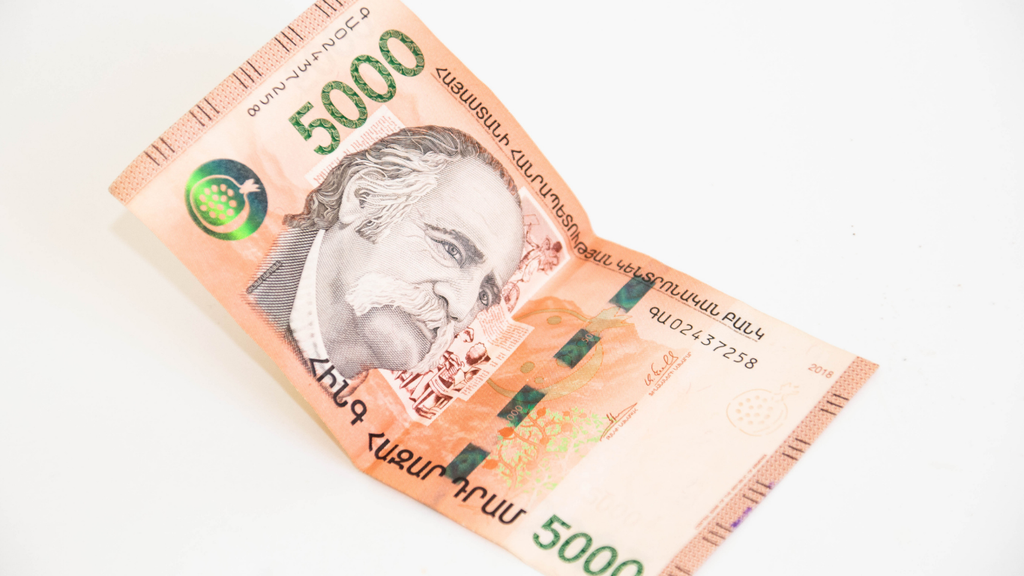
The official currency of Armenia is the Armenian Dram (AMD), and while you’ll quickly become familiar with the colourful banknotes and distinctive coins, paying for things throughout the country is generally very straightforward.
You’ll find contactless payments and card terminals throughout Yerevan, while smaller towns still have family-run cafés, roadside fruit stalls and artisan markets where cash is often the preferred option. Rather than relying entirely on one payment method, I recommend travelling with a combination of credit or debit cards and a small amount of cash.
Credit cards: Credit and debit cards are widely accepted in hotels, larger restaurants, supermarkets, shopping centres and many tourist attractions, particularly in Yerevan. Visa and Mastercard are the most commonly accepted cards, while American Express may not be accepted everywhere.
Cash: Although Armenia has embraced electronic payments in recent years, I still find it helpful to carry some cash every day. It’s particularly useful when visiting places such as Vernissage Market, buying fresh fruit from roadside stalls, shopping at smaller artisan workshops, purchasing snacks or drinks during our scenic drives, or leaving a tip for excellent service.
Many of my favourite purchases in Armenia have come from small family businesses, and having cash on hand means you won’t miss out if cards aren’t accepted. You don’t need to carry large amounts. I usually keep enough for small purchases during the day while leaving the rest securely in the hotel safe.
ATMs are widely available throughout Yerevan and can also be found in larger towns across the country. Most accept international Visa and Mastercard cards, making it easy to withdraw Armenian dram if you need more cash during your trip.
Before you travel, it’s worth checking whether your bank charges international withdrawal or foreign transaction fees, as these can vary considerably. Whenever an ATM or payment terminal asks whether you’d like to be charged in your home currency or Armenian dram, I generally recommend choosing Armenian dram. This usually allows your own bank to perform the currency conversion, which often results in a better exchange rate than the merchant’s conversion service, although it’s always worth checking your bank’s fees and policies.
Currency exchange If you prefer to exchange cash, you’ll find exchange offices and banks throughout Yerevan, often offering competitive exchange rates. You’ll also find currency exchange services at Zvartnots International Airport, although, as is the case in many countries, airport exchange rates aren’t always the most favourable.
Tipping isn’t as deeply ingrained in Armenian culture as it is in some countries, but it is certainly appreciated for good service. Some restaurants automatically include a service charge, so it’s worth checking your bill before leaving an additional tip.
If a service charge hasn’t been included and you’ve enjoyed your meal, rounding up the bill or leaving around 5-10% is a thoughtful gesture, although it’s always at your discretion. Hotel staff, local guides and drivers also appreciate tips for excellent service.
Basic Armenian words to know
The official language of Armenia is Armenian, one of the world’s oldest living languages. It also has its own unique alphabet, created in 405 AD, which you’ll quickly notice on street signs, restaurant menus and shopfronts throughout the country, though they are also translated into English.
Don’t worry if the alphabet looks unfamiliar – English is spoken in many hotels, restaurants and tourism businesses, particularly in Yerevan, and you’ll have no trouble getting around.
That said, learning a few Armenian words before you arrive is a wonderful way to show respect for the local culture, and I’ve found that even a simple greeting is almost always met with a smile.
Here are a few you’ll probably use during your trip.
- Hello – Բարեւ (Barev)
- Good morning – Բարի լույս (Bari luys)
- Goodbye – Ցտեսություն (Ts’tesutyun)
- Please – Խնդրում եմ (Khndrum em)
- Thank you – Շնորհակալություն (Shnorhakalutyun)
- You’re welcome – Խնդրեմ (Khndrem)
- Yes – Այո (Ayo)
- No – Ոչ (Voch)
- Excuse me / Sorry – Ներեցեք (Neretsek)
- Do you speak English? – Անգլերեն խոսո՞ւմ եք? (Angleren khosum ek?)
- Cheers! – Կենաց (Kenats)
There’s one Armenian word that probably won’t appear in many phrasebooks, but I guarantee you’ll hear it throughout your trip.
Jan (ջան) is a term of affection that roughly translates to “dear,” “beloved” or “my friend.”
You’ll often hear people add it after someone’s name:
Mar jan
Anastasia jan
Meg jan
It’s a warm, affectionate expression used between family members, friends and even people who have only just met. You don’t need to use it yourself straight away, but once you know what it means, you’ll start noticing it everywhere.
Local Cuisine
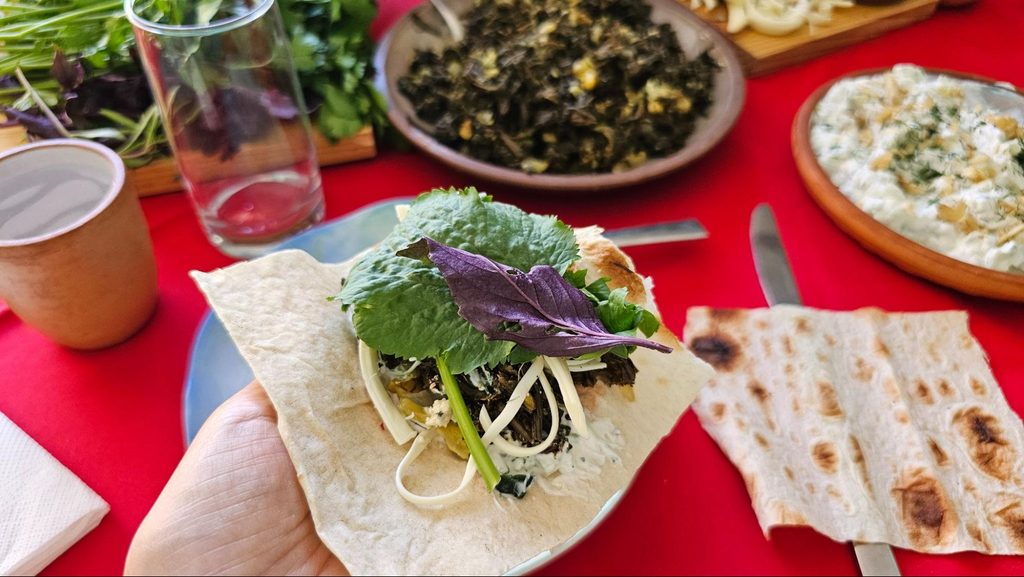
Meals in Armenia are an opportunity to gather, celebrate, catch up with family and friends, and show hospitality, and you’ll quickly discover that one of the easiest ways to experience Armenian culture is simply to sit around a table.
Meals typically begin with a few small dishes, and then another appears, and another… and another. Armenian hospitality is wonderfully generous, and hosts often express their welcome by making sure your plate is never empty for very long.
The cuisine itself reflects Armenia’s landscape and history. Fresh vegetables, fragrant herbs, grilled meats, mountain cheeses, legumes and locally grown fruit all feature prominently, while recipes have been shaped over thousands of years by the country’s location at the crossroads of Europe, the Middle East and Asia.
Because we visit in September, we’ll be travelling during harvest season, when markets and roadside stalls are overflowing with grapes, figs, apricots, peaches, apples, walnuts and pomegranates. Vineyards are busy bringing in their grape harvest, restaurants are making the most of fresh local produce, and it’s one of the most delicious times of year to visit.
Here are a few dishes you have to try on your visit to Armenia
Best Foods to try in Armenia
Armenian cuisine is wonderfully fresh, seasonal and designed to be shared. Meals are often served family-style, with the table gradually filling with breads, salads, grilled meats, cheeses and vegetables for everyone to enjoy together.
Here are some of my favourite Armenian dishes to look out for during your trip.
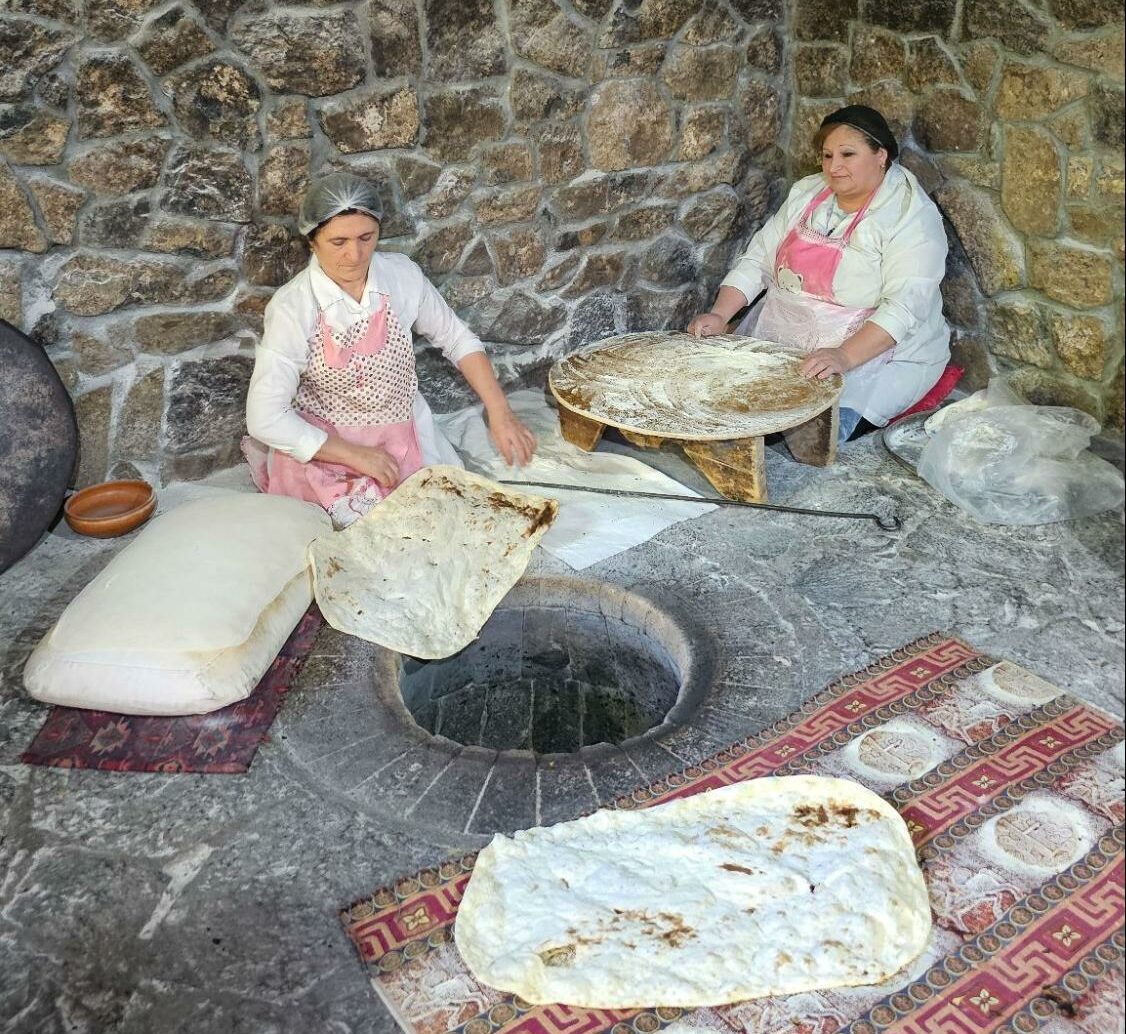
Lavash: If there’s one food you’ll eat almost every day in Armenia, it’s lavash. This traditional soft flatbread is baked by hand inside underground clay ovens called tonirs, where the dough is stretched paper-thin before being slapped against the hot walls of the oven to bake in just a few minutes.
Fresh lavash is soft, crunchy, slightly chewy and incredibly versatile. You’ll find it wrapped around grilled meats and cheeses, served alongside dips and salads, or simply enjoyed warm on its own.
Making lavash is such an important part of Armenian culture that UNESCO has recognised the tradition as Intangible Cultural Heritage.
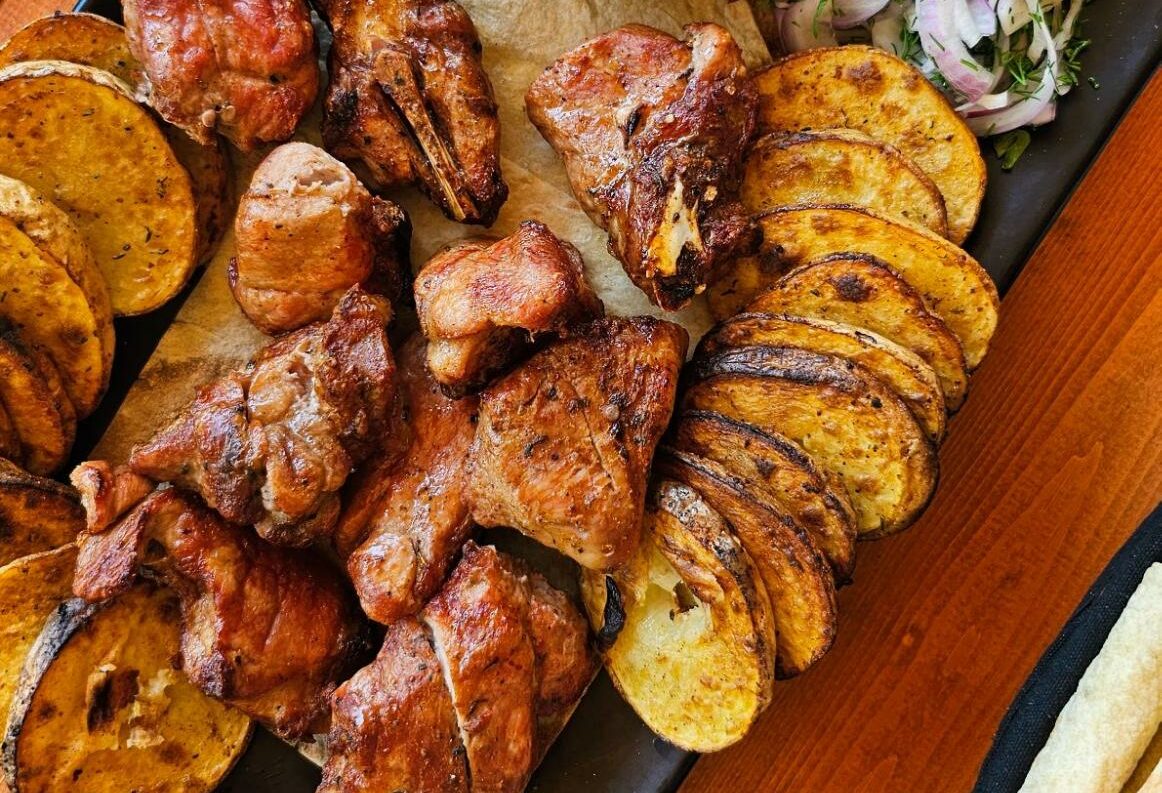
Khorovats: Often described as Armenia’s national dish, khorovats is a style of charcoal-grilled meat that’s central to family celebrations and gatherings. Pork is the most common version, although you’ll also find chicken, beef and lamb. The meat is usually marinated simply before being cooked over an open flame and served with grilled vegetables, herbs and fresh lavash.
If you’re invited to a barbecue in Armenia, there’s a very good chance khorovats will be on the menu.
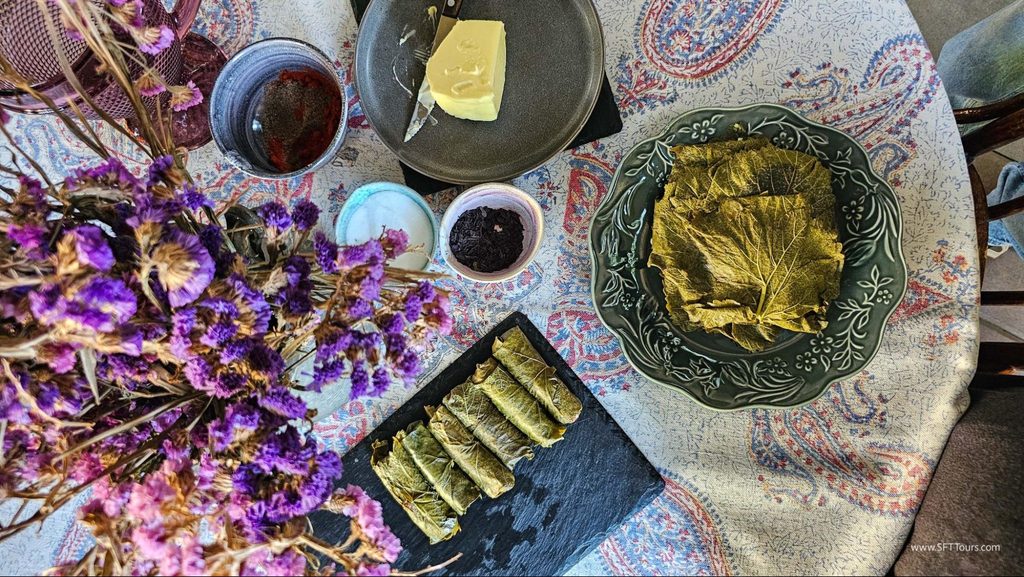
Dolma: Every country in this part of the world has its own version of dolma, but Armenia’s is definitely worth trying. The most familiar version consists of vine leaves stuffed with minced meat, rice and herbs, although vegetables such as peppers, tomatoes and eggplants are also commonly filled with delicious savoury mixtures.
Many Armenian families have their own recipes, so don’t be surprised if no two dolmas taste exactly the same.
Zhingyalov Hats One of the country’s most unique regional specialties is Zhingyalov Hats. Originating in southern Armenia, this thin flatbread is filled with a mixture of fresh herbs and leafy greens – sometimes more than 20 different varieties depending on the season.
Harissa: No, not the spicy North African chilli paste! Armenian harissa is a savory porridge made from cracked wheat and slow-cooked chicken or lamb. The ingredients are simmered together over many hours until they become wonderfully creamy and rich.
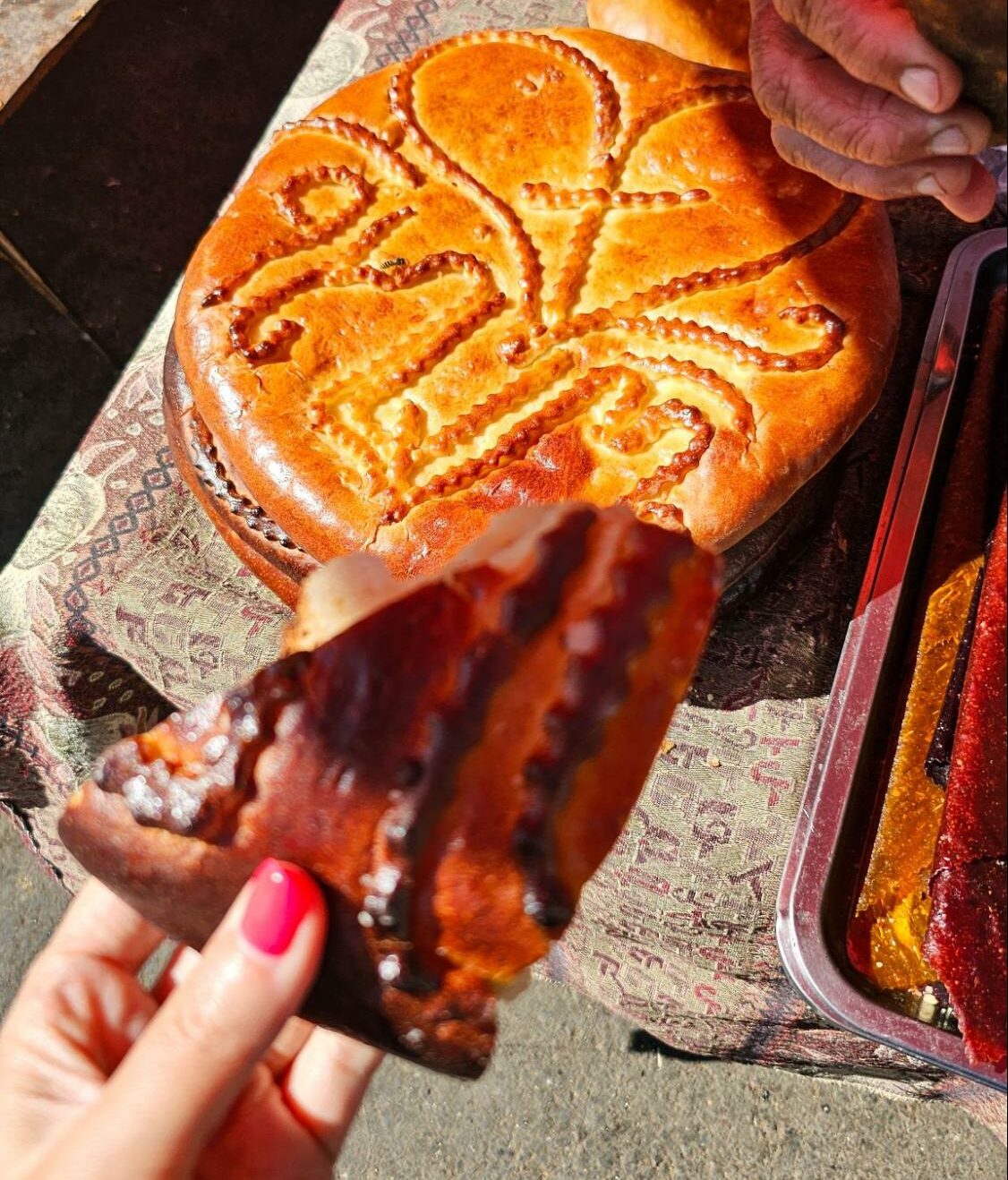
Gata: If you have a sweet tooth, don’t leave Armenia without trying gata. This traditional pastry has a buttery, flaky exterior and a sweet filling made from flour, butter and sugar. Every region has its own variation, and you’ll find bakeries proudly claiming theirs is the best. It’s perfect with a cup of Armenian coffee and we will learn how to make it during our tour.
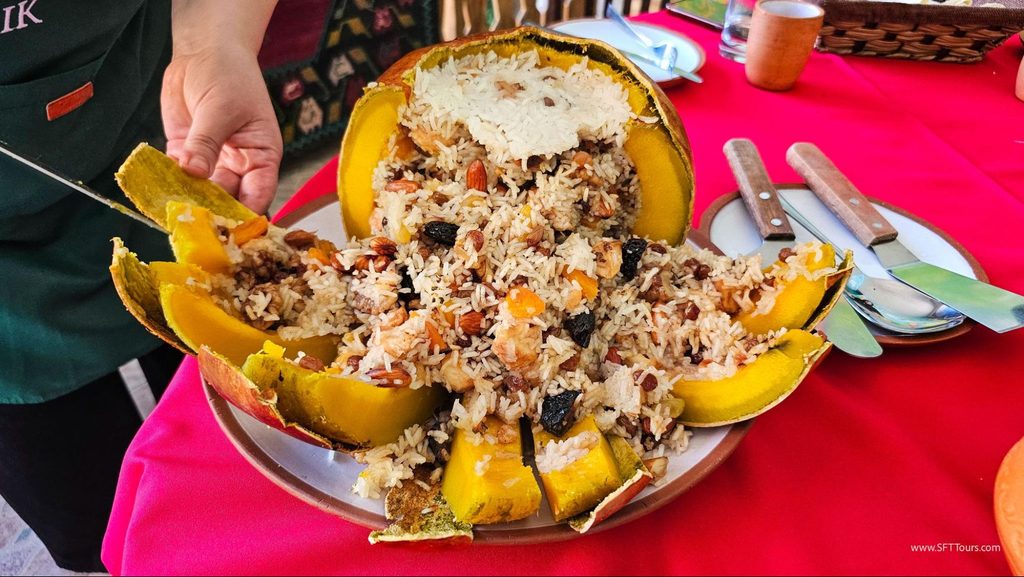
Ghapama: One of Armenia’s most beautiful festive dishes is ghapama. A whole pumpkin is hollowed out and filled with rice, dried fruit, nuts, cinnamon and honey before being baked until tender. It’s traditionally prepared during celebrations and holidays and is as impressive to look at as it is to eat.
Spas: If you’re looking for something a little different, try spas. This traditional yoghurt soup combines fermented yoghurt, grains and herbs into a surprisingly comforting dish that can be served either hot or cold depending on the season. It’s one of those recipes that’s been passed down through generations and is still commonly prepared in Armenian homes.
Basturma: You’ll often see basturma served as part of a selection of cured meats. This air-dried beef is coated in a fragrant spice mixture containing fenugreek, paprika, garlic and other seasonings, giving it a distinctive flavour that’s unlike anything else. It pairs beautifully with local cheeses and fresh lavash.
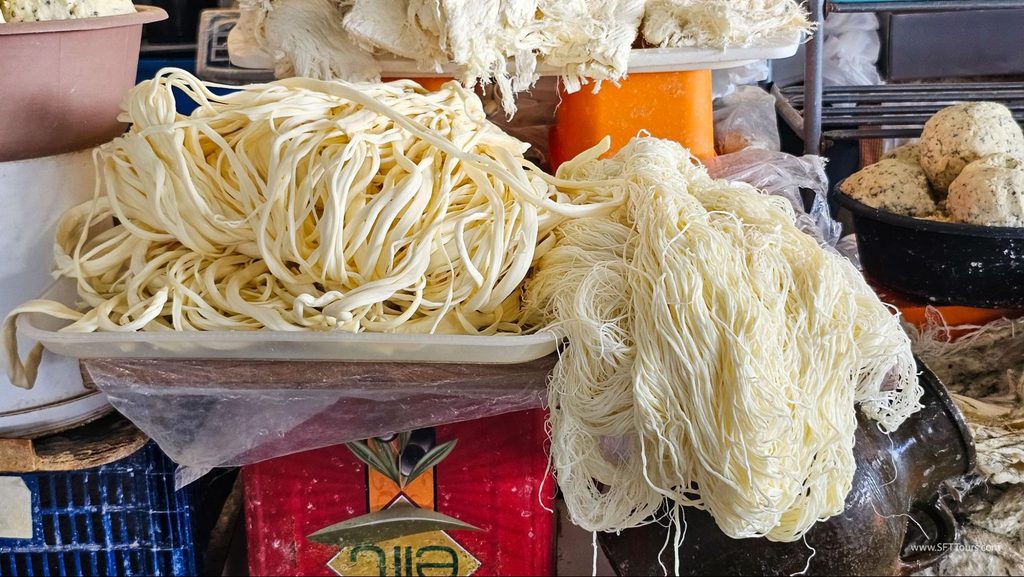
Armenian cheeses: Armenia produces a wonderful variety of traditional cheeses, and you’ll often find salty white cheeses served alongside fresh herbs, tomatoes, cucumbers and warm lavash, creating one of the simplest and most delicious starts to a meal.
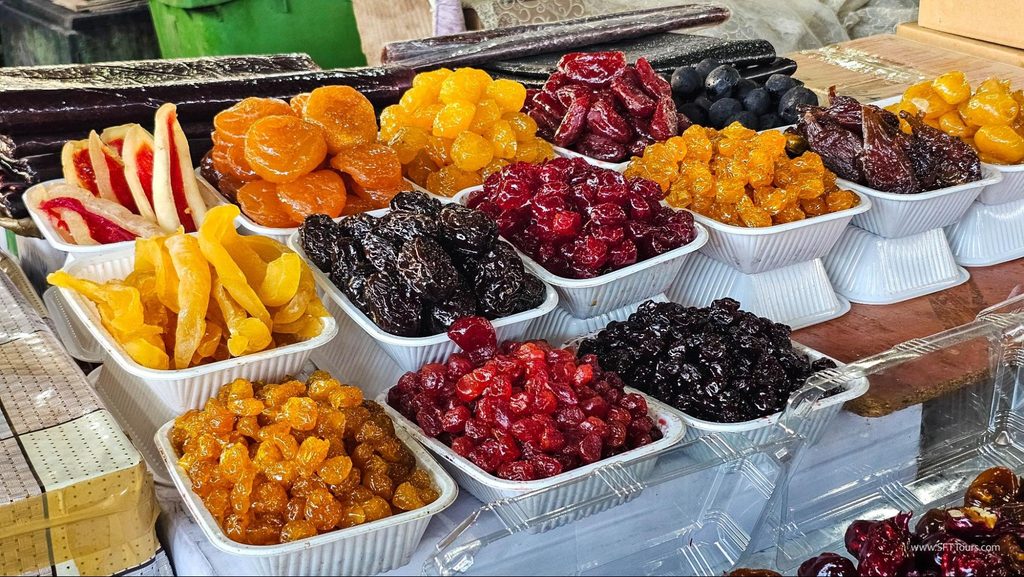
Fresh and dried fruit: September is one of the very best times to visit Armenia if you love fresh produce. Roadside stalls will have grapes, peaches, figs, apples, pears, walnuts and pomegranates, while local markets are filled with seasonal fruit picked only hours earlier and beautiful selections of dried fruits and nuts.
One of my favourite things to do during our drives through the countryside is stop at one of these family-run stalls and pick up fresh fruit for the journey. It’s inexpensive, incredibly fresh and a lovely way to support local communities.
Sujukh: If you spot strings of what look like sausages hanging in market stalls, take a closer look – they’re probably sujukh, one of Armenia’s favourite traditional sweets.
Rather than meat, they’re made by threading walnuts onto string before repeatedly dipping them into thickened grape molasses and allowing each layer to dry. The result is a naturally sweet, chewy snack that’s perfect for taking home or enjoying during a long drive through the countryside. This is the same as the Georgian Churchkhela which we learn how to make during our Georgian tour.
Best drinks to try in Armenia
Armenia may be one of the oldest wine-producing countries in the world, but its drinks culture extends far beyond wine.
Whether you’re sipping coffee in a Yerevan café, enjoying a glass of local wine overlooking the vineyards of Areni or trying a homemade fruit spirit offered by a local family, you’ll quickly discover that sharing a drink is often just as much about hospitality as it is about what’s in the glass.
Here are some of the drinks I recommend trying during your trip.
Armenian wine
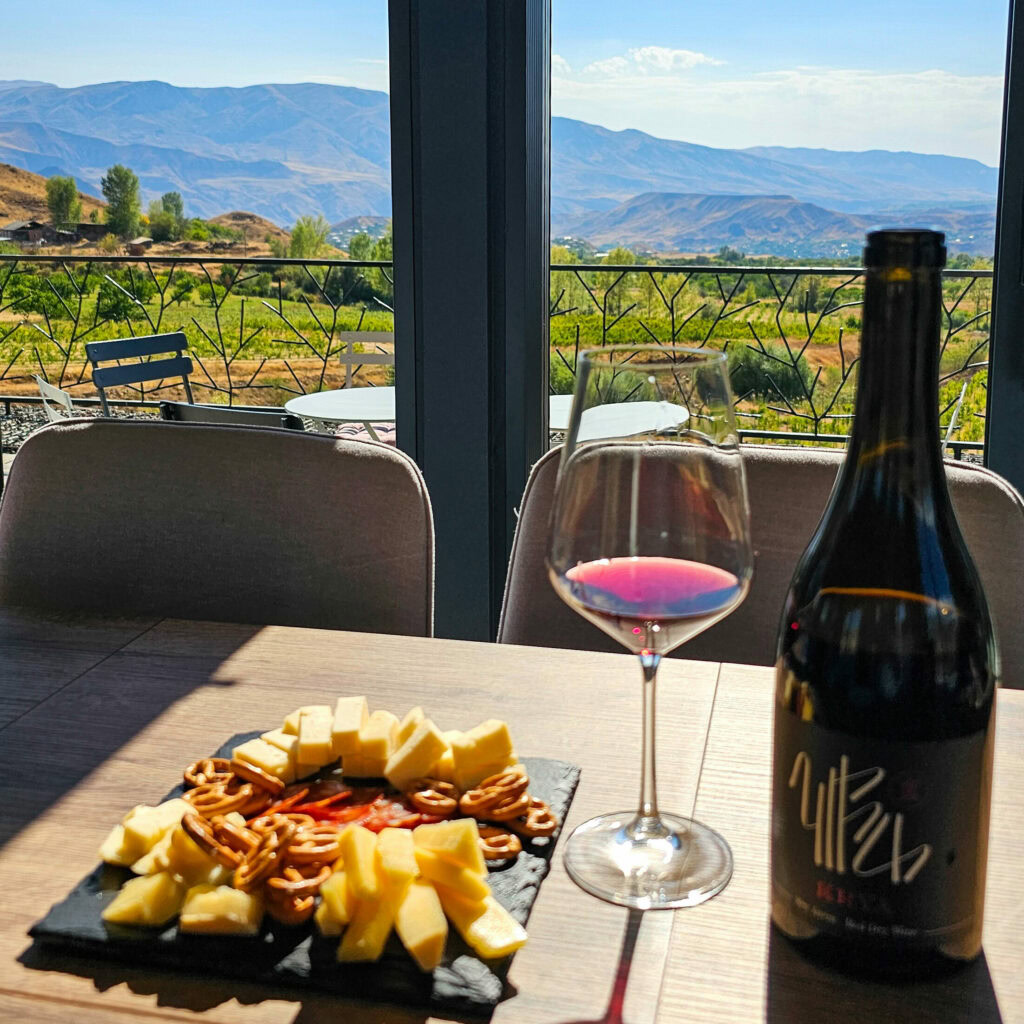
If you only try one drink in Armenia, make it the wine.
Armenia has been producing wine for more than 6,000 years, and the discovery of the Areni-1 Cave Complex, home to the world’s oldest known winery, has only strengthened the country’s reputation as one of the birthplaces of winemaking.
After a brief break during the Soviet Union when Armenia was tasked with producing brandy and not wine, Armenian winemakers have returned to ancient traditions with modern techniques, producing excellent wines from indigenous grape varieties such as Areni Noir, Voskehat and Kangun.
We’ll have the opportunity to visit the Areni wine region during our tour, and it’s a wonderful place to discover why Armenian wine is earning growing international recognition.
Armenian brandy
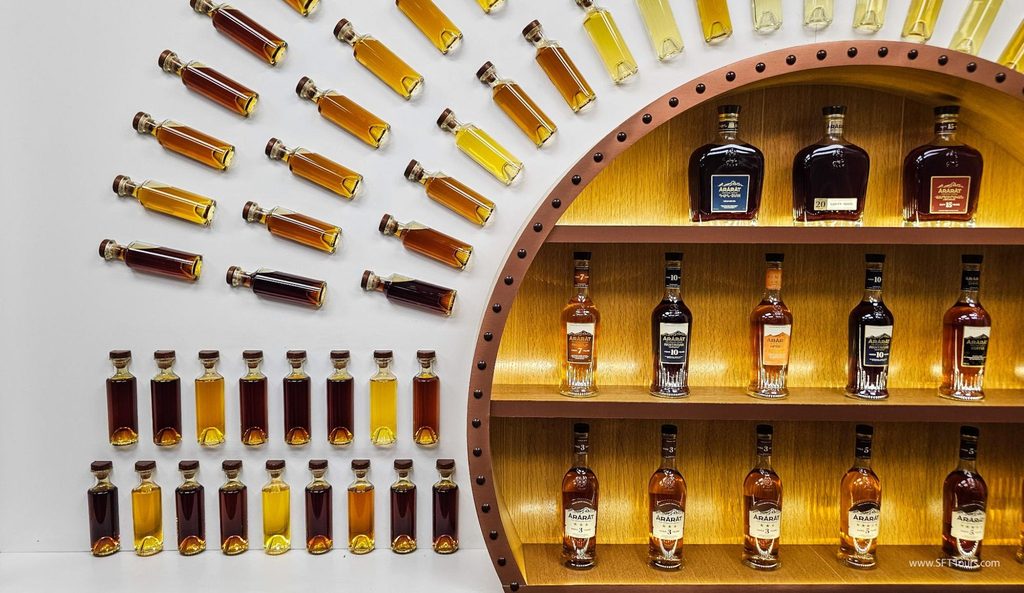
Few products are as closely associated with Armenia as its famous brandy. Often referred to as Armenian cognac in the past, today’s producers generally use the term Armenian brandy, following international geographical naming rules.
Made primarily from local grape varieties and aged in Caucasian oak barrels, Armenian brandy has earned a worldwide reputation for its smooth, rich flavour. Even if you’re not usually a brandy drinker, it’s worth trying a small tasting while you’re here. We will do just that during our tour when we visit one of the two most important brandy distilleries.
Armenian coffee
Traditional Armenian coffee is brewed slowly in a small pot called a jazve, producing a rich, unfiltered coffee that’s served in small cups, often alongside a glass of water. You’ll see friends lingering over coffee in cafés throughout Yerevan, and conversations often continue long after the cups are empty.
Some Armenians also enjoy reading fortunes from the coffee grounds left behind in the cup, a tradition that has been passed down through generations.
Herbal teas
If you’re not a coffee drinker, Armenia has a wonderful tradition of herbal teas. Mountain herbs such as thyme, mint, chamomile, wild oregano and rosehip are commonly brewed into fragrant teas, particularly in rural areas and after meals. They’re naturally caffeine-free.
Tan
One of Armenia’s most refreshing traditional drinks is tan. Made from yoghurt, water and a pinch of salt, it’s a cool, tangy drink that’s particularly popular during the warmer months.
It may sound unusual if you’ve never tried it before, but it’s incredibly refreshing and pairs surprisingly well with grilled meats and other traditional Armenian dishes.
Fresh fruit juices
September is one of the best times of year to enjoy Armenia’s incredible fruit. Restaurants and cafés frequently serve freshly squeezed juices made from peaches, pomegranates, grapes, apples and apricots, while roadside stalls often sell seasonal fruit picked just hours earlier.
If pomegranate juice is available while you’re visiting, don’t miss the opportunity to try it. It’s wonderfully fresh and one of my favourite drinks in Armenia.
Mineral water
Armenia is blessed with an abundance of natural mineral springs, and bottled mineral water is extremely popular with locals. You’ll notice a wide variety of locally produced sparkling and still mineral waters available in restaurants, supermarkets and cafés throughout the country.
Oghi
If you’re offered a small glass of oghi, you’re experiencing one of Armenia’s oldest traditions. Oghi is a strong fruit spirit, often distilled from grapes, mulberries, apricots or other local fruit and flavoured with anis, and many families proudly make their own. Every household seems convinced theirs is the best!
It’s usually offered as a gesture of hospitality or during celebrations, so if you choose to try it, sip slowly. I’ve found it’s much stronger than it looks.
Movies about or set in Armenia
One of my favourite ways to prepare for a trip is by watching a few movies or documentaries before I leave. Not only do they help you understand a country’s history and culture, but they also make the places you visit feel much more meaningful once you’re standing there in person.
Armenia has inspired filmmakers for decades, and while relatively few mainstream Hollywood films are set here, there are several excellent documentaries and feature films that offer fascinating insight into the country’s landscapes, history and people.
Here are a few I recommend watching before your trip.
The Color of Pomegranates (1969) One of the greatest works of Armenian cinema, The Color of Pomegranates tells the life of 18th-century Armenian poet Sayat-Nova through a series of beautifully symbolic and visually stunning scenes inspired by Armenian art, folklore and religious traditions. It’s not a conventional film, but if you enjoy artistic cinema, it’s an unforgettable introduction to Armenian culture.
Aurora’s Sunrise (2022) One of the most powerful films you can watch before visiting Armenia is Aurora’s Sunrise. This award-winning animated documentary tells the remarkable true story of Aurora Mardiganian, a survivor of the Armenian Genocide, weaving together archival footage, animation and her own testimony. It’s deeply moving, beautifully made and provides important historical context before visiting the Armenian Genocide Memorial in Yerevan.
Intent to Destroy (2017) If you’d like to better understand one of the defining events in Armenian history, Intent to Destroy is an excellent documentary. Directed by Joe Berlinger, it explores the history and legacy of the Armenian Genocide while examining the making of the feature film The Promise. It’s thoughtful, balanced and provides valuable historical background for visitors wanting a deeper understanding of Armenia’s modern identity.
The Promise (2016) Set during the final years of the Ottoman Empire, The Promise is a historical drama starring Oscar Isaac, Charlotte Le Bon and Christian Bale. While fictional, the story unfolds against the backdrop of the Armenian Genocide and introduces many of the historical events that continue to shape Armenia and the global Armenian community today. Watching it before your visit helps put many of the country’s memorials and museums into context.
Lost and Found in Armenia (2012) If you’re looking for something much lighter, Lost and Found in Armenia is a charming comedy set in the Armenian countryside. The story follows an American tourist who unexpectedly finds himself in a remote Armenian village after a paragliding accident. It’s a humorous introduction to Armenian hospitality, village life and local traditions, and showcases some beautiful scenery along the way.
Anthony Bourdain: Parts Unknown – Armenia (2018) Anthony Bourdain’s visit to Armenia is one of my favourite travel documentaries about the country. Travelling with chef Serge Tankian, he explores Armenian food, wine, history and identity while meeting local people and discovering what makes the country so unique. If you’re only going to watch one travel programme before visiting Armenia, this would probably be my recommendation.
An Armenian Sketchbook (BBC) Presented by historian Dr Janina Ramirez, An Armenian Sketchbook is a fascinating documentary series exploring Armenia’s art, architecture, history and cultural heritage. Filmed across many of the country’s most iconic locations, it’s an excellent introduction to the places you’ll visit on the tour and helps explain why Armenia has played such an important role in world history despite its relatively small size.
Books about or set in Armenia
Reading a book about a destination is one of my favourite ways to understand its history, culture and people before I arrive. It also makes visiting historic sites feel much more meaningful because you already know some of the stories behind them.
Armenia has inspired some remarkable books, from sweeping historical accounts and moving memoirs to novels that beautifully capture the country’s landscapes, traditions and resilience.
Here are a few I’d recommend before your trip.
Black Dog of Fate by Peter Balakian If I could recommend just one book before travelling to Armenia, this would probably be it.
Part memoir and part family history, Black Dog of Fate follows Pulitzer Prize-winning author Peter Balakian as he uncovers his Armenian heritage and learns about the experiences his family rarely spoke about.
It’s beautifully written, deeply personal and provides wonderful insight into both Armenian culture and the lasting impact of the Armenian Genocide on families around the world.
The Sandcastle Girls by Chris Bohjalian If you enjoy historical fiction, The Sandcastle Girls is an excellent place to start. The novel follows two intertwined stories: one set during the Armenian Genocide in 1915 and another in modern-day Armenia, where a young woman begins uncovering her family’s past.
It’s an emotional and accessible introduction to one of the defining chapters of Armenian history while also celebrating the resilience of its people.
Armenia: Portraits of Survival and Hope by Frederica de Chesnais This beautifully photographed book combines contemporary portraits with personal stories from Armenians across the country. Rather than focusing solely on history, it offers a fascinating glimpse into modern Armenia, highlighting everyday life, traditions and the warmth of the people you’ll meet during your travels.
It’s a lovely reminder that Armenia isn’t only a country with an extraordinary past – it’s also a vibrant, welcoming place full of optimism and creativity.
The Crossing Place by Philip Marsden Part travel writing, part history and part personal journey, The Crossing Place explores the landscapes and cultures of the Caucasus, including Armenia. Marsden has a wonderful ability to connect the history of a place with the people who live there today, making this an enjoyable read for anyone interested in understanding the broader region before travelling.
My First 2,000 Years by Hagop Baronian If you’d like to understand Armenian humour, this classic memoir is a fascinating read. Blending wit, social observation and autobiography, it offers a different perspective on Armenian culture while introducing readers to one of Armenia’s best-known literary voices.
A Traveller’s History of Armenia by David Marshall Lang For readers who enjoy understanding the historical context behind the places they visit, this is one of the most accessible introductions to Armenia’s long and complex history. Rather than reading like an academic textbook, it explains thousands of years of history in a clear and engaging way, making it a great companion before visiting Armenia’s monasteries, archaeological sites and museums.
The Forty Days of Musa Dagh by Franz Werfel Often regarded as one of the most important novels ever written about the Armenian experience, The Forty Days of Musa Dagh tells the story of an Armenian community’s resistance during the Armenian Genocide.
Although fictionalised, it is based on historical events and has become a landmark work of literature for readers wanting a deeper understanding of Armenian history.