
This article is written for solo female travelers visiting mainland Ecuador and the Amazon, whether you’re joining our Ecuador & Galapagos tour for women or planning your trip independently. You can read this alongside our Ecuador packing list here.
We will cover important historical context to know before you go, when to visit and what the climate is really like, visa and entry requirements, health and safety, money, connectivity, and what daily life looks like.
Intro to the history of Ecuador

Ecuador is one of those places with many different worlds in one small country.
In a single trip (and certainly in ours), you can go from high-altitude Andean cities to trekking through the Amazon rainforest, and then jump over to the Galapagos Islands and be snorkeling with Sea Lions. All of these places have completely different climates, landscapes, and culture, even though they’re all the same country.
Quito sits high in the Andes at over 2,800 meters above sea level, where the air is thinner, the mornings feel cool, and the pace is slow as your body adjusts to the altitude.
If you love volcanoes and mountains, the Avenue of volcanoes offers incredible mountain hiking and climbing in untouched landscapes.
Travel north of Quito and you can be engulfed in the mist of the Cloud Forest where indigenous culture is alive and it rains almost every day, making it one of the greenest places in the world.
From there, you drop down into the Amazon, where the air becomes warm and humid, nature around you feels alive, and your days are shaped by the rhythms of the jungle.
Then there’s the Pacific coastline and The Galapagos Islands, which is another world completely unto its own, which we separated out into its own travel tips post (read here).
Understanding the country’s background and diversity is key in making the most of your visit.
Indigenous civilizations and colonisation
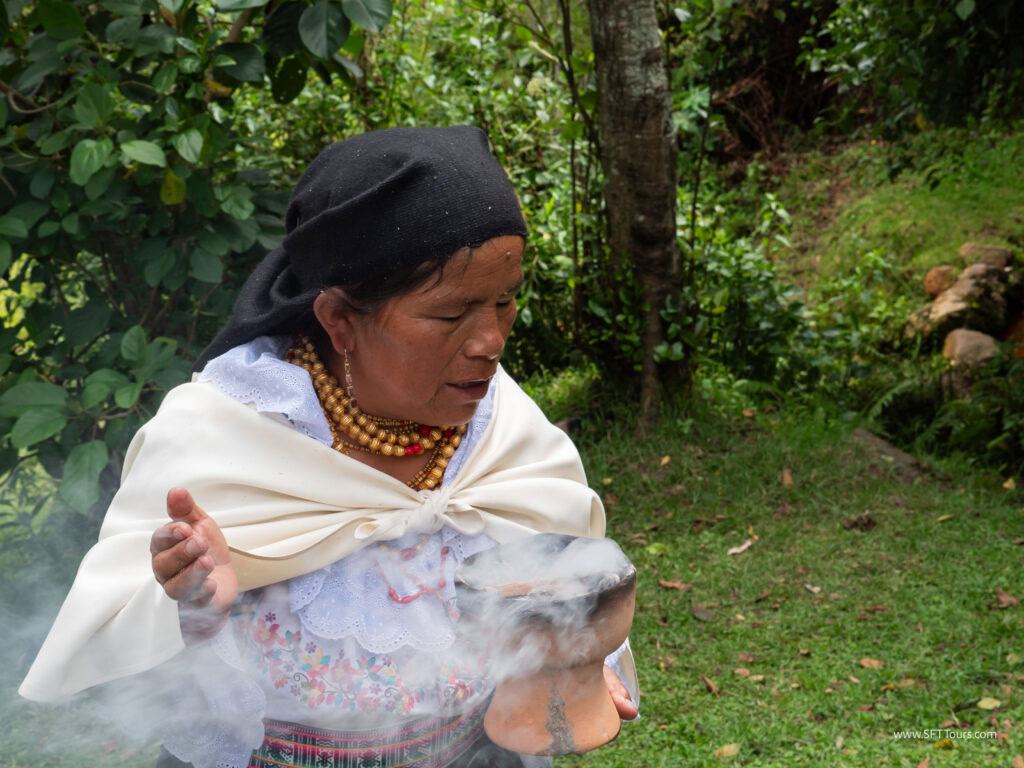
Long before Ecuador became a country, the region was home to many different Indigenous communities.
In the Andes, societies developed agricultural systems, built settlements, and traded across regions. In the Amazon, Indigenous groups lived in smaller, more dispersed communities, closely tied to the rainforest and its seasonal cycles.
These Amazonian cultures developed deep knowledge of the environment, from medicinal plants to river systems and wildlife behaviour. That connection to the land is still very much present today, and many communities continue to live in ways that are closely linked to the forest.
In the 15th century, much of what is now Ecuador became part of the Inca Empire, which expanded north from Peru.
The Incas established administrative centres, built road networks through the Andes, and integrated local populations into their Governments. But the arrival of the Spanish in the 16th century meant their control in the region was relatively short-lived.
Inca rule only lasted a few decades, and when Ecuador became part of the Spanish Empire, cities like Quito were developed as colonial centres, with churches, plazas, and architecture that you can still see today.
Colonisation brought significant change, but while Spanish influence shaped language, religion, and much of the country’s modern identity, Indigenous populations were heavily impacted by disease, forced labour, and cultural disruption.
While the Andes became more structured under colonial rule, the Amazon remained relatively isolated. Its dense rainforest and challenging terrain meant that Spanish control there was limited, and many Indigenous communities retained more of their traditional ways of life compared to other parts of the country.
Independence and the formation of Ecuador
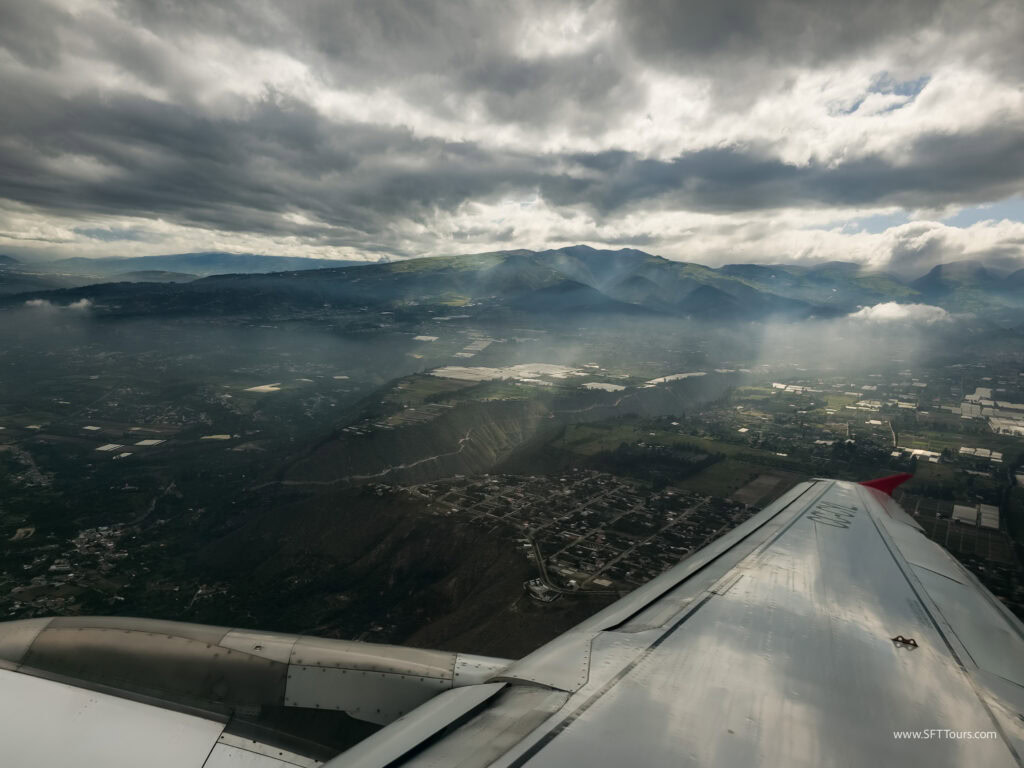
Ecuador gained independence from Spain in 1822 and became its own republic in 1830 (it functioned as part of Gran Colombia in between). But with such distinct regions, different parts of the country developed parallely.
The Andes became the political and cultural centre, while the Amazon remained remote and less connected to national infrastructure. Even today, traveling between these regions feels like moving between different worlds within the same country.
For much of its history, Ecuador’s Amazon region remained difficult to access. Rivers were the main transport routes, and communities were often separated by distance and dense forest.
In the 20th century, increased exploration, missionary activity, and later oil development brought more attention to the region. Roads and infrastructure began to expand, and with that came both opportunity and environmental challenges.
Conservation and modern Ecuador
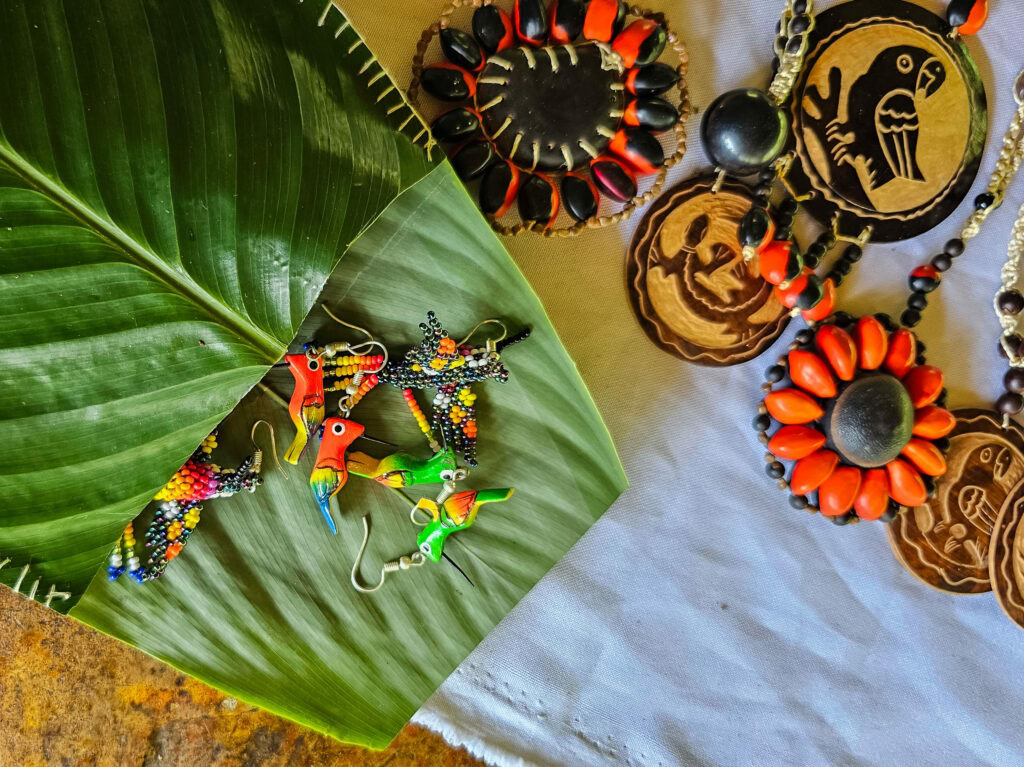
Today, Ecuador is one of the most biodiverse countries in the world, and both the Andes and the Amazon are recognised for their ecological importance. National parks and reserves have been established to protect these environments, and sustainable tourism has become an important part of how they are managed.
Indigenous communities have always played a central role in protecting the rainforest, and many areas are now managed as protected reserves or community-run territories, balancing tourism, conservation, and traditional ways of life.
In the Amazon, this often means small-scale lodges, guided excursions, and community involvement rather than large-scale development. When we’re there, we are introduced to the forest through local knowledge, whether that’s understanding plants, spotting wildlife, or learning how people have lived here for generations.
When you travel through Ecuador and into the Amazon, you’re not just moving between landscapes. You’re moving through layers of history, from Indigenous traditions to colonial influence to modern conservation efforts.
These regions have always been closely connected, but have evolved throughout history quite separately, which is why today they can feel both connected, but also worlds apart.
Interesting facts about Ecuador
Here are some interesting and practical facts about Ecuador and the Amazon.
- Ecuador sits on the equator (it’s literally where the name comes from), and you can visit the “Middle of the World” monument just outside Quito where you can stand with one foot in each hemisphere.
- Despite being a relatively small country, Ecuador is one of the most biodiverse places on Earth, with four distinct regions: the Andes, the Amazon, the Pacific coast, and the Galapagos Islands. Nature is so important here that the country was the first in the world to give nature constitutional rights (2008). Ecosystems can technically be “defended” in court.
- Quito’s historic center is one of the best preserved in the world. It was one of the first-ever UNESCO World Heritage Sites (1978) and is packed with gold-covered churches and colonial architecture. The capital also sits at over 2,800 meters (9,200 feet) above sea level, making it the second highest in the world after La Paz, in Bolivia. Altitude can affect you even if you’re fit and healthy. Lower oxygen levels in Quito can suppress appetite and slow digestion, where once you descend into the Amazon it’s normal to then feel famished, when oxygen, energy levels, and activity all increase.
- The Amazon rainforest covers roughly half of Ecuador’s land area and is part of the larger Amazon Basin, which spans nine countries and is the largest tropical rainforest in the world. Only 4% of the Amazon basin is in Ecuador, however, there are more species of plants and animals in a single hectare of Amazon rainforest than in entire countries elsewhere and the country ranks in the top-10 most diverse in the world.
- Spanish is the official language, but Ecuador is home to 14 other Indigenous languages, with Kichwa and Shuar being the most spoken.
- Sunset and sunrise happen quickly near the equator, with very little twilight, so days and nights feel more defined than in higher latitudes.
- Mount Chimborazo isn’t the tallest mountain by height above sea level but because Earth bulges at the equator, its summit is the closest point on Earth to the sun. Mind-bending.
- Ecuador sits on the Pacific “Ring of Fire” and has dozens of volcanoes. Cotopaxi is one of the highest active volcanoes in the world, and you can hike it.
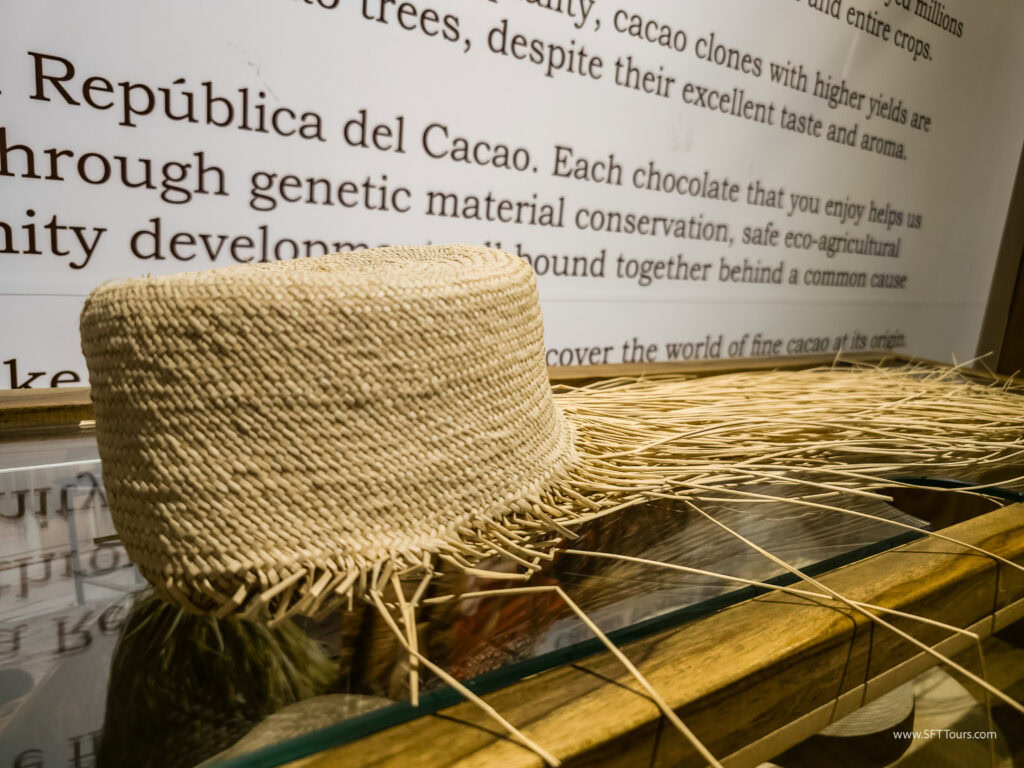
- Panama hats are actually from Ecuador. They were just exported through Panama during the canal constructions, and the name stuck.
Ecuador Travel Tips
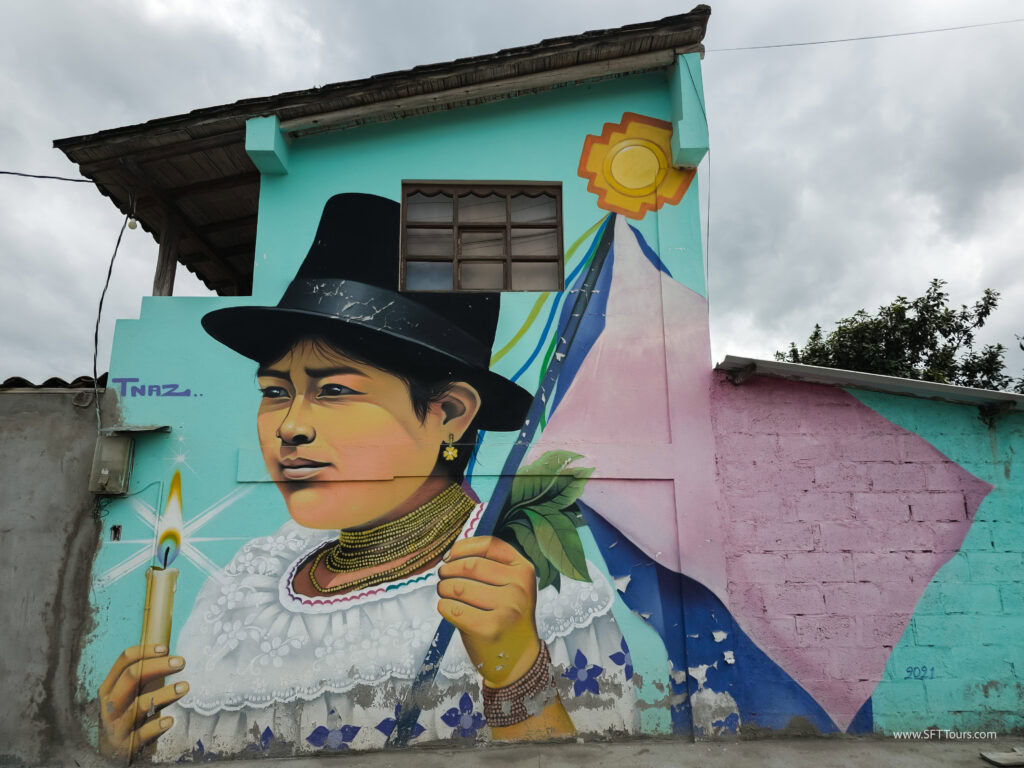
In this section, we will discuss various travel tips that will come in handy during a visit to Ecuador.
When to visit
You can visit Ecuador year-round and have a great time, but timing does make a difference depending on where you are and which region you’re planning to experience.
Our women only trip moves through three very different environments: the Andes, the Amazon, and the Galapagos Islands. Each place has its own weather patterns and peak seasons, so the experience isn’t about choosing a “perfect” month, but picking a time of year that balances all three nicely.
We personally pick May as a good window across all three regions.
Broadly speaking, Ecuador has wet and dry seasons, and there are trade-offs between the seasons depending on what you prefer.
Traveling in May means you’ll experience the Amazon in its shoulder rainy season, which often translates to easier boat access and very lush surroundings, while still having manageable conditions in the Andes and warm drier weather in the Galapagos.
The Andes (Quito and surrounding areas)
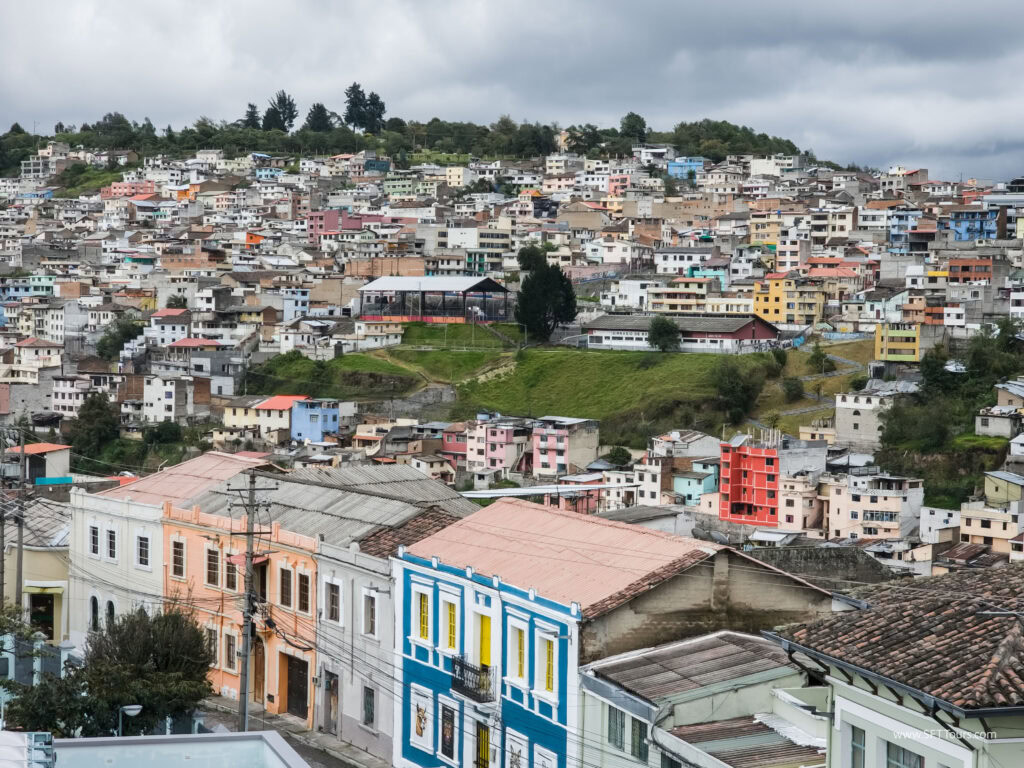
In the Andes, the year is loosely split into a dry and a wet season.
June to September tends to be drier, with less rainfall overall, cooler mornings and evenings, and clearer skies, especially early in the day. These months are great for walking and exploring.
October to May sees more frequent rain, often in the afternoons, though mornings are still clear. The landscapes are greener, and temperatures remain fairly consistent throughout the year.
Because Quito sits at high altitude, it can feel cool, especially early in the morning or after rain, which is why layers are such an important part of your packing list.
The Amazon
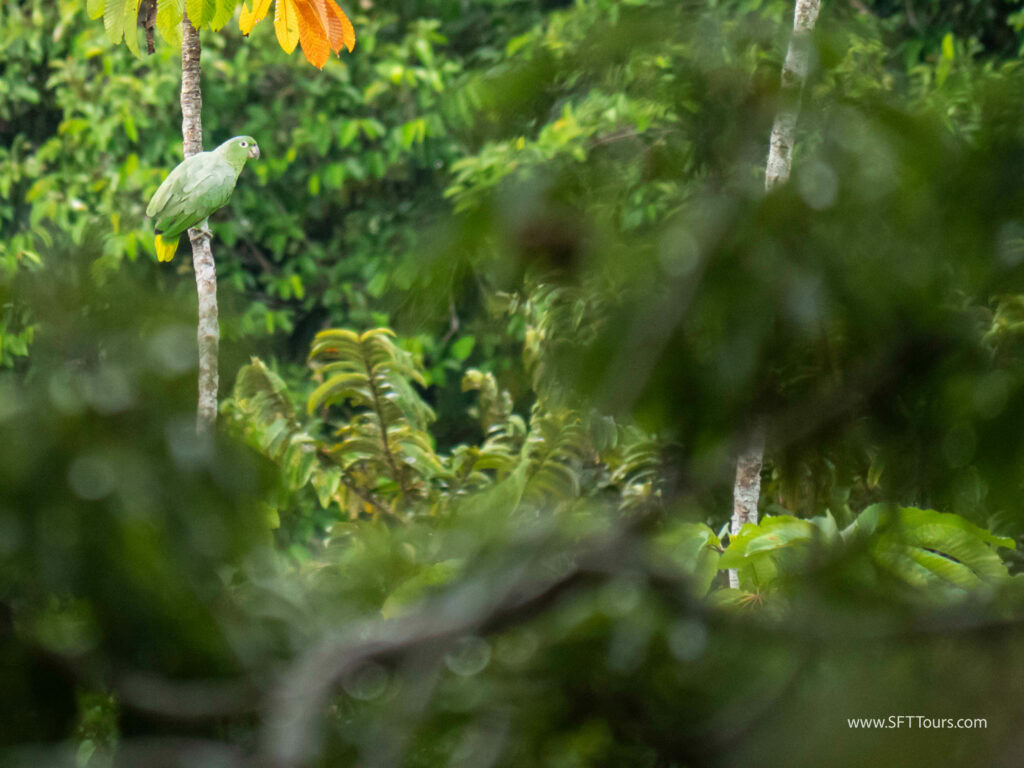
The Amazon doesn’t have a true dry season in the way other destinations do. It’s a rainforest, so rain is always part of the experience and humidity is high year round.
From December to May, water levels are higher, which means rivers are fuller and travel by boat is easier. You’ll often explore by canoe, and wildlife can be spotted from the water. Rain is more frequent, but usually comes in short bursts.
From June to November, water levels drop slightly, which makes forest trails more accessible for walking. There’s generally a bit less rain, and wildlife spotting on land can be easier, though it’s still very much a tropical environment and humidity is still high.
Passport & visa requirements
Traveling to Ecuador is straightforward for most people, and the majority of travelers (including Australia, the US, UK, Canada, and most of Europe) don’t need a visa to visit.
Visa free countries can visit for tourism for up to 90 days within a 12-month period. You’ll need 6 months validity on your passport from your date of entry, and occasionally might be asked for proof of onward travel. Despite many countries doing away with entrance stamps, Ecuador is still stamping passports.
If you do need a visa, you find official information through the Ecuadorian Ministry of Foreign Affairs website – https://www.cancilleria.gob.ec
You’ll need to apply in advance through an Ecuadorian embassy or via the online system, because this is not something they offer at the airport on arrival.
If you are traveling to the Amazon, there are no additional visa requirements beyond entering Ecuador, but you may be asked about your itinerary, accommodation, or onward travel plans. In some cases, vaccination requirements (such as yellow fever, depending on where you are arriving from) may also apply.
Health & Safety
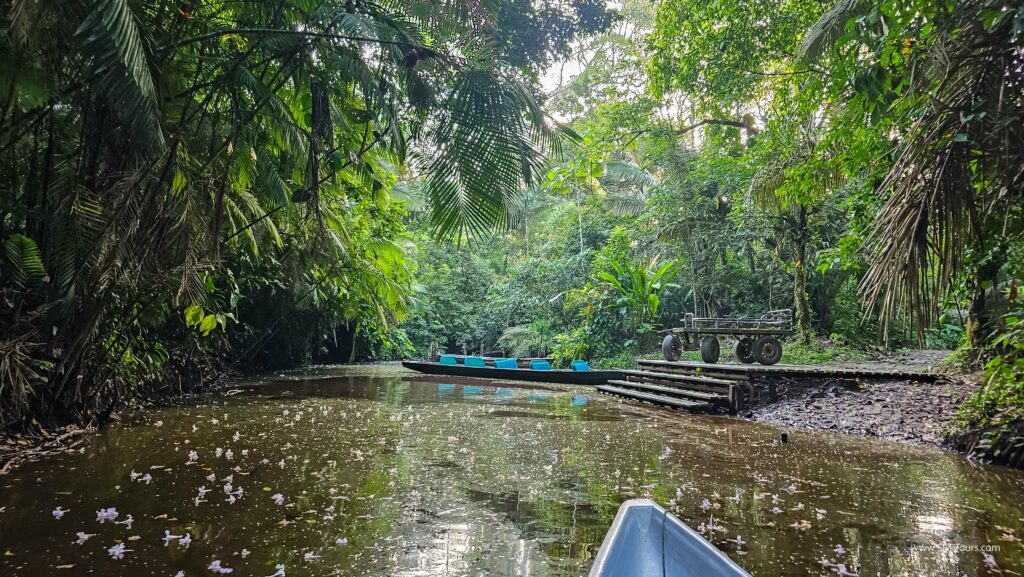
Traveling through Ecuador and into the Amazon is generally very safe, but it’s a different kind of safety than you might be used to.
Crime and pickpocketing are less of a concern beyond Quito and the high risk areas on the border with Colombia in the north (though it is always important to be cautious of your surroundings), and it’s more about looking after your health in changing environments.
In places like Quito, you will need to adjust to altitude, while in the Amazon it’s the combination of heat, humidity, insects, and being in a more remote environment. Medical facilities do exist, but once you’re in the rainforest, access can be limited and reaching a larger hospital may take time.
Bring all the medication you need
In cities like Quito, you’ll likely be able to find most things you need, and pharmacies are well stocked if you find you’re not feeling well. But once you’re in more remote parts of the country like The Amazon, access to supplies and medications will be far more limited.
Bring enough of any prescription medication for your entire trip, plus a buffer in case of delays, and always keep it in your carry-on rather than your checked luggage.
It’s also worth putting together a small, practical “travel kit” with the things people always end up needing, like pain relief, antihistamines, electrolyte sachets, blister care, bandaids, insect repellent, and anything you personally rely on such as migraine medication, inhalers, or EpiPens.
While lodges and guides may have basic first aid supplies, they won’t carry a full range of medications or your usual brands. And because parts of the Amazon are remote, accessing more comprehensive medical care can take time if something more serious comes up.
If you bring medication, make sure it is clearly labeled, ideally in original packaging, and compliant with Ecuador’s entry regulations.
Vaccinations & Yellow Fever
There are no mandatory vaccinations for travel to Ecuador, but both the CDC and the UK Foreign Office recommend checking your vaccines well in advance of travel, ideally at least 6–8 weeks before departure, and do recommend being up to date on routine vaccines (like tetanus, measles, and hepatitis A), along with typhoid depending on your itinerary and how long you’re staying.
Yellow fever is where it becomes more specific to your trip. The vaccine is not generally required to enter Ecuador, but it may be required if you are arriving from certain countries where yellow fever is present, or if you’ve spent more than 10 days in those regions before arrival.
More importantly for our itinerary, the yellow fever vaccine is recommended for travel to parts of the Amazon, where the disease exists and is spread by mosquitoes.
It is not typically recommended for high-altitude areas like Quito, where there is little to no risk, which is why you’ll see different advice depending on where in Ecuador you’re going.
If you do choose to get the yellow fever vaccine:
- It needs to be administered at least 10 days before travel to be valid
- A single dose is generally considered to provide long-lasting (often lifetime) protection
- You may receive an International Certificate of Vaccination, which can be requested at borders if required
It’s also worth noting that Ecuador’s entry rules around yellow fever can change depending on regional outbreaks, so it’s important to check official sources close to your departure date.
Beyond vaccinations, the bigger health consideration in the Amazon is mosquito-borne illness in general, which is why your packing list includes insect repellent, long sleeves, and practical clothing.
The best approach is simple: speak to a travel doctor before your trip, let them know your full itinerary (including the Amazon), and they’ll advise what’s appropriate for you personally.
Mosquitos in The Amazon

Mosquitoes are part of life in Ecuador, especially once you head into the Amazon, and it’s something to be aware of rather than worried about. You’re in a tropical environment, so insects are a part of life, and with a bit of preparation, they’re very manageable.
In cities like Quito, mosquitoes are minimal because of the altitude, and I personally didn’t notice them at all. It’s really only once you drop into the Amazon that they become more present, particularly around rivers, in shaded areas, and at dawn and dusk.
The main reason they matter isn’t just the bites themselves, it’s that mosquitoes in some parts of Ecuador can carry illnesses such as dengue, and in certain areas, yellow fever. The risk for short-term travelers is generally low, but it’s still something to take seriously in a practical way.
What’s helpful to understand is that mosquitoes are predictable. They’re more active at certain times of day, and they’re more attracted to exposed skin. That’s why our packing list focuses so much on long, lightweight clothing and insect repellent, rather than heavy gear.
Using a good insect repellent (ideally with DEET or a strong alternative) makes a big difference, and I always apply it early in the morning and late in the afternoon. Wear loose, breathable long sleeves and long pants in the jungle, as I found that this helps far more than you’d expect, and it’s also far more comfortable than constantly reapplying repellent.
Rooms at the lodges all have mosquito nets around the beds to keep you safe at night and fans to stir mosquitoes away. The lodge that we stay at in the Amazon is next to a lake that is a natural repellent to mosquitoes so their presence is much less common than in other parts of the Amazon.
It’s also worth knowing that not everyone reacts to bites in the same way. While mosquitoes seem drawn to my blood (sorry for the graphic analogy), some people barely notice them. But either way, it’s worth having a small supply of bite relief cream or antihistamines.
Other bug bites
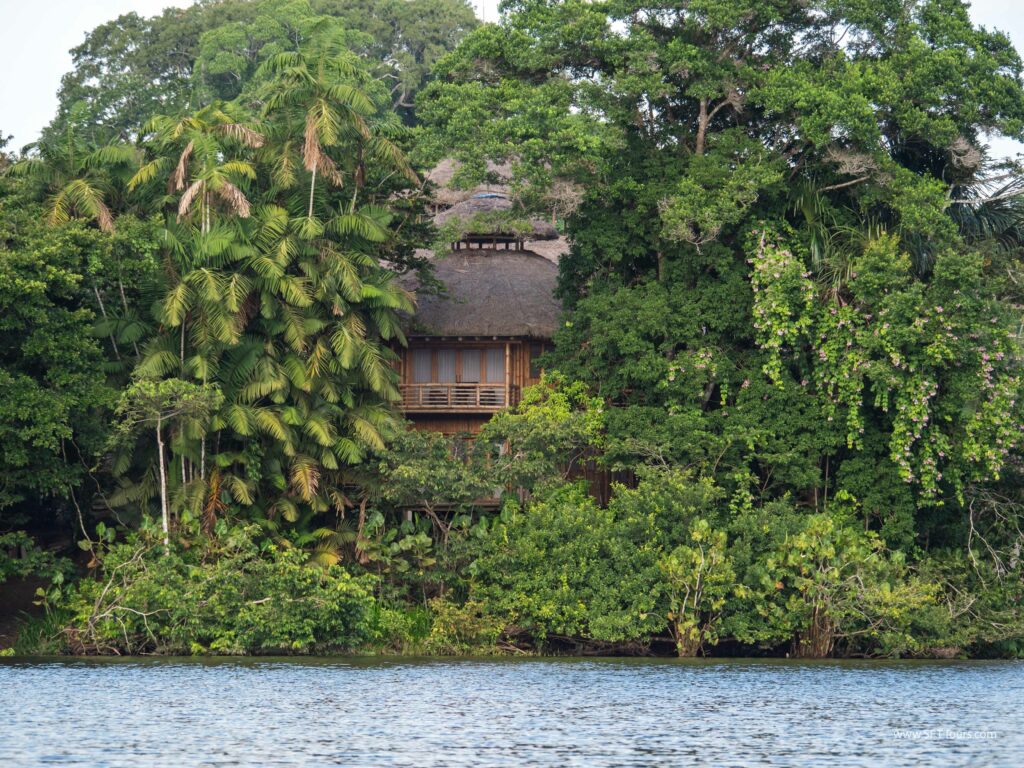
Mosquitoes get most of the attention, but they’re not the only insects you’ll come across in Ecuador, especially in the Amazon. The rainforest is full of life, and that includes a variety of small bugs that may bite, sting, or land on you out of curiosity.
The good news is that most of these are more of an irritation than a real issue. You might notice small bites from things like sandflies or midges, especially around rivers or in more humid areas. I find that these are itchier than mosquito bites, but they’re generally harmless and manageable.
Ants are another one to be aware of, and in the Amazon you’ll see long lines of them moving through the forest. While most of them are harmless, a few species can bite if disturbed. It’s less about avoiding them completely and more about being mindful of where you step or place your hands, especially on tree trunks or logs.
You may also come across the occasional spider or insect in your room or on a trail, but this is normal in a rainforest environment. They’re harmless, but from personal experience I do recommend shaking out your clothes before you get changed in the morning, and checking the insides of your shoes before putting them on your feet.
If you do get bitten, most of the time the reactions are pretty mild and can be taken care of with anti-itch creams, antihistamines, or a basic bite treatment. Like mosquitoes, bugs are just part of the environment here.
Insurance with medical coverage
Ecuador and the Amazon are generally easy to travel through, but once you move beyond cities like Quito, you’re in more remote environments where access to advanced medical care can be limited.
Basic clinics exist, and lodges or guides are prepared for common situations, but anything more than minor treatment may require transfer to a larger town or hospital.
That’s where costs can escalate quickly. Evacuations, whether by road, river, or air, can be expensive and logistically hard depending on where you are and the conditions at the time. Serious incidents are rare, but this is still a trip where having the right coverage makes a real difference.
It’s also worth remembering that this is an active itinerary. You’ll be walking on uneven terrain, getting in and out of boats, and spending long periods outdoors in changing conditions. Most of this is straightforward, but it does increase the chance of minor injuries if you’re not paying attention, and in a more remote setting, even small issues can take more effort to manage.
If your trip includes time in the Galapagos or any boat-based travel, make sure your policy covers cruise or expedition-style activities, along with anything else you plan to do. It’s also worth checking how your insurance works in practice, whether you need to pay upfront and claim later, or if your provider coordinates and pays directly for treatment and evacuation.
Travel insurance isn’t about expecting something to go wrong, it’s about knowing you’re covered if it does, so you can relax and focus on the experience.
Altitude
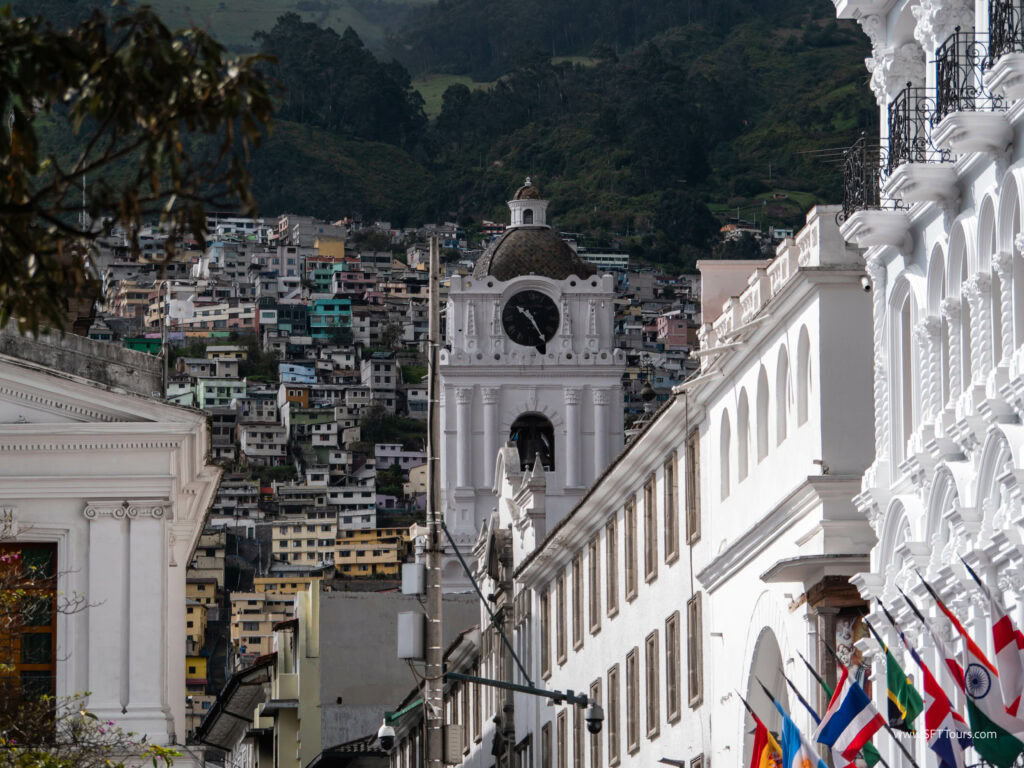
Altitude is one of the first things you’ll notice when you arrive in Quito, and it’s something worth taking seriously, even if you’re fit and healthy. At over 2,800 meters above sea level, the air contains less oxygen, which means your body has to work a bit harder than usual while it adjusts. Most people start to feel better after a day or two as their body acclimatizes.
I personally felt really exhausted within the first 24 hours, and needed a day of bed rest as my body adjusted. This can be as mild as feeling slightly short of breath when walking uphill, or as noticeable as headaches, fatigue, light dizziness, or a reduced appetite. It’s completely normal, and not a sign that anything is wrong, just your body adapting.
The best thing you can do is take it slow at the start. Walk at a comfortable pace, avoid overexerting yourself on day one, and give your body time to adjust. Staying well hydrated helps, as does eating regularly even if your appetite is lower than usual. Alcohol can make symptoms feel worse, so it’s worth taking it easy at the beginning.
If you’re concerned, or if you’ve experienced altitude sickness before, it’s worth speaking to your doctor before your trip. Some travelers choose to bring medication to help with symptoms, but for most people, rest, hydration, and pacing yourself are enough.
The key thing is not to rush it. Once your body adjusts, you’ll feel much more like yourself, and everything becomes easier and more enjoyable.
Drinking Water
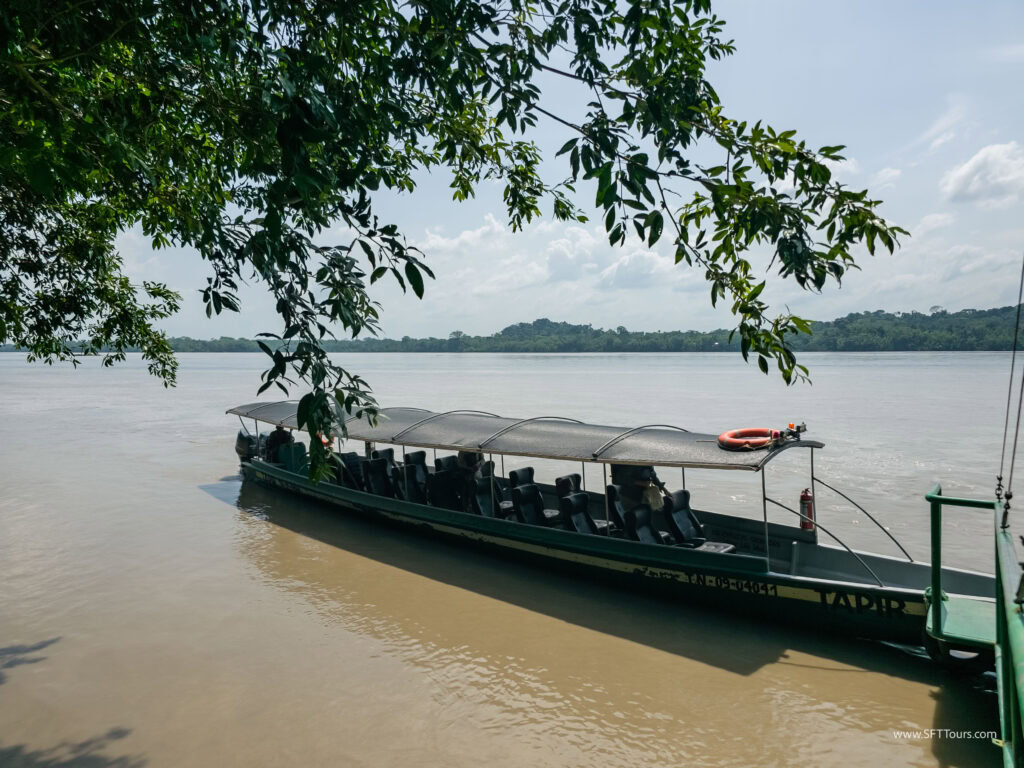
We do not recommend drinking tap water in Ecuador.
In cities like Quito, tap water is generally treated, but we would still recommend sticking to bottled or filtered water for drinking. Most hotels and restaurants will provide safe options and do use filtered water.
Once you’re in the Amazon, it becomes more important to be deliberate. Lodges will provide safe drinking water, usually filtered or purified, and you should rely on that rather than any untreated sources. Even if water looks clean, rivers and streams are not safe to drink from without proper treatment.
Avoid ice unless you’re confident it’s made from filtered water, brush your teeth with bottled or purified water if advised by your lodge, and wash or sanitize your hands regularly, especially before meals.
To make sure you always have safe drinking water available and don’t contribute to the global plastic problem, we recommend a water filter bottle that has an inbuilt filter. You can fill it with any water and press down the filter to have drinking water in a minute.
Wildlife safety in The Amazon
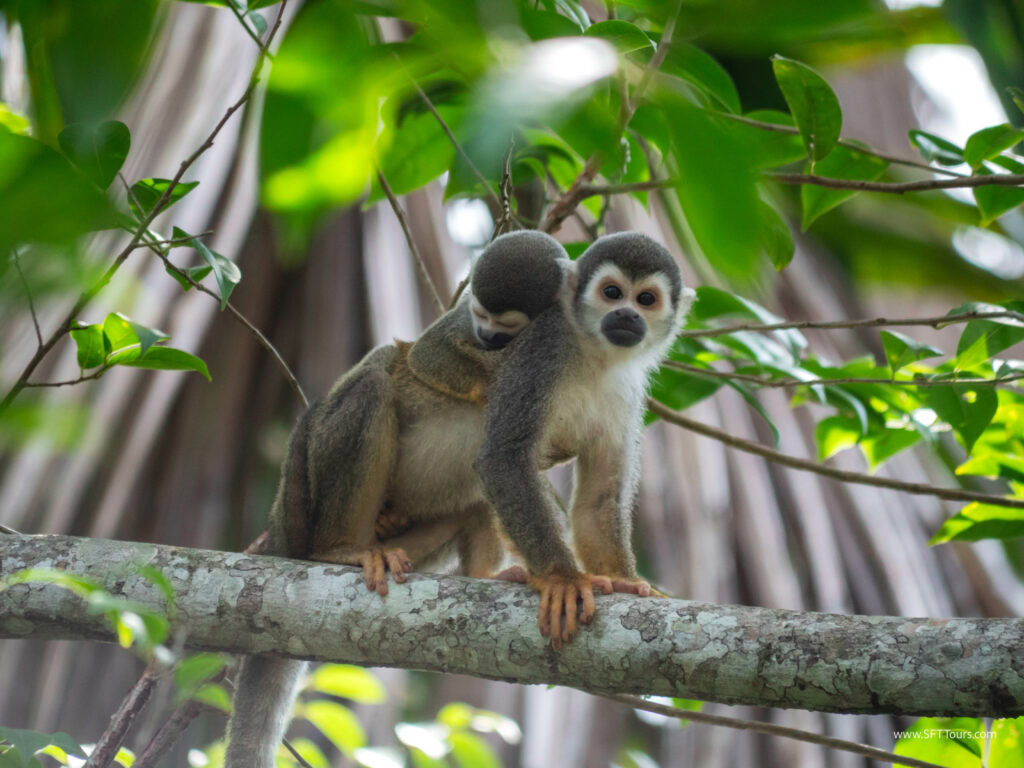
Wildlife safety in the Amazon comes down to respecting the environment and listening to your guide.
The Amazon is very different from places like the Galapagos. Wildlife here doesn’t usually come close to you, and you won’t see animals casually wandering past your path. Instead, most species are well camouflaged, high in the canopy, or hidden in the forest, which means sightings take patience and a trained eye.
That doesn’t make it less exciting, just different, and when you do see wildlife, it often feels more like a quiet discovery than a close encounter.
Animals in the Amazon are not used to human presence, and while many will move away before you even notice them, others may react if they feel threatened. Your guide will give you advice on how to spot wildlife safely and how to manage distance without disturbing the environment.
It’s important to stay on designated trails, move carefully, and avoid touching plants or animals. Some plants can irritate skin, and some insects or animals may bite if disturbed, so keeping a respectful distance is the best approach.
And while it’s tempting to step off the path for a better look or photo, the forest floor can be uneven, and guides choose routes carefully based on safety and environmental impact.
Travel essentials for Ecuador
In this section we will look at a range of other things to consider when traveling to the Galapagos as a solo female traveler.
Plugs & power
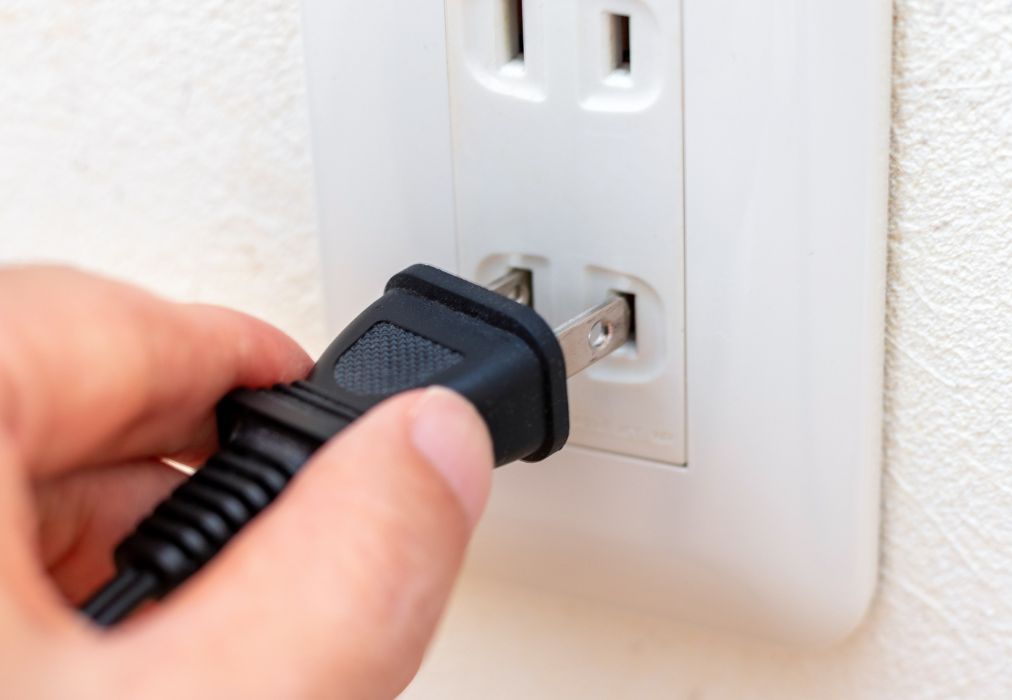
Ecuador uses 120V with Type A and B plugs, the same as the United States. If you’re traveling from Australia, the UK, or Europe, you’ll need a plug adapter, but most modern devices like phones, laptops, and cameras are dual voltage and will work without a converter.
In cities and hotels, power is reliable, but once you move into more remote areas or the Amazon, it can be a bit less consistent. Some lodges run on solar power, generators or limited power schedules, which means electricity may only be available at certain times of day. Charging opportunities can also be shared, so it’s worth planning ahead.
Bringing a small power bank is very useful, especially for long days out in the rainforest or when outlets are limited. A simple adapter and possibly a multi-USB charger will make things easier when you have multiple devices to keep topped up. We like this one.
Staying connected
Ecuador is one of those trips where your connection will vary a lot depending on where you are, and it’s worth adjusting expectations before you go.
You can pick up a local SIM card at the airport when you arrive, usually in the arrivals area or just outside the terminal at places like the Quito Airport Center shopping area. There are kiosks and stores (often selling Claro or Movistar SIMs) that will set everything up for you on the spot, and you’ll just need your passport for registration.
The main providers in Ecuador are Claro, Movistar, and CNT, but I’ve found that Claro and Movistar are generally the best options for coverage and reliability across the country, including the Andes and parts of the Amazon.
In cities like Quito, you’ll have reliable mobile signal and decent Wi-Fi in hotels, cafes, and restaurants, so it’s easy to stay connected if you need to. But once you move into more remote areas, especially the Amazon, that changes quickly.
Wi-Fi in The Amazon is available at lodges, but relies on satellite connectivity. Mobile signal can be patchy or disappear entirely once you’re deeper into the rainforest, even if you did pick up a local SIM.
If your itinerary includes the Galapagos, connectivity becomes even more limited. You may have some signal in towns, but once you’re on the ship or traveling between islands, mobile service drops out completely. Some ships offer onboard Wi-Fi, but speeds are slow and typically restricted to light use.
It’s worth preparing ahead of time by downloading anything you might want during the trip, whether that’s maps, books, podcasts, or playlists. At the same time, you’ll likely find that your days are full, and you won’t have as much downtime as you think.
Money and currency

Ecuador uses the US dollar (USD) as its official currency, and this is a country where cash is still very common, especially once you move beyond larger cities.
Credit cards like Visa and Mastercard are widely accepted through cities, but they’re not guaranteed everywhere. Contactless payments are less common than in some other countries, and you shouldn’t rely on your card as your only form of payment.
ATMs are easy to find in cities, airports, and larger towns, and most accept international cards, meaning you can withdraw US dollars directly. But ATMs do become limited and even unavailable in more remote parts of the country, so it’s best to withdraw what you need before leaving the city.
Small denominations are more useful than large bills, as change can sometimes be difficult in smaller shops or local settings, and this also makes it easier to manage tipping.
Tipping in Ecuador is appreciated but not always expected, and it tends to be more informal than in some other countries. In restaurants, a service charge is sometimes already included in the bill, so it’s worth checking before adding anything extra. If it’s not included, a tip of around 5–10% is common for good service.
For guides, drivers, and lodge staff, especially in the Amazon, tipping is more normal. This is usually given at the end of your stay or activity and can be pooled among staff. The amount is personal, and lodges will indicate a range at check out.
Language
The official language of Ecuador is Spanish, and it’s spoken throughout the country, from cities like Quito to smaller towns and the Amazon.
In hotels, restaurants, and tourism settings, you’ll find people who speak some English, but this becomes less common when you move into more local areas or the Amazon, and communication may be more basic.
Ecuador is also home to a number of Indigenous languages, particularly in the Amazon and Andean regions. One of the most widely spoken is Kichwa, which you may hear spoken in the streets.
You don’t need to speak Spanish to travel here, but knowing a few basic words goes a long way and is always appreciated.
Hello – Hola (OH-lah)
Good morning – Buenos días (BWAY-nos DEE-ahs)
Good afternoon – Buenas tardes (BWAY-nas TAR-dess)
Good evening – Buenas tardes (BWAY-nas TAR-dess)
Good night – Buenas noches (BWAY-nas NO-chess)
Thank you – Gracias (GRAH-see-ahs)
You’re welcome – De nada (day NAH-dah)
Please / Help – Por favor / Ayuda (por fah-VOR / ah-YOO-dah)
Sorry / Excuse me – Perdón / Disculpe (per-DON / dis-KOOL-peh)
Excuse me (to pass by someone) – Permiso (pair-MEE-so)
Best Food in Ecuador & The Amazon
Food in Ecuador is shaped by geography, and you’ll really notice that on this trip. What you eat in the Andes is different from what you’ll find in the Amazon, but across the country meals tend to be simple, fresh, and built around local ingredients.
In the Andes, food is more hearty and grounding, with staples like rice, potatoes, corn, beans, and meat. In the Amazon, meals become lighter and more focused on what’s available locally, especially fish, plantains, and tropical fruits.
Here are a few foods you’re likely to try while traveling through Ecuador.
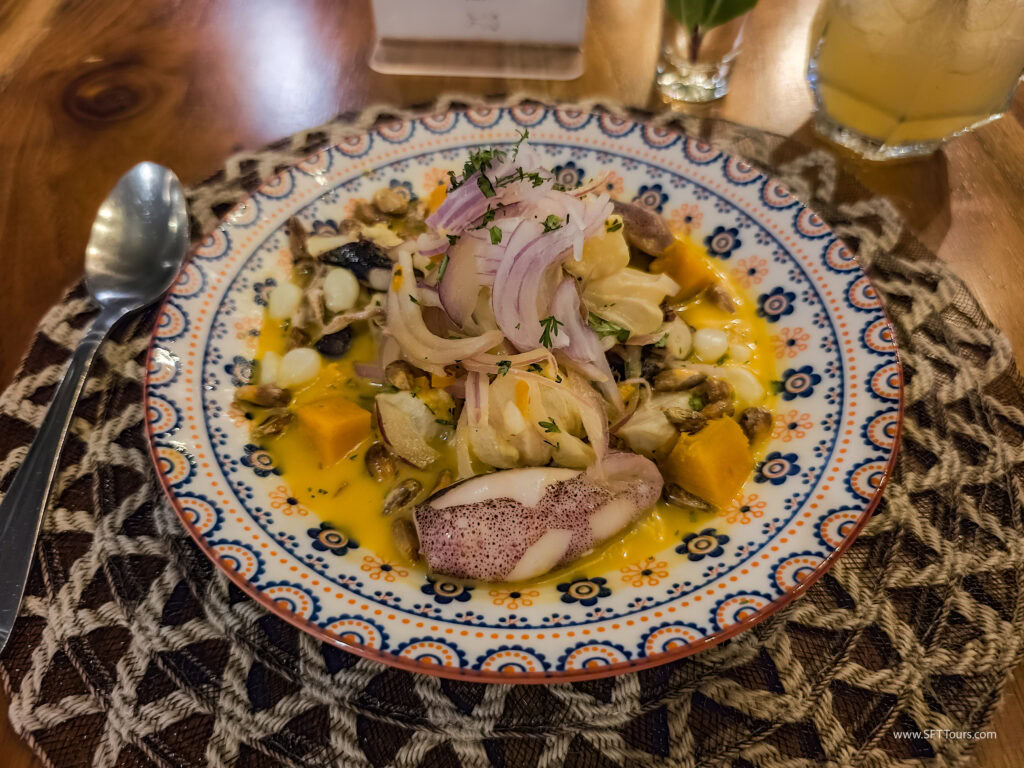
Ceviche: Ceviche is one of the most common dishes you’ll come across, especially in coastal regions but widely available throughout Ecuador. It’s typically made with shrimp or fish marinated in citrus juice and served with sides like corn kernels, popcorn or plantain chips. It’s light, fresh, and works well in warmer climates.

Encocado: Encocado is a rich, coconut-based dish usually made with fish or shrimp. It’s more filling than ceviche, with a creamy sauce flavored with garlic, herbs, and spices. It’s especially common in coastal areas but often appears on menus across the country.
Empanadas: Empanadas are an easy go-to and you’ll see them everywhere. They’re pastry pockets filled with cheese, meat, or vegetables, usually fried or baked and served warm. Simple, filling, and reliable when you want something quick.
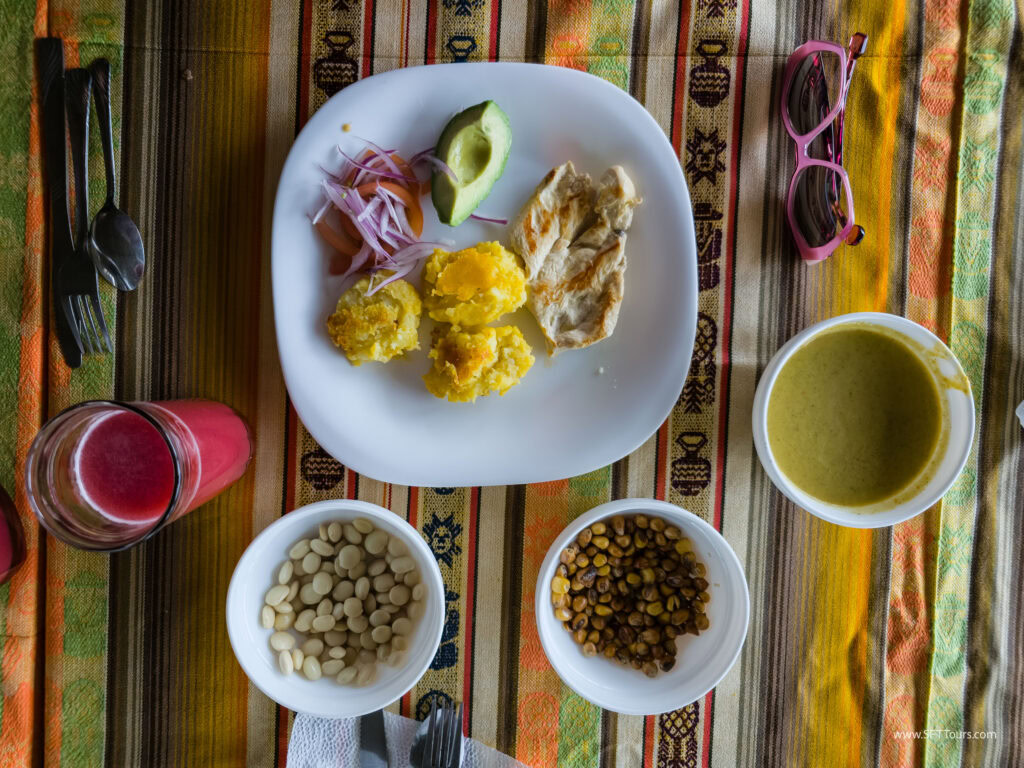
Llapingachos: A classic Andean dish made from potato patties stuffed with cheese and pan-fried until crisp. They’re usually served with eggs, sausage, avocado, and a peanut sauce, making them a hearty and very local meal.
Helado de paila: A traditional ice cream made by hand in a large metal pan over ice. It has a slightly lighter texture than regular ice cream and is often made with fresh fruit, so the flavors feel clean and really natural.
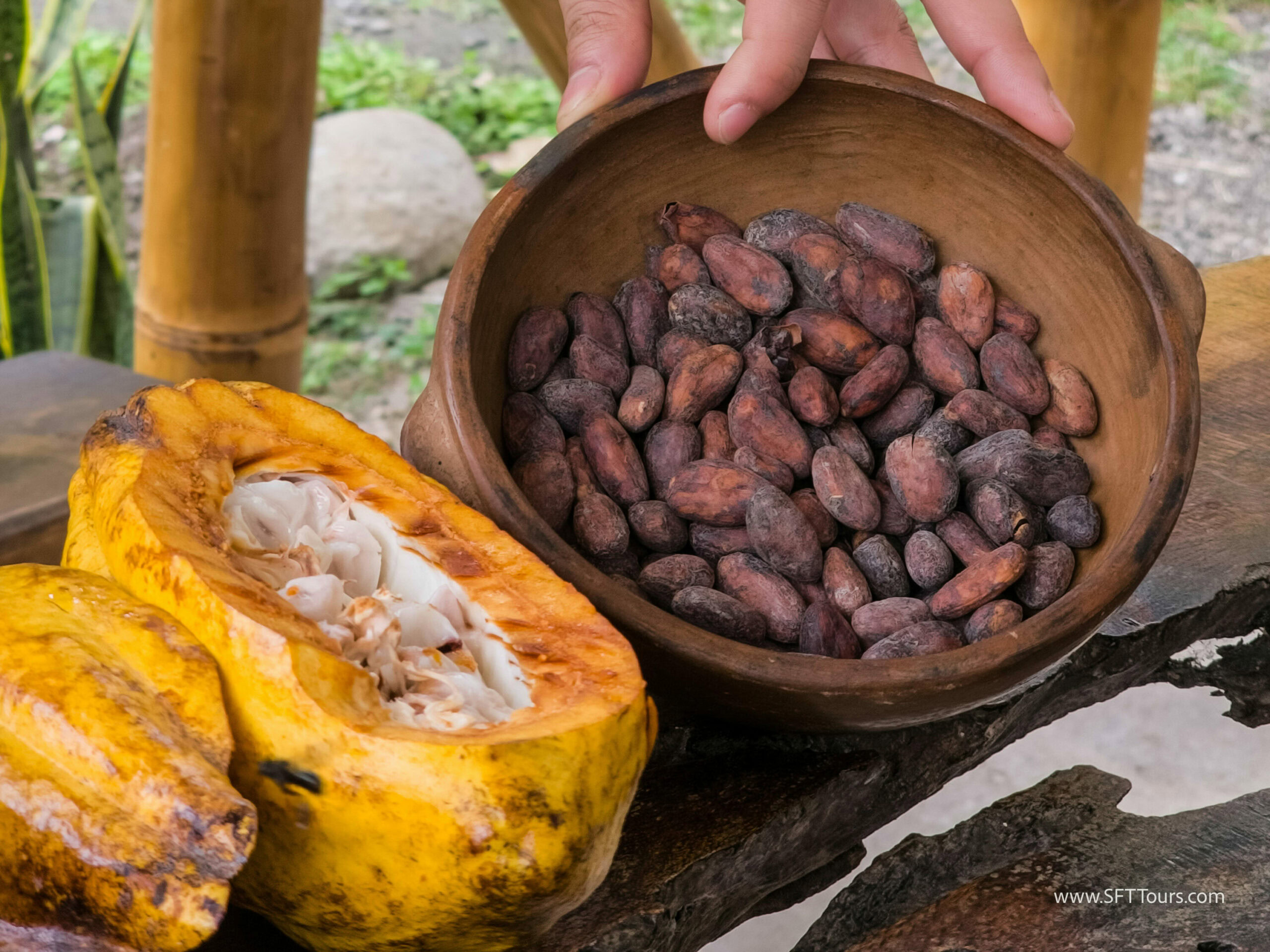
Chocolate (cacao): Ecuador produces some of the world’s best cacao, so chocolate here is genuinely worth trying. Whether it’s in desserts or on its own, the quality is noticeably different from what you might be used to.
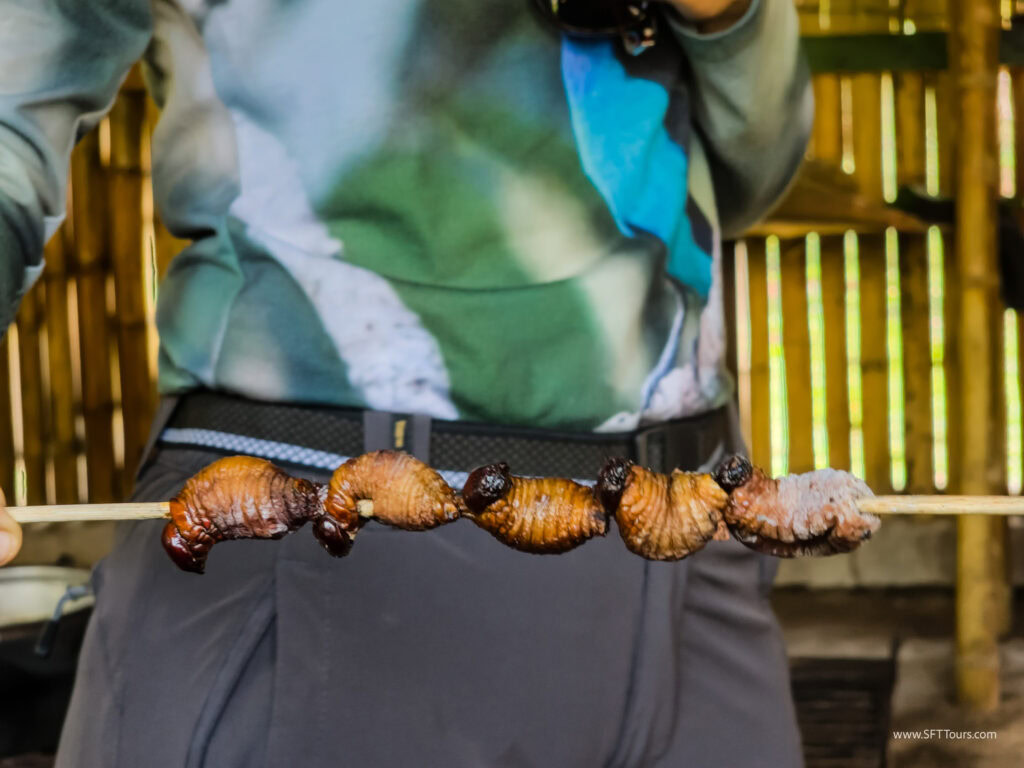
Bugs and worms: In the Amazon, you may have the chance to try insects, especially worms, which are part of the local cuisine and grilled.
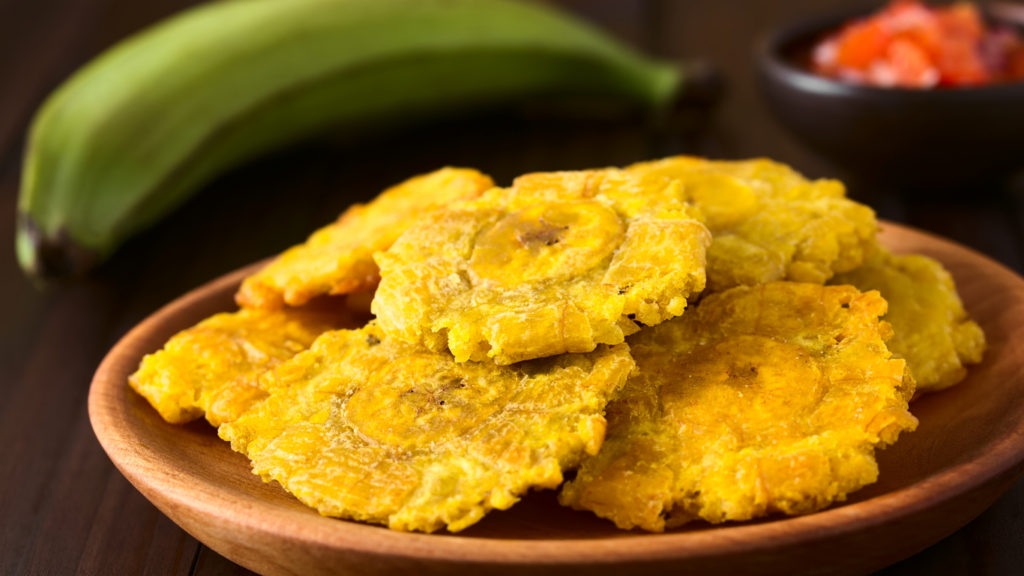
Patacones: Fried green plantains smashed into thick, crispy discs. Salty, crunchy, and addictive, basically the Ecuadorian version of fries.
Drinks to try in Ecuador
Ecuador also has a range of local drinks worth trying, from fresh juices to more traditional options you might not have come across before.
Fresh tropical fruit juices: Fresh juices are everywhere, and they’re one of those small things that end up being a highlight. Made from fruits like passionfruit, mango, papaya, or guava, they’re simple, refreshing, and taste far better than anything bottled.
Ecuadorian coffee: Coffee is grown locally, and while Ecuador isn’t as globally known for coffee like its neighboring countries, what you’ll find is fresh and often locally sourced. In the Amazon, coffee tends to be simple but strong.
Canelazo: A traditional warm drink from the Andes made with cinnamon, sugar, and aguardiente (a local spirit). It’s often served hot in cooler regions and has a comforting, slightly spiced flavor.
Aguardiente: This is a sugarcane-based spirit commonly found across Ecuador. It’s quite strong and usually consumed in small amounts, often mixed into drinks like canelazo.
Fresh coconut water: In warmer regions, especially closer to the coast, fresh coconut water is widely available and naturally refreshing.
Herbal teas (Agua de hierbas): In the Andes, herbal teas are very common, often made from local plants. These are sometimes offered after meals and are also used to help with digestion or altitude adjustment.
Chicha: A traditional drink found in parts of the Amazon, often made from fermented cassava (yuca). It has cultural significance in Indigenous communities and is sometimes shared as part of local experiences.
Ecuador & The Amazon Photography tips
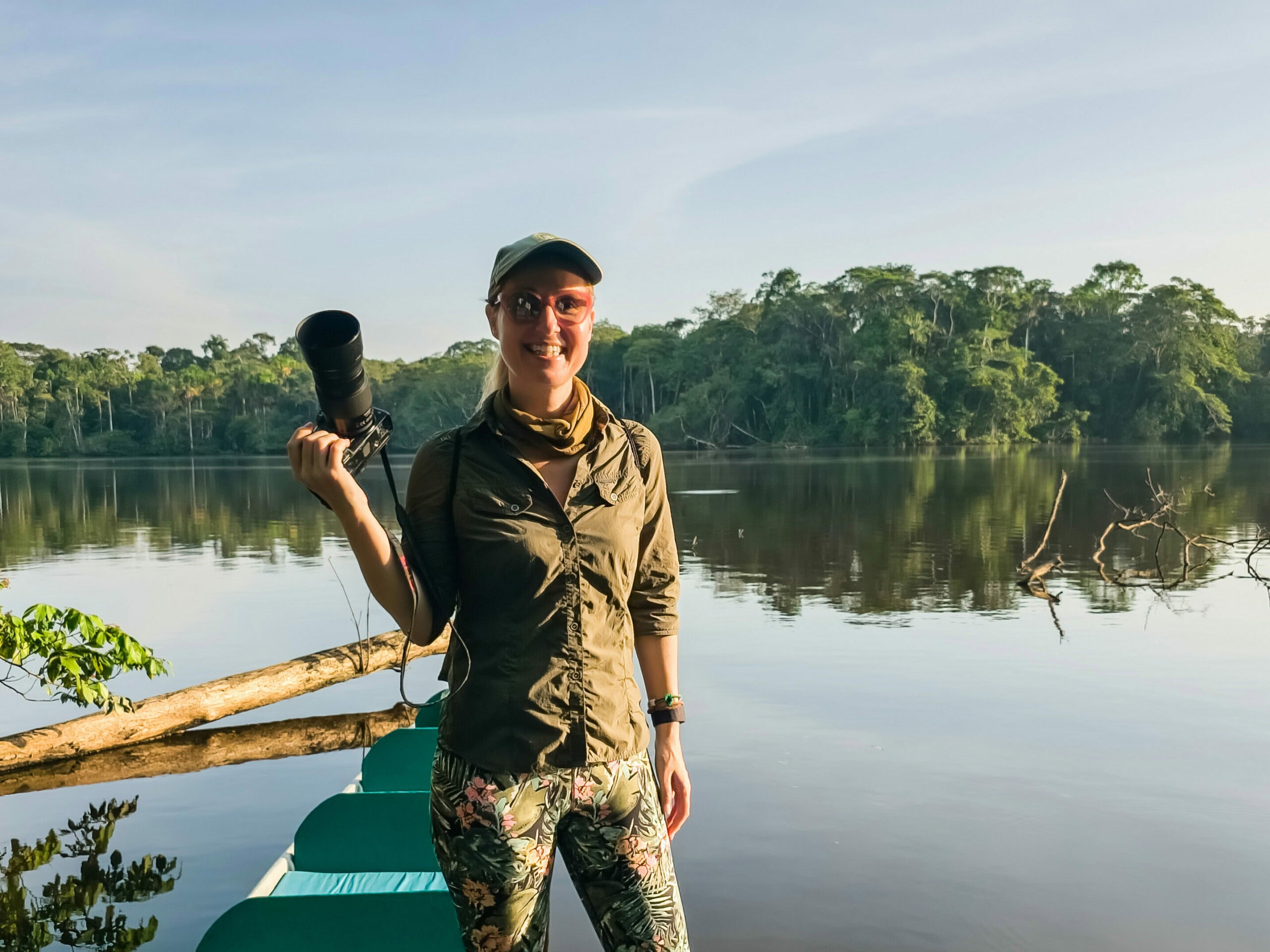
You’ll take a lot of photos on this trip, and everything in Ecuador is interesting, including the people, wildlife, and the environment.
First, when it comes to people, it’s essential to ask before taking someone’s photo. This is particularly important in cities like Quito and in Indigenous communities.
It can be tempting to capture candid moments, especially in markets where you’ll see people wearing traditional dress, but taking photos without permission is not only disrespectful, you will absolutely offend people. I have personally seen local women in traditional dress in Quito confront travelers, and demand payment for having their photo taken without their consent.
If you do wish to take a photo of someone, make eye contact, gesture, or ask. Most people will either say yes or no very clearly, and you should respect their personal choice on this, just as you would wish your privacy to be respected by someone visiting your country.
It’s also important to avoid taking photos of children. Even if it feels like a harmless or candid moment, photographing children without clear parental consent is unethical and can make people understandably uncomfortable. As a general rule, don’t take photos of children at all unless you have explicit permission from a parent or guardian, and even then, be mindful of how and why you’re capturing the image.
In the Amazon, wildlife photography is a completely different experience from places like the Galapagos.
Animals don’t come close to you, and you won’t be surrounded by obvious photo opportunities. Instead, it’s about patience and awareness. Many species are hidden, high in the canopy, or well camouflaged, so your guide will often spot things long before you do.
Wildlife always comes before the shot. Don’t move off trail, don’t reach into vegetation, and don’t try to get closer than your guide advises. We stuck our go pro on an extender stick into some bushes, which in hindsight was irresponsible, and a squirrel monkey nearly actually took off with it.
Gear-wise, keeping things simple helps. You’ll be walking on uneven terrain, getting in and out of boats, and dealing with humidity and occasional rain, so having your camera in a secure backpack is far easier than carrying loose equipment. Quick access matters, but so does being able to move safely.
Humidity is something people don’t always think about, but it does affect your gear. Lenses can fog when moving between air-conditioned spaces and the outdoors, and moisture builds up quickly. From personal experience, wiping your lens regularly and giving your gear time to adjust to temperature changes helps a lot in avoiding frustration.
If you’re using a camera, a zoom lens will give you more flexibility for wildlife, since you won’t be getting physically close. Faster shutter speeds help with movement, especially on boats or when animals are active, and adjusting exposure slightly can help in dappled forest light.
Drones are restricted in many parts of Ecuador, including protected areas and the Amazon, so don’t plan on using one unless you’ve arranged permission in advance.
Books about or set in Ecuador
Even though you’ll learn a lot once you’re on the ground, arriving with a bit of context about Ecuador and the Amazon helps everything click into place when you’re actually there.
We’ve put together a reading list of books about or set in Ecuador and the Amazon. You don’t need to read all of these, but even one or two will change how you see the country.
The River of Doubt – Candice Millard: This is one of the most gripping Amazon adventure stories out there, following Theodore Roosevelt on a dangerous expedition through an uncharted Amazon river. It’s part history, part survival story, and gives a real sense of how challenging and unpredictable the rainforest can be.
The Unconquered: In Search of the Amazon’s Last Uncontacted Tribes – Scott Wallace This book explores the Amazon through the lens of Indigenous communities who still live with minimal outside contact. It’s thoughtful, respectful, and gives insight into the cultural importance of protecting these regions.
Savages – Joe Kane A powerful account of oil exploration in Ecuador’s Amazon and its impact on Indigenous communities. It’s an eye-opening read that adds context to the environmental and social challenges in the region.
The Amazon: What Everyone Needs to Know – Mark Plotkin An accessible overview of the Amazon, covering biodiversity, Indigenous knowledge, and conservation. It’s informative without being heavy, and a great introduction before visiting the rainforest.
Journey to the Centre of the Earth – Jules Verne This is a fictional classic, inspired by Ecuador’s volcanic landscapes. It adds a sense of adventure and imagination to the dramatic terrain you’ll see in the Andes.
Turn Right at Machu Picchu – Mark Adams Not set in Ecuador specifically, but very relevant to the Andean region. This is a humorous and insightful travel narrative that helps bring context to Inca history and the landscapes of the Andes.
The Old Patagonian Express – Paul Theroux A classic travel memoir that passes through Ecuador, offering observations on culture, people, and travel in South America. It’s reflective and very readable.
Movies about or set in Ecuador
Here’s a curated list of films and documentaries about Ecuador, the Andes, and the Amazon (and the stories and ecosystems connected to them) to get you excited before your trip.
The Last Shaman (2016) Filmed partly in the Amazon, this documentary follows a personal journey into Indigenous healing traditions. It offers insight into spiritual practices and the cultural depth of the rainforest, though it’s more personal than educational.
Amazon (IMAX, 1997) A visually immersive documentary that explores the biodiversity of the Amazon rainforest. It’s less about Ecuador specifically, but it captures the scale and intensity of the ecosystem you’ll be stepping into.
River of Gold (2016) This documentary focuses on illegal gold mining in the Amazon and its environmental impact. It’s a more serious watch, but it adds important context to conservation challenges in the region.
National Geographic: Wild Amazon A classic wildlife-focused documentary that introduces the animals and ecosystems of the Amazon. It’s a good starting point if you want to recognise species and understand how the rainforest works.
Our Planet – Jungle Episode (2019) This episode showcases rainforest ecosystems around the world, including parts of the Amazon. It’s stunning and gives a broader perspective on how these environments function globally.
Planet Earth II – Jungles Episode (2016) Another Attenborough classic that brings the rainforest to life, focusing on animal behaviour and the complexity of jungle ecosystems. It’s less about Ecuador specifically, and more about understanding what you’re seeing once you’re there.
The Burning Season (2008) A documentary about conservation efforts in the Amazon, following environmental activists working to protect the rainforest. It provides context on the ongoing balance between development and preservation.
BBC Natural World: Amazon Alive A wildlife documentary that captures daily life in the Amazon, from insects to larger animals. It’s a great way to get familiar with how active and layered the environment is.
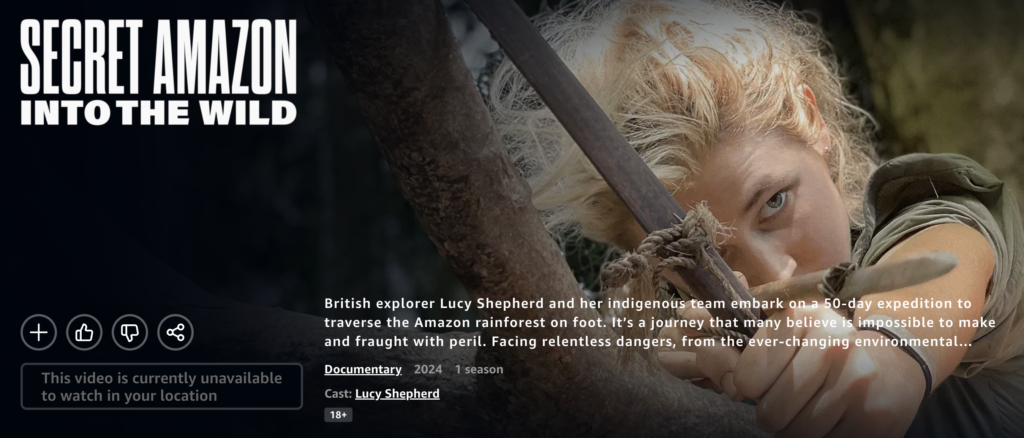
Secret Amazon: Into the Wild Where British explorer Lucy Shepherd and her indigenous team go on a 2-month adventure into the rainforest.